Morrow’s Honeysuckle
/
(Lonicera morrowii)
Morrow’s Honeysuckle (Lonicera morrowii)
/


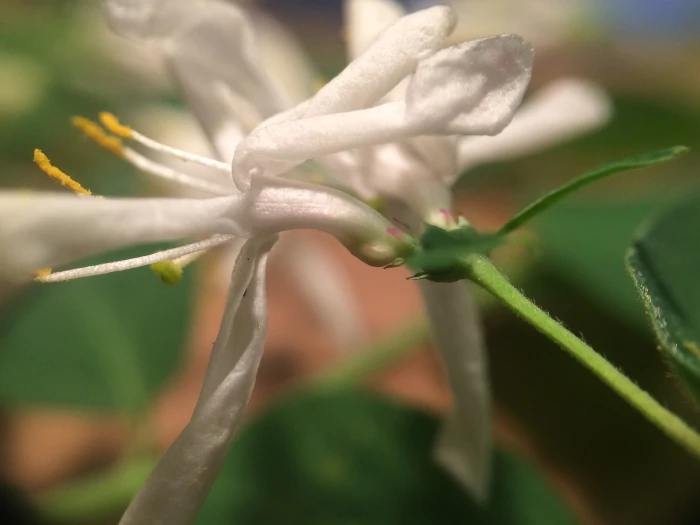

Étienne Lacroix-Carignan
Public Domain




Summary
Morrow’s Honeysuckle is valued for its ease of maintenance and ability to thrive in a range of conditions. However, gardeners should be aware of its invasive potential, as it can spread aggressively via seed dispersal by birds and vegetative growth. It is invasive across the northeastern U.S., forming dense thickets and hybridizing with other exotic honeysuckles.CC BY-SA 4.0
Plant Description
- Plant Type: Shrub
- Height: 6-8 feet
- Width: 8-10 feet
- Growth Rate: Moderate
- Flower Color: White
- Flowering Season: Spring, Summer
- Leaf Retention: Deciduous
Growth Requirements
- Sun: Full Sun, Part Shade
- Drainage: Medium
Common Uses
Bee Garden, Bird Garden, Butterfly Garden, Deer Resistant, Drought Tolerant, Fragrant, Hummingbird Garden, Showy Flowers
Natural Habitat
Forest margins, riverbanks, and scrublands in East Asia
Other Names
Common Names: Asian Fly-Honeysuckle, Morrows Heckenkirsche, Morrow-Heckenkirsche, Clématite De Morrow, Chèvrefeuille De Morrow, Spärrtry, Fly Honeysuckle, Morrow Honeysuckle, 섬괴불나무
Scientific Names: Lonicera morrowii, Lonicera insularis, Lonicera tatarica var. morrowii, Caprifolium morrowii, Lonicera insularis var. lutescens, Lonicera insularis var. mandshurica, Lonicera morrowii var. gamushiensis, Lonicera morrowii var. insularis, Xylosteon morrowii
GBIF Accepted Name: Lonicera morrowii Gray