Alpine Tea Tree
/
(Leptospermum rupestre)
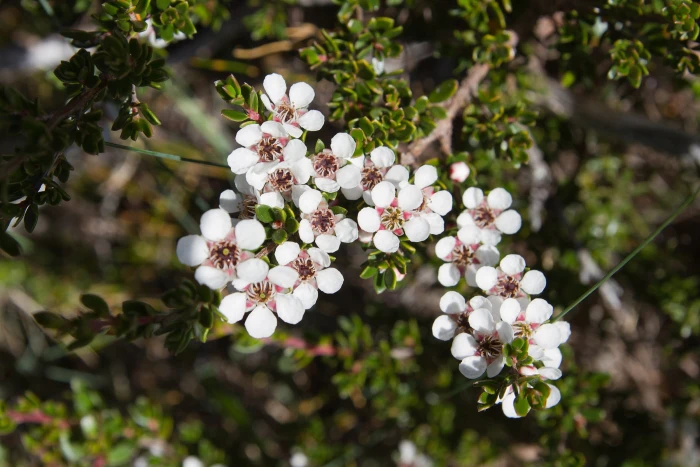
Alpine Tea Tree (Leptospermum rupestre)
/



JJ Harrison
CC BY-SA 3.0

Image By:
JJ Harrison
Recorded By:
Copyright:
CC BY-SA 3.0
Copyright Notice:
Photo by: JJ Harrison | License Type: CC BY-SA 3.0 | License URL: https://creativecommons.org/licenses/by-sa/3.0 | Uploader: JJ Harrison | Publisher: Wikimedia Commons | Title: Leptospermum_rupestre_-_Walls_of_Jerusalem.jpg |





Summary
Leptospermum rupestre, commonly known as Alpine Tea Tree, is an evergreen shrub native to the alpine and subalpine regions of Tasmania and the southeastern Australian mainland. It typically grows to a height of 8-10 feet (2.4-3 meters) and a width of 4-5 feet (1.2-1.5 meters). Alpine Tea Tree has a compact, bushy habit with small, needle-like leaves and a rough, flaky bark that adds texture to the garden. It produces a profusion of small, white flowers with a hint of red in the center during the summer months, which are highly attractive to pollinators.
Alpine Tea Tree is valued for its hardiness in cold climates and its ability to thrive in poor soils with good drainage. It is often used in rockeries, as a specimen plant, or for informal hedging in gardens. This shrub prefers full sun but can tolerate part shade, and once established, it is relatively low maintenance. It is not known for having aggressive roots or being particularly prone to diseases, making it a reliable choice for gardeners. However, it can be susceptible to root rot if overwatered or planted in poorly draining soils. There are no widely recognized cultivars of this species in the horticultural trade, but its natural form is appealing enough for most garden settings.CC BY-SA 4.0
Alpine Tea Tree is valued for its hardiness in cold climates and its ability to thrive in poor soils with good drainage. It is often used in rockeries, as a specimen plant, or for informal hedging in gardens. This shrub prefers full sun but can tolerate part shade, and once established, it is relatively low maintenance. It is not known for having aggressive roots or being particularly prone to diseases, making it a reliable choice for gardeners. However, it can be susceptible to root rot if overwatered or planted in poorly draining soils. There are no widely recognized cultivars of this species in the horticultural trade, but its natural form is appealing enough for most garden settings.CC BY-SA 4.0
Plant Description
- Plant Type: Shrub
- Height: 8-10 feet
- Width: 4-5 feet
- Growth Rate: Moderate
- Flower Color: White
- Flowering Season: Summer
- Leaf Retention: Evergreen
Growth Requirements
- Sun: Full Sun
- Drainage: Medium
Common Uses
Bee Garden, Bird Garden, Butterfly Garden, Deer Resistant, Drought Tolerant, Fragrant, Low Maintenance, Rock Garden
Natural Habitat
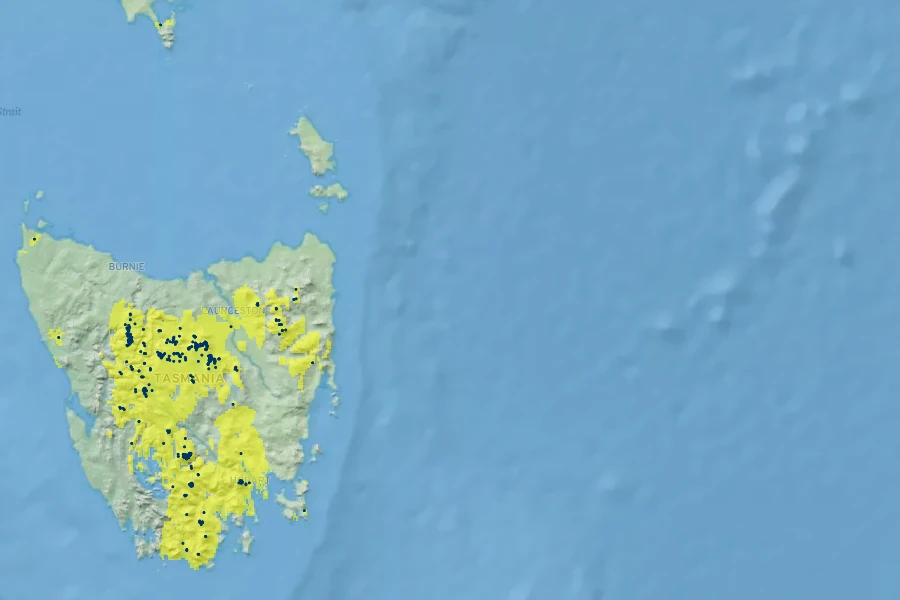
Native to alpine and subalpine regions of Tasmania and the southeastern Australian mainland
Other Names
Common Names: Prostrate Tea-Tree
Scientific Names: Leptospermum rupestre, Leptospermum grandifolium var. compactum, Leptospermum scoparium var. microphyllum
GBIF Accepted Name: Leptospermum rupestre Hook.fil.