Mountain Pepperweed
/
(Lepidium montanum)
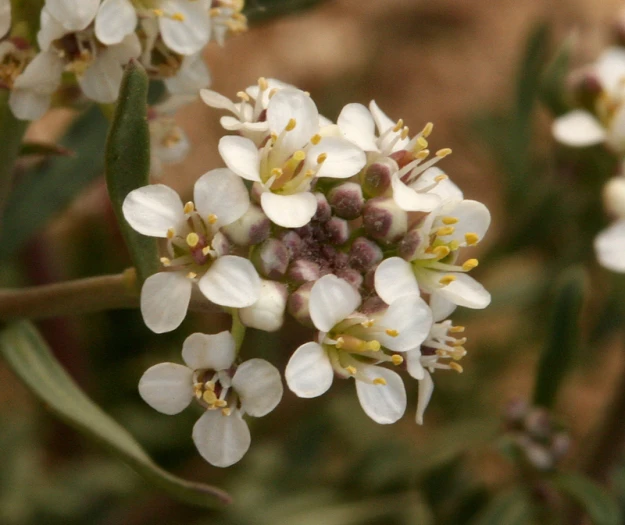
Mountain Pepperweed (Lepidium montanum)
/



Steve Matson
CC BY 4.0

Image By:
Steve Matson
Recorded By:
Copyright:
CC BY 4.0
Copyright Notice:
Photo by: Steve Matson | License Type: CC BY 4.0 | License URL: http://creativecommons.org/licenses/by/4.0/ | Rights Holder: Steve Matson | Publisher: iNaturalist | Date Created: 2008-04-25T09:22:15-07:00 |





Summary
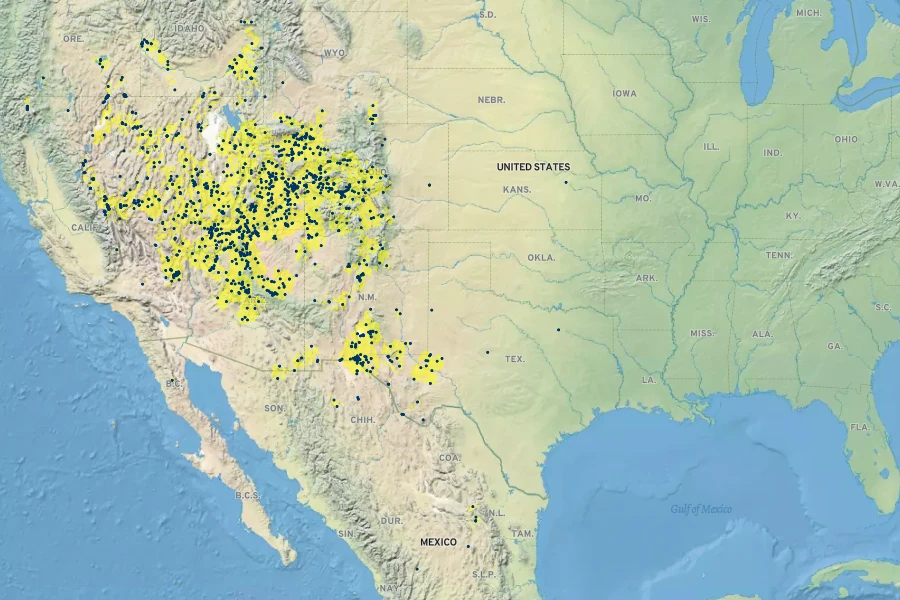
Lepidium montanum, commonly known as mountain pepperweed, is a biennial herb native to the western United States, including regions from Oregon to Montana, and extending to northern Mexico. It is typically found in arid environments such as sagebrush steppe, desert margins, and montane habitats, often on saline or gravelly soils. This plant can reach up to 16 inches in height and width, presenting a rounded form. The basal leaves are pinnatifid, up to 6 inches long, with toothed lobes, while the upper stem leaves are smaller and may be entire or less divided. Mountain pepperweed blooms profusely with small, white to cream-colored flowers arranged in rounded to cylindrical clusters, known as racemes, which are highly attractive to pollinators during the flowering season.
Mountain pepperweed is valued for its drought tolerance and ability to thrive in poor soils, making it suitable for xeriscaping and restoration projects in arid regions. It requires minimal maintenance and is often used to stabilize soils and as an ornamental in rock gardens. It prefers full sun and well-drained soils but can tolerate a range of soil types, including those with high salinity. While not commonly cultivated, it can be an interesting addition to native plant gardens.CC BY-SA 4.0
Mountain pepperweed is valued for its drought tolerance and ability to thrive in poor soils, making it suitable for xeriscaping and restoration projects in arid regions. It requires minimal maintenance and is often used to stabilize soils and as an ornamental in rock gardens. It prefers full sun and well-drained soils but can tolerate a range of soil types, including those with high salinity. While not commonly cultivated, it can be an interesting addition to native plant gardens.CC BY-SA 4.0
Plant Description
- Plant Type: Shrub, Herb
- Height: 1-3 feet
- Width: 1-1.5 feet
- Growth Rate: Rapid
- Flower Color: White, Yellow
- Flowering Season: Spring, Summer
- Leaf Retention: Deciduous
Growth Requirements
- Sun: Full Sun, Part Shade
- Drainage: Fast, Medium
Common Uses
Drought Tolerant, Low Maintenance
Natural Habitat
Sagebrush steppe, desert margins, and montane habitats
Other Names
Common Names: Mountain Pepperweed, Western Peppergrass, Mountain Pepperplant, Mountain Pepperwort, Mountain Peppergrass
Scientific Names: Lepidium montanum, Lepidium albiflorum, Lepidium alyssoides var. jonesii, Lepidium alyssoides var. stenocarpum, Lepidium brachybotryum, Lepidium campestre var. heterophyllum, Lepidium corymbosum, Lepidium crandallii, Lepidium heterophyllum
GBIF Accepted Name: Lepidium montanum