Trailing Lantana
/
(Lantana montevidensis)
Trailing Lantana (Lantana montevidensis)
/


MathewTownsend
CC BY-SA 3.0






Summary
Trailing Lantana is valued for its long flowering season and its versatility as a ground cover, container plant, or ornamental vine with support. This plant thrives in full sun and requires well-drained soil. While it is generally low-maintenance, it can be susceptible to lace bug infestations and root rot if overwatered. In some regions, it is considered invasive and gardeners should be cautious about planting it in areas where it can spread uncontrollably. It has been found to become a noxious, invasive species in parts of Australia and Hawaiʻi.CC BY-SA 4.0
Plant Description
- Plant Type: Shrub, Subshrub
- Height: 1-1.5 feet
- Width: 3-5 feet
- Growth Rate: Moderate
- Flower Color: Pink, Purple, Yellow
- Flowering Season: Summer, Fall
- Leaf Retention: Evergreen
Growth Requirements
- Sun: Full Sun, Part Shade
- Drainage: Medium
Common Uses
Bank Stabilization, Bee Garden, Bird Garden, Border Plant, Butterfly Garden, Deer Resistant, Drought Tolerant, Erosion Control, Fragrant, Groundcover, Hummingbird Garden, Low Maintenance, Potted Plant, Rabbit Resistant, Rock Garden, Salt Tolerant, Showy Flowers, Street Planting
Natural Habitat
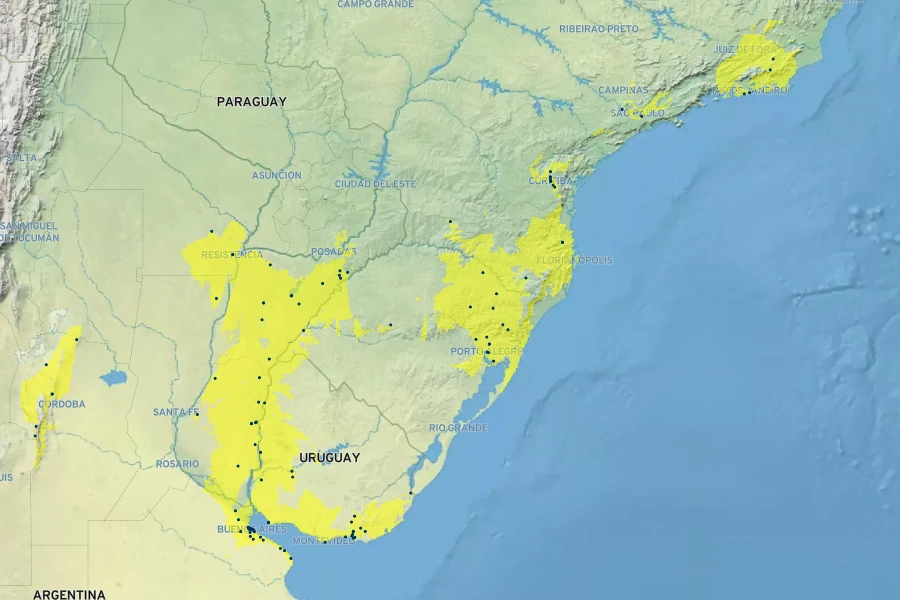
Open woodlands and scrublands of Uruguay, Brazil, and Argentina
Other Names
Common Names: Purple Lantana, Wild Verbena, Trailing Shrubverbena, Creeping Lantana, Weeping Lantana, Small Lantana, Liten Eldkrona
Scientific Names: Lantana montevidensis, Lantana sellowiana, Lantana selloi, Lantana delicatissima, Lantana montevidensis f. albiflora, Lantana sellowiana f. planifolia, Lippia montevidensis, Camara montevidensis, Camara sellowiana
GBIF Accepted Name: Lantana montevidensis (Spreng.) Briq.