Buttonsage
/
(Lantana involucrata)
Buttonsage (Lantana involucrata)
/


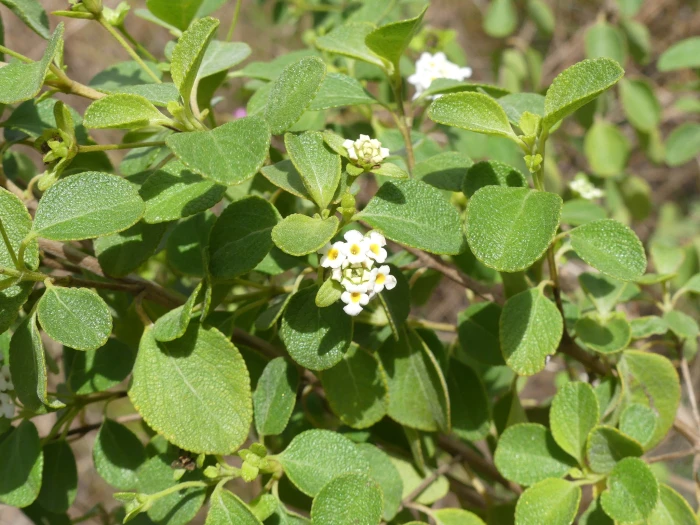

botanygirl
CC BY 4.0




Summary
Buttonsage is valued for its drought tolerance and wildlife-attracting qualities, making it a suitable choice for xeriscaping and naturalistic garden designs. It thrives in full sun to part shade and prefers well-drained soils, tolerating a range of soil types from sandy to loamy. While generally low-maintenance, it may require pruning to maintain its shape and can be susceptible to pests such as whiteflies and lantana lace bugs. In regions where it is non-native, Buttonsage should be monitored to prevent spread and ensure it does not displace local vegetation.CC BY-SA 4.0
Plant Description
- Plant Type: Shrub
- Height: 3-5 feet
- Width: 1-5 feet
- Growth Rate: Moderate, Slow
- Flower Color: Purple, White, Yellow
- Flowering Season: Spring, Summer, Fall
- Leaf Retention: Evergreen, Semi-deciduous
Growth Requirements
- Sun: Full Sun
- Drainage: Fast, Medium
Common Uses
Bird Garden, Butterfly Garden, Groundcover, Hummingbird Garden, Low Maintenance, Showy Flowers, Street Planting
Natural Habitat
native to coastal areas, dunes, and other well-drained sites in the Neotropical realm, including Mexico, the Caribbean, Central America, and South America
Other Names
Common Names: Wild Sage, Hammock Shrubverbena, Black Sage, Beishi Ros, Bush Tea, Bushurumbu, Bushurumu, Common Sage Bush
Scientific Names: Lantana involucrata, Camara involucrata, Lantana arubensis, Lantana incana, Lantana involucrata f. candida, Lantana involucrata f. leucocarpa, Lantana involucrata f. rubella, Lantana involucrata var. berlandieri, Lantana involucrata var. floridana, Lantana involucrata var. kuhnholtziana
GBIF Accepted Name: Lantana involucrata