Three-Flowered Rush
/
(Juncus triglumis)
Three-Flowered Rush (Juncus triglumis)
/


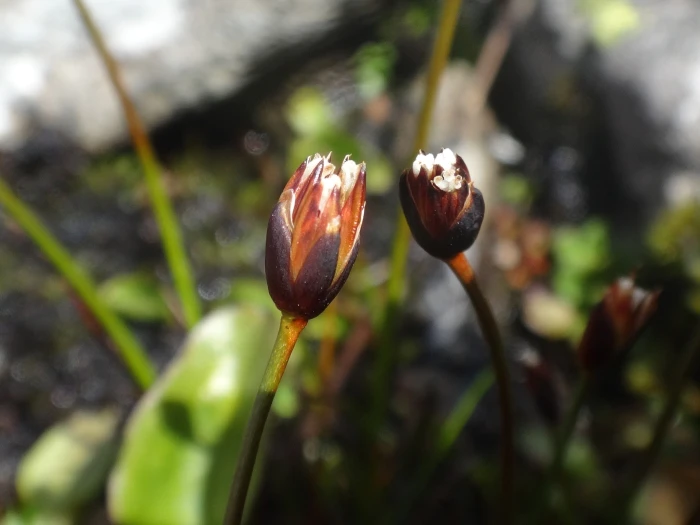

Christian Berg
CC BY 4.0

Image By:
Christian Berg
Recorded By:
Copyright:
CC BY 4.0
Copyright Notice:
Photo by: Christian Berg | License Type: CC BY 4.0 | License URL: http://creativecommons.org/licenses/by/4.0/ | Rights Holder: Christian Berg | Publisher: iNaturalist | Date Created: 2018-07-02T14:43:57-07:00 |





Summary
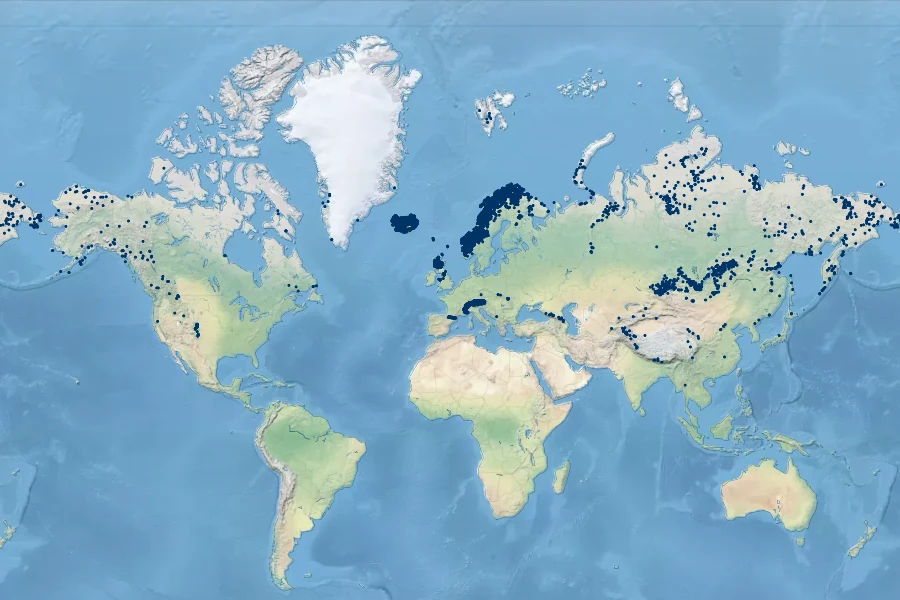
Juncus triglumis, commonly known as Three-flowered Rush, is a perennial herbaceous plant native to the subarctic and subalpine regions of the Northern Hemisphere, including North America, Europe, and Asia. It is typically found in cold, moist environments such as wet meadows, marshes, and the edges of streams and lakes in tundra and alpine zones. This rush thrives in calcareous soils and is often associated with other sedge species like Carex atrofusca and Carex bicolor. It is a small plant, usually not exceeding 10 cm in height, with a distinctive appearance characterized by its dark green, grass-like leaves and clusters of usually three small, brownish flowers that bloom in the summer months.
Three-flowered Rush is valued for its ability to thrive in cold, wet conditions where other plants may struggle. It is used in garden settings that mimic its natural habitat, such as rock gardens, bog gardens, and water features. In cultivation, it requires consistently moist or wet soil, preferably calcareous, and full sun to partial shade. While not commonly available in the horticultural trade, it can be an interesting addition to collections that focus on native or alpine plants. It is generally free from major pests and diseases but can be sensitive to drought and excessive heat.CC BY-SA 4.0
Three-flowered Rush is valued for its ability to thrive in cold, wet conditions where other plants may struggle. It is used in garden settings that mimic its natural habitat, such as rock gardens, bog gardens, and water features. In cultivation, it requires consistently moist or wet soil, preferably calcareous, and full sun to partial shade. While not commonly available in the horticultural trade, it can be an interesting addition to collections that focus on native or alpine plants. It is generally free from major pests and diseases but can be sensitive to drought and excessive heat.CC BY-SA 4.0
Plant Description
- Plant Type: Grass
- Height: 0.5-1.5 feet
- Width: 0.5-1 feet
- Growth Rate: Moderate
- Flower Color: N/A
- Flowering Season: Spring, Summer
- Leaf Retention: Deciduous
Growth Requirements
- Sun: Full Sun, Part Shade
- Drainage: Slow
Common Uses
Erosion Control, Low Maintenance, Water Garden
Natural Habitat
Wet meadows, marshes, and the edges of streams and lakes in tundra and alpine zones
Other Names
Common Names: Three-Hulled Rush, Trig Rush
Scientific Names: Juncus triglumis, Juncus gontscharovii, Juncus hancockii, Juncus pyrenaicus, Juncus schischkinii, Juncus triglumis f. acutiusculus, Juncus triglumis subsp. wakhaniensis, Juncus triglumis var. acutiusculus, Juncus triglumis var. copelandii
GBIF Accepted Name: Juncus triglumis