Lopsided Rush
/
(Juncus secundus)
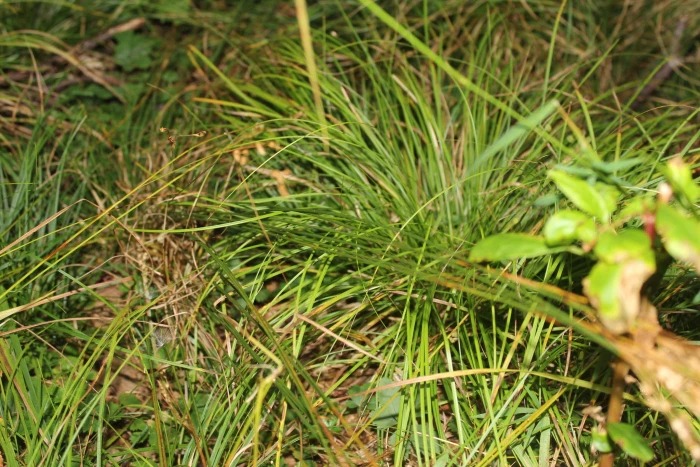
Lopsided Rush (Juncus secundus)
/



Alex Karasoulos
CC BY 4.0

Image By:
Alex Karasoulos
Recorded By:
Copyright:
CC BY 4.0
Copyright Notice:
Photo by: Alex Karasoulos | License Type: CC BY 4.0 | License URL: http://creativecommons.org/licenses/by/4.0/ | Rights Holder: Alex Karasoulos | Publisher: iNaturalist | Date Created: 2023-09-06T17:47:04-07:00 |





Summary
Juncus secundus, commonly known as lopsided rush, is a perennial herb native to wetlands, marshes, and along streambanks in eastern North America. It has been introduced to Primorsky Krai in Russia. It grows in consistently moist, nutrient-rich environments. Lopsided rush reaches up to 24 inches in height and forms dense clumps of slender, cylindrical stems. The inflorescence is subtle, with clusters of small, greenish-brown flowers that appear in late spring to summer. The flowers are not particularly showy but are interesting upon close inspection.
This rush is valued for its ability to stabilize soil and contribute to the ecological health of wetland areas. It is often used in restoration projects and naturalized plantings. In cultivation, Juncus secundus requires consistently wet soil and full sun to part shade conditions. It is relatively low-maintenance, but gardeners should ensure it does not dry out. While not commonly affected by diseases, it can suffer in drought conditions. Lopsided rush is not known for aggressive roots, making it a safe choice for natural gardens. CC BY-SA 4.0
This rush is valued for its ability to stabilize soil and contribute to the ecological health of wetland areas. It is often used in restoration projects and naturalized plantings. In cultivation, Juncus secundus requires consistently wet soil and full sun to part shade conditions. It is relatively low-maintenance, but gardeners should ensure it does not dry out. While not commonly affected by diseases, it can suffer in drought conditions. Lopsided rush is not known for aggressive roots, making it a safe choice for natural gardens. CC BY-SA 4.0
Plant Description
- Plant Type: Grass
- Height: 1-4 feet
- Width: 0.5-1 feet
- Growth Rate: Moderate
- Flower Color: N/A
- Flowering Season: Spring
- Leaf Retention: Evergreen
Growth Requirements
- Sun: Full Sun, Part Shade
- Drainage: Fast, Medium
Common Uses
Bird Garden, Deer Resistant, Erosion Control, Low Maintenance, Water Garden
Natural Habitat
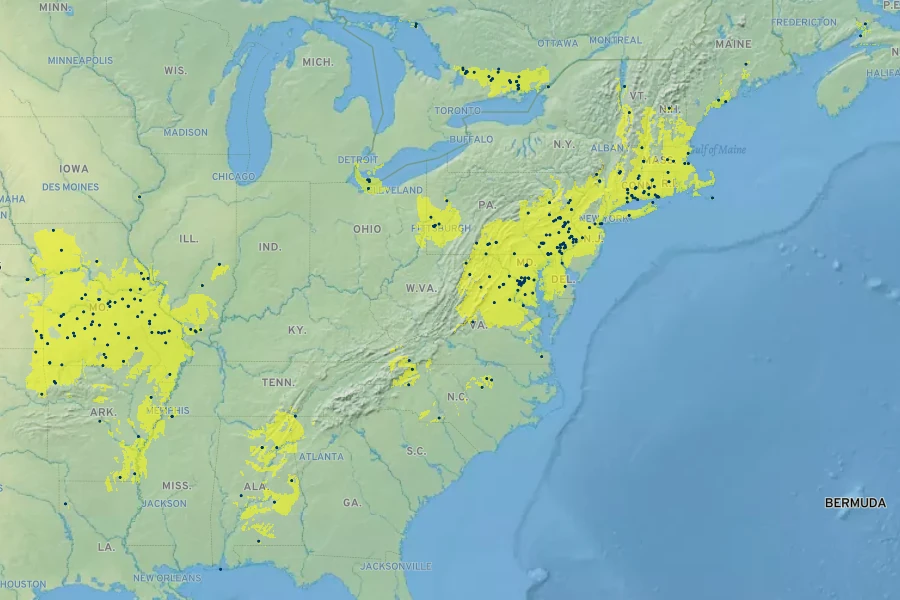
Native to wetlands, marshes, and along streambanks in eastern North America
Other Names
Common Names: Rush, One-Sided Rush, Secund Rush, Blue Rush
Scientific Names: Juncus secundus, Juncus secundus, Juncus tenuis var. secundus
GBIF Accepted Name: Juncus secundus