Man Of The Earth
/
(Ipomoea pandurata)
Man Of The Earth (Ipomoea pandurata)
/


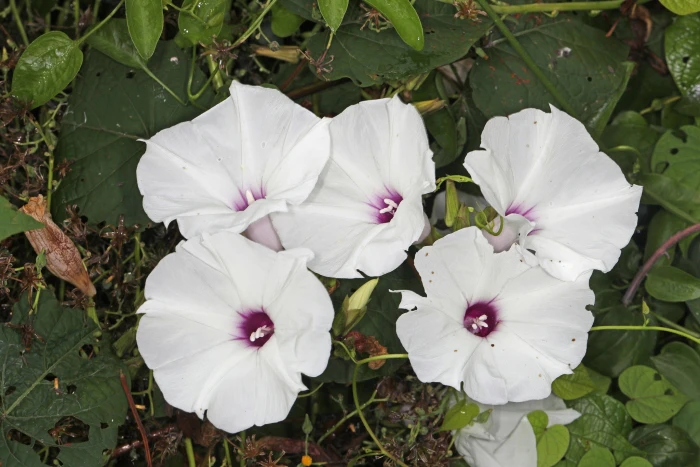

Judy Gallagher
CC BY-SA 4.0

Image By:
Judy Gallagher
Recorded By:
Copyright:
CC BY-SA 4.0
Copyright Notice:
Photo by: Judy Gallagher | License Type: CC BY-SA 4.0 | License URL: http://creativecommons.org/licenses/by-sa/4.0/ | Rights Holder: Judy Gallagher | Publisher: iNaturalist | Date Created: 2021-07-29T09:30:43-07:00 |





Summary
Ipomoea pandurata, commonly known as man of the earth or wild potato vine, is a perennial vine native to open woodlands, prairies, and roadsides across eastern and central North America. It can vigorously climb to lengths of up to 30 feet, featuring large, heart-shaped leaves and showy white flowers with a pinkish-purple throat that bloom from late spring to early fall. The flowers are trumpet-shaped and can be quite attractive to pollinators. The plant also produces large, tuberous roots that resemble sweet potatoes and can be roasted for consumption or utilized for their medicinal properties.
Wild potato vine is valued for its ornamental flowers and can be used to cover trellises, fences, or other structures in the garden. It thrives in full sun to part shade and prefers well-drained soils, although it is adaptable to various soil types. Gardeners should be cautious, as it can become aggressive and may require management to prevent it from overtaking other plants.CC BY-SA 4.0
Wild potato vine is valued for its ornamental flowers and can be used to cover trellises, fences, or other structures in the garden. It thrives in full sun to part shade and prefers well-drained soils, although it is adaptable to various soil types. Gardeners should be cautious, as it can become aggressive and may require management to prevent it from overtaking other plants.CC BY-SA 4.0
Plant Description
- Plant Type: Herb, Vine
- Height: 15-30 feet
- Width: 3-6 feet
- Growth Rate: Rapid
- Flower Color: Pink, Purple, White
- Flowering Season: Spring, Summer, Fall
- Leaf Retention: Deciduous
Growth Requirements
- Sun: Full Sun, Part Shade
- Drainage: Fast, Medium, Slow
Common Uses
Bee Garden, Butterfly Garden, Groundcover, Showy Flowers
Natural Habitat
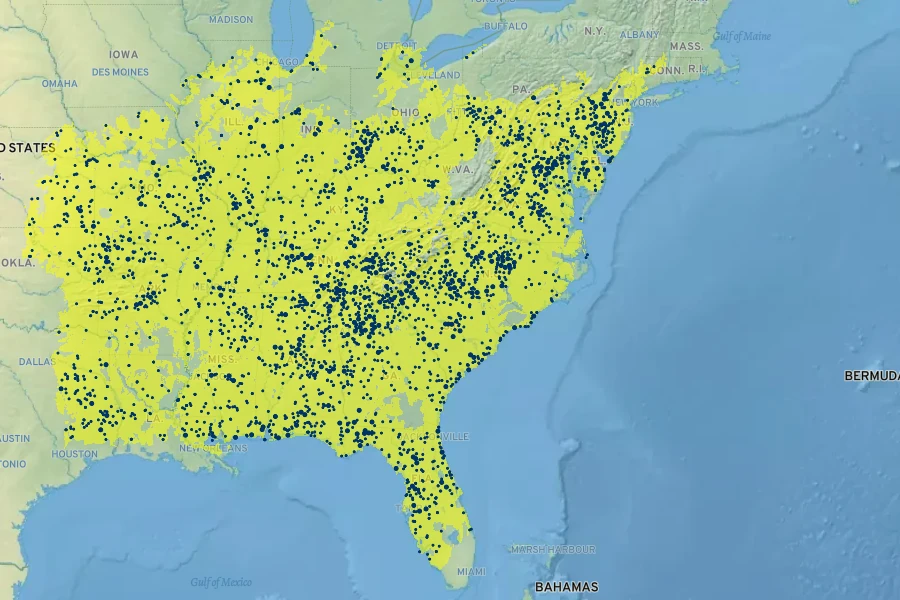
Native to open woodlands, prairies, and roadsides across eastern and central North America
Other Names
Common Names: Manroot, Bigroot Morning-Glory, Wild Potato-Vine, Wild Sweet-Potato Vine
Scientific Names: Ipomoea pandurata, Convolvulus candicans, Convolvulus candicans, Convolvulus ciliolatus, Convolvulus panduratus, Ipomoea candicans, Ipomoea ciliolata, Ipomoea ciliosa, Ipomoea karwinskiana
GBIF Accepted Name: Ipomoea pandurata