Creeping St. John’s-Wort
/
(Hypericum calycinum)
Creeping St. John’s-Wort (Hypericum calycinum)
/


Agnieszka Kwiecień, Nova
CC BY-SA 4.0

Image By:
Agnieszka Kwiecień, Nova
Recorded By:
Copyright:
CC BY-SA 4.0
Copyright Notice:
Photo by: Agnieszka Kwiecień, Nova | License Type: CC BY-SA 4.0 | License URL: https://creativecommons.org/licenses/by-sa/4.0 | Uploader: Nova | Publisher: Wikimedia Commons | Title: Hypericum_calycinum_Dziurawiec_kielichowaty_2019-06-09_03.jpg | Notes: {{Information |Description ={{en|1=Location taken: Fairchild Tropical Botanic Garden, Miami, FL USA. Names: Ilex cassine 'Yellow' Classification: Plantae > Tracheophyta > Spermatopsida > Aquifoliales > Aquifoliaceae





Summary
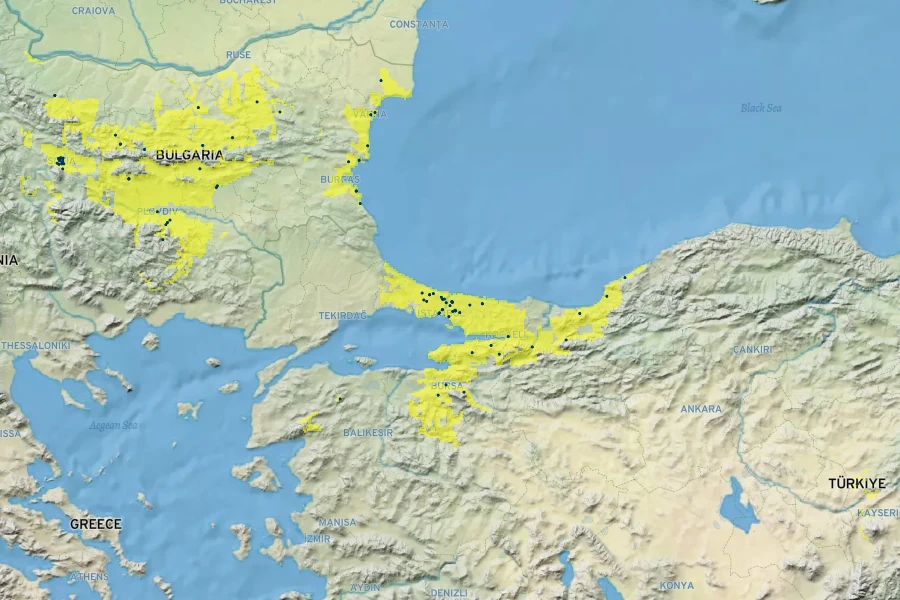
Hypericum calycinum, commonly known as Great St. John's Wort, is an evergreen subshrub native to open woodlands and dry rocky areas in the Balkans and Turkey. This low-growing plant typically reaches 1 m in height and spreads 1–2 m wide, with a creeping habit that makes it an effective ground cover. The ovate leaves are a vibrant green in full sun, turning yellow-green in shade, with a blue-green underside that shifts to purple in the fall. Its large, showy yellow flowers, 3–5 cm in diameter with five petals and numerous stamens, bloom from June to September, resembling single roses or in small clusters.
Great St. John's Wort is valued for its ornamental flowers, evergreen foliage, and low maintenance requirements, making it suitable for ground cover, soil stabilization on slopes, and border planting in Mediterranean climates. It thrives in full sun to part shade and prefers well-drained acidic soils, although it is adaptable to a range of soil types, including sandy and loamy. Rapid growth through underground stems can lead to invasiveness, particularly in California. To manage its spread and invasiveness, it is recommended to cut the plant back each spring. Gardeners should be aware of its invasive potential and check local regulations before planting. It has the potential to become invasive and is reported invasive in some areas of California due to rapid stoloniferous spread.CC BY-SA 4.0
Great St. John's Wort is valued for its ornamental flowers, evergreen foliage, and low maintenance requirements, making it suitable for ground cover, soil stabilization on slopes, and border planting in Mediterranean climates. It thrives in full sun to part shade and prefers well-drained acidic soils, although it is adaptable to a range of soil types, including sandy and loamy. Rapid growth through underground stems can lead to invasiveness, particularly in California. To manage its spread and invasiveness, it is recommended to cut the plant back each spring. Gardeners should be aware of its invasive potential and check local regulations before planting. It has the potential to become invasive and is reported invasive in some areas of California due to rapid stoloniferous spread.CC BY-SA 4.0
Plant Description
- Plant Type: Shrub
- Height: 0.8-1 feet
- Width: 1.5-2 feet
- Growth Rate: Rapid
- Flower Color: Yellow
- Flowering Season: Summer
- Leaf Retention: Evergreen
Growth Requirements
- Sun: Full Sun, Part Shade
- Drainage: Fast, Medium, Slow
Common Uses
Bank Stabilization, Bee Garden, Bird Garden, Border Plant, Butterfly Garden, Deer Resistant, Drought Tolerant, Erosion Control, Groundcover, Low Maintenance, Rock Garden, Showy Flowers, Street Planting
Natural Habitat
Open woodlands and dry rocky areas in the Balkans and Turkey
Other Names
Common Names: Aaron’s Beard, Rose-Of-Sharon, Great Saint John’s Wort, Jerusalem Star, Großblumiges Johanniskraut, Großblütiges Johanniskraut, Millepertuis À Calice Persistant, Millepertuis À Grandes Fleurs, Prakthyperikum
Scientific Names: Rose-of-Sharon
GBIF Accepted Name: Hypericum calycinum L.