Siebold’s Plantain Lily
/
(Hosta sieboldiana)
Siebold’s Plantain Lily (Hosta sieboldiana)
/



Eddie Johnston
CC BY-SA 4.0

Image By:
Eddie Johnston
Recorded By:
Copyright:
CC BY-SA 4.0
Copyright Notice:
Photo by: Eddie Johnston | License Type: CC BY-SA 4.0 | License URL: https://creativecommons.org/licenses/by-sa/4.0 | Uploader: LavaLampBamboo | Publisher: Wikimedia Commons | Title: Hosta_sieboldiana_Kew_Gardens_flowers.jpg | Notes: User created page with UploadWizard |






Summary
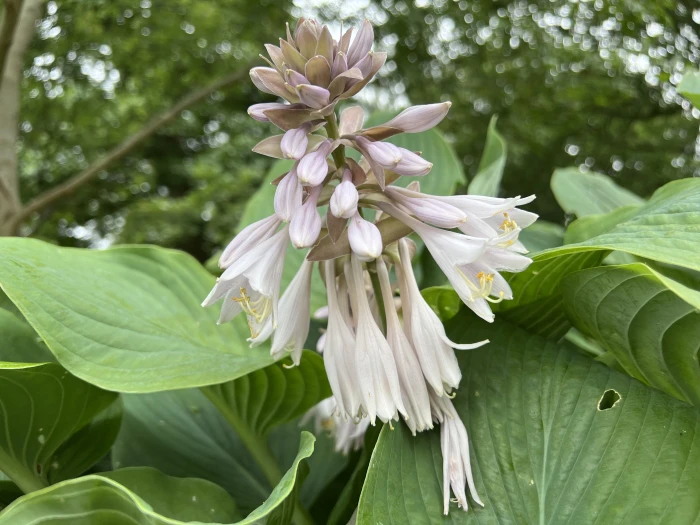
Hosta sieboldiana, commonly known as Hosta or Siebold’s Plantain Lily, is a deciduous perennial herb native to the forest margins and open woodlands of Japan. It typically grows to a height of 2 feet (0.6 meters) and spreads 4-5 feet (1.2-1.5 meters) wide. Hosta sieboldiana has a mounded form with large, heart-shaped, blue-green leaves that can provide a striking texture contrast in the garden. The plant produces tall flower stalks bearing bell-shaped purple and white flowers in the summer, which are moderately showy and can attract pollinators such as bees.
This species is valued for its foliage, which can add a lush, cooling effect to garden spaces, especially in shaded areas. It is commonly used in border plantings, as a ground cover, or in woodland gardens. Hosta sieboldiana is relatively low maintenance, requiring consistent moisture but is tolerant of a range of soil types, provided they are well-draining. The cultivar ’Elegans’ is particularly noted for its large, blue-gray leaves that can add a dramatic presence. While generally disease-resistant, Hosta sieboldiana can be susceptible to slugs and snails, which may damage the leaves. It is also important to note that all parts of the plant are toxic if ingested by pets or humans.CC BY-SA 4.0
This species is valued for its foliage, which can add a lush, cooling effect to garden spaces, especially in shaded areas. It is commonly used in border plantings, as a ground cover, or in woodland gardens. Hosta sieboldiana is relatively low maintenance, requiring consistent moisture but is tolerant of a range of soil types, provided they are well-draining. The cultivar ’Elegans’ is particularly noted for its large, blue-gray leaves that can add a dramatic presence. While generally disease-resistant, Hosta sieboldiana can be susceptible to slugs and snails, which may damage the leaves. It is also important to note that all parts of the plant are toxic if ingested by pets or humans.CC BY-SA 4.0
Plant Description
- Plant Type: Herb
- Height: 1.5-2 feet
- Width: 4-5 feet
- Growth Rate: Slow
- Flower Color: Purple, White
- Flowering Season: Summer
- Leaf Retention: Deciduous
Growth Requirements
- Sun: Part Shade, Full Shade
- Drainage: Fast, Medium, Slow
Common Uses
Bee Garden, Bird Garden, Border Plant, Butterfly Garden, Edible*Disclaimer: Easyscape's listed plant edibility is for informational use. Always verify the safety and proper identification of any plant before consumption., Hummingbird Garden, Low Maintenance
Natural Habitat
Forest margins and open woodlands of Japan
Other Names
Common Names: Siebold's Plantain Lily
Scientific Names: Hosta sieboldiana, Funkia sieboldiana, Funkia ovata var. albomarginata, Funkia sieboldii, Funkia umbellata, Hosta caerulea f. albomarginata, Niobe sieboldiana, Saussurea sieboldiana
GBIF Accepted Name: Hosta sieboldiana (Hook.) Engl.