Gray Sedge
/
(Graphephorum canescens)
Gray Sedge (Graphephorum canescens)
/


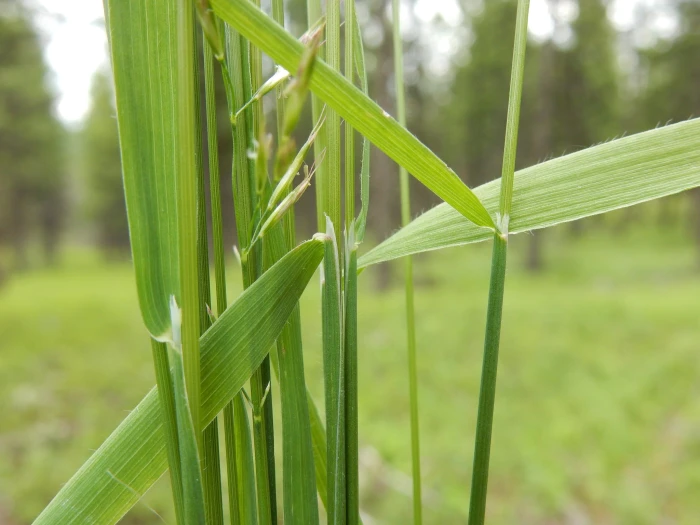

© Matt Lavin
CC BY 4.0

Image By:
© Matt Lavin
Recorded By:
Copyright:
CC BY 4.0
Copyright Notice:
Photo by: © Matt Lavin | License Type: CC BY 4.0 | License URL: http://creativecommons.org/licenses/by/4.0/ | Uploader: mattlavin | Publisher: iNaturalist |





Summary
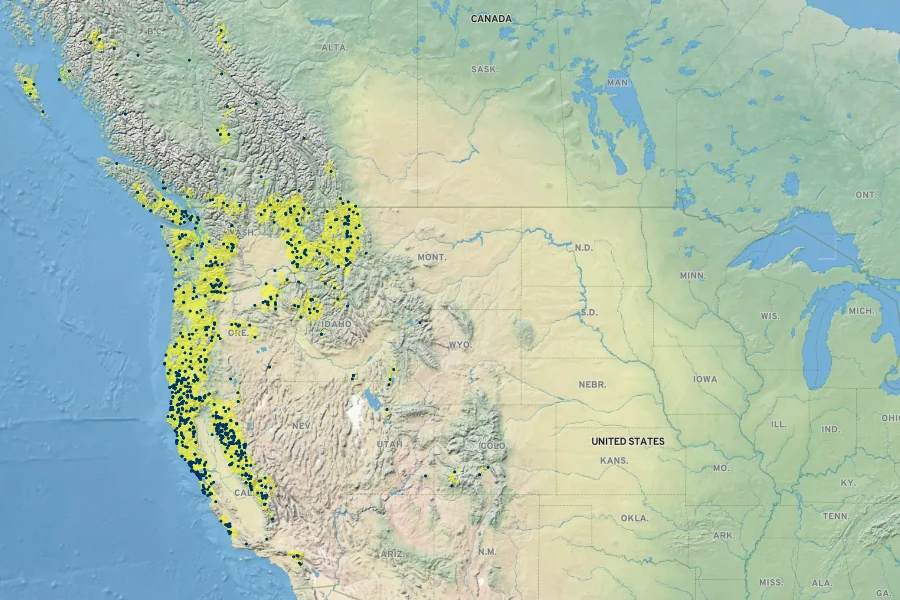
Graphephorum canescens, commonly known as Gray Sedge or Hoary Grass, is a perennial grass native to temperate and boreal regions of North America, particularly thriving in wet meadows, bogs, moist forests, and along streambanks. It typically grows at a moderate rate to a height of 1.5-2.5 feet (0.46-0.76 meters) and a width of 1-2 feet (0.3-0.6 meters). This grass features arching, bluish-green foliage and produces brown, inconspicuous flowers that bloom in the summer, followed by seed heads that may persist into fall, providing visual interest and food for wildlife.
Gray Sedge is valued for its ability to stabilize soil and its adaptability to wet conditions, making it suitable for rain gardens, water features, and naturalized areas. It is also used in restoration projects and as a ground cover in moist, shaded gardens. While it prefers full sun or part shade, it is tolerant of a range of light conditions. This sedge thrives in medium or slow-draining clay, loam, or sandy soils, and requires medium to high amounts of water, reflecting its natural affinity for moist habitats. It is generally low-maintenance, but can spread if conditions are ideal, which should be considered when planting in smaller spaces.CC BY-SA 4.0
Gray Sedge is valued for its ability to stabilize soil and its adaptability to wet conditions, making it suitable for rain gardens, water features, and naturalized areas. It is also used in restoration projects and as a ground cover in moist, shaded gardens. While it prefers full sun or part shade, it is tolerant of a range of light conditions. This sedge thrives in medium or slow-draining clay, loam, or sandy soils, and requires medium to high amounts of water, reflecting its natural affinity for moist habitats. It is generally low-maintenance, but can spread if conditions are ideal, which should be considered when planting in smaller spaces.CC BY-SA 4.0
Plant Description
- Plant Type: Grass
- Height: 1.5-2.5 feet
- Width: 1-2 feet
- Growth Rate: Moderate
- Flower Color: N/A
- Flowering Season: Summer
- Leaf Retention: Deciduous
Growth Requirements
- Sun: Full Sun, Part Shade
- Drainage: Medium, Slow, Standing
Common Uses
Border Plant, Low Maintenance, Water Garden
Natural Habitat
Temperate and boreal regions of North America, particularly in wet meadows, bogs, moist forests, and along streambanks
Other Names
Common Names: Hoary Grass
Scientific Names: Graphephorum canescens, Helictotrichon canescens, Trisetum canescens, Trisetum canescens f. tonsum, Trisetum canescens f. velutinum, Trisetum cernuum subsp. canescens, Trisetum cernuum var. canescens, Trisetum elatum, Trisetum elatum
GBIF Accepted Name: Graphephorum canescens