Hungarian Gentian
/
(Gentiana pannonica)
Hungarian Gentian (Gentiana pannonica)
/


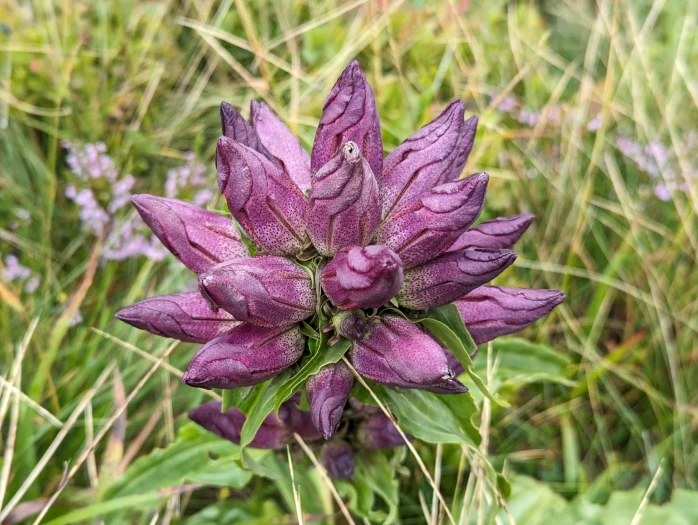

Elias
CC BY 4.0

Image By:
Elias
Recorded By:
Copyright:
CC BY 4.0
Copyright Notice:
Photo by: Elias | License Type: CC BY 4.0 | License URL: http://creativecommons.org/licenses/by/4.0/ | Rights Holder: Elias | Publisher: iNaturalist | Date Created: 2023-08-06T12:40:41-07:00 |





Summary
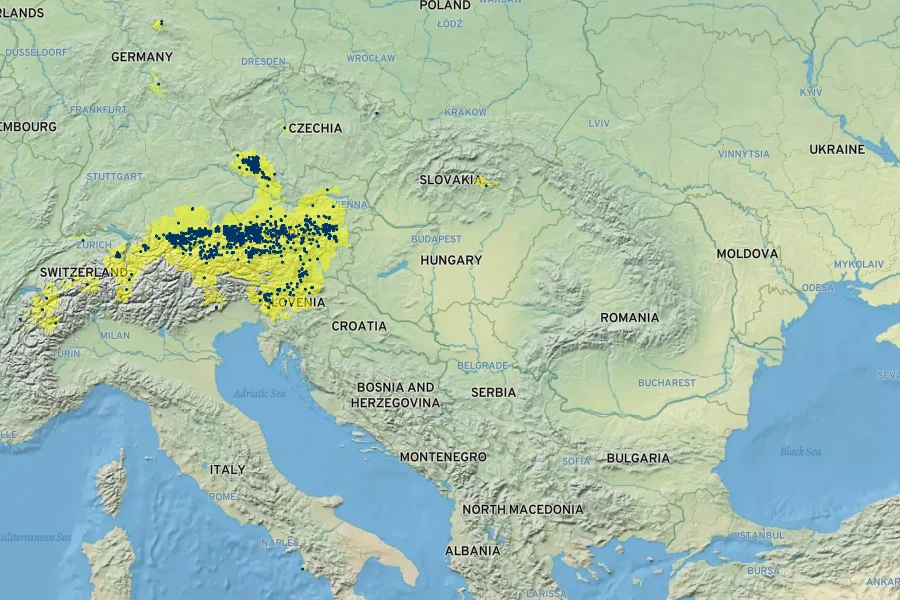
Gentiana pannonica, commonly known as Hungarian gentian or brown gentian, is a perennial herb native to the mountainous regions of Central and Eastern Europe, including the Eastern Alps, Bergamasque Alps, Carpathians, and Transylvania. It typically grows 8 to 24 inches tall with upright, strong stems and hairless above-ground parts. Hungarian gentian is characterized by its striking flowers, which appear from July to September. The blooms are radially symmetrical with green fused sepals and bell-shaped corollas that are red and violet with distinctive black and red spots on the outside and a yellowish hue inside, making them quite showy.
This species is valued for its ornamental flowers and is used in rock gardens, alpine collections, and as a border plant in gardens that can replicate its native alpine conditions. It requires well-drained, calcareous soils and prefers full sun to partial shade. While it is relatively low maintenance, it does not tolerate wet soils in the winter. Hungarian gentian is considered "near threatened" due to historical overharvesting for medicinal uses, as it contains bitter compounds that are thought to stimulate digestion. Gardeners should be aware of its conservation status and source plants responsibly.CC BY-SA 4.0
This species is valued for its ornamental flowers and is used in rock gardens, alpine collections, and as a border plant in gardens that can replicate its native alpine conditions. It requires well-drained, calcareous soils and prefers full sun to partial shade. While it is relatively low maintenance, it does not tolerate wet soils in the winter. Hungarian gentian is considered "near threatened" due to historical overharvesting for medicinal uses, as it contains bitter compounds that are thought to stimulate digestion. Gardeners should be aware of its conservation status and source plants responsibly.CC BY-SA 4.0
Plant Description
- Plant Type: Herb
- Height: 0.5-1 feet
- Width: 0.5-1 feet
- Growth Rate: Slow
- Flower Color: Blue
- Flowering Season: Summer
- Leaf Retention: Deciduous
Growth Requirements
- Sun: Full Sun, Part Shade
- Drainage: Medium
Common Uses
Border Plant, Butterfly Garden, Low Maintenance, Rock Garden
Natural Habitat
Native to alpine and subalpine meadows in the mountainous regions of Central and Eastern Europe, particularly in calcareous soils
Other Names
Common Names: Hungarian Gentian, Pannonian Gentian
Scientific Names: Gentiana pannonica, Coilantha pannonica, Gentiana pannonica var. ronnigeri, Gentiana pannonica var. semifida, Gentiana punctata, Gentiana punctata subsp. pannonica, Gentiana purpurea, Gentiana purpurea var. pannonica, Gentiana semifida
GBIF Accepted Name: Gentiana pannonica