Texas Bedstraw
/
(Galium texense)
Texas Bedstraw (Galium texense)
/


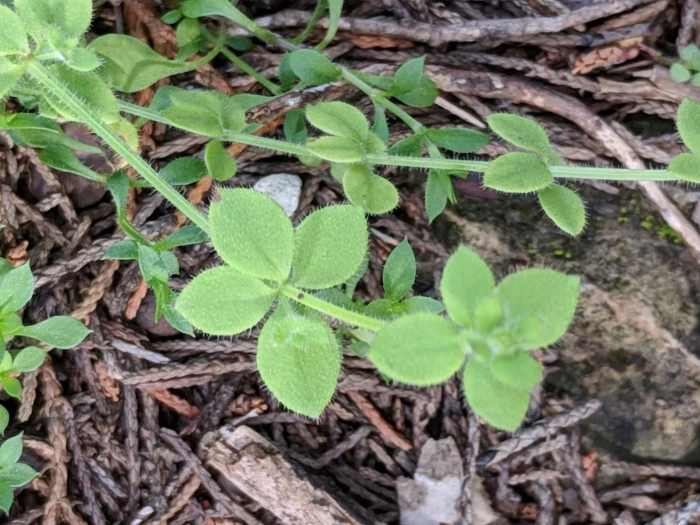

Alison Northup
CC BY 4.0

Image By:
Alison Northup
Recorded By:
Copyright:
CC BY 4.0
Copyright Notice:
Photo by: Alison Northup | License Type: CC BY 4.0 | License URL: http://creativecommons.org/licenses/by/4.0/ | Rights Holder: Alison Northup | Publisher: iNaturalist | Date Created: 2019-02-23T14:20-08:00 |





Summary
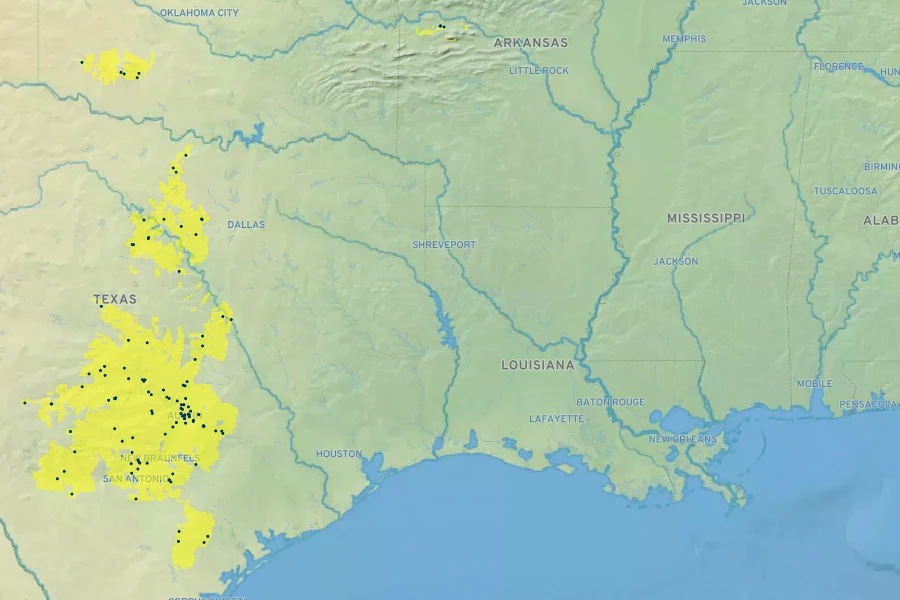
Galium texense, commonly known as Texas bedstraw, is a perennial herb native to open woodlands, grasslands, and rocky areas in Texas, Oklahoma, and Arkansas. It typically grows to a height of 12-18 inches (30-45 centimeters) and spreads to form a mat-like ground cover. Texas bedstraw features small, star-shaped, white to greenish flowers that bloom from April to June, which are not particularly showy but do attract pollinators. The plant’s foliage is whorled with narrow leaves, and it may produce small, globular fruits.
Texas bedstraw is valued for its ability to cover ground quickly, making it a suitable choice for erosion control and as a filler in garden beds or borders. It is also used in xeriscaping due to its drought tolerance. In cultivation, Texas bedstraw prefers full sun to part shade and well-drained soils, though it is adaptable to various soil types. It is generally low-maintenance. There are no widely recognized cultivars of this species, and it is not known for significant disease or pest problems. However, gardeners should be aware that it can spread vigorously and may need to be managed to prevent unwanted naturalization.CC BY-SA 4.0
Texas bedstraw is valued for its ability to cover ground quickly, making it a suitable choice for erosion control and as a filler in garden beds or borders. It is also used in xeriscaping due to its drought tolerance. In cultivation, Texas bedstraw prefers full sun to part shade and well-drained soils, though it is adaptable to various soil types. It is generally low-maintenance. There are no widely recognized cultivars of this species, and it is not known for significant disease or pest problems. However, gardeners should be aware that it can spread vigorously and may need to be managed to prevent unwanted naturalization.CC BY-SA 4.0
Plant Description
- Plant Type: Herb
- Height: 1-2 feet
- Width: 1-1.5 feet
- Growth Rate: Moderate
- Flower Color: Green, Yellow
- Flowering Season: Spring
- Leaf Retention:
Growth Requirements
- Sun: Full Sun, Part Shade
- Drainage: Medium, Fast
Common Uses
Low Maintenance
Natural Habitat
Native to open woodlands, grasslands, and rocky areas in Texas, Oklahoma, and Arkansas
Other Names
Common Names: Texan Bedstraw
Scientific Names: Galium texense, Galium californicum var. texanum, Galium texanum, Galium uncinulatum
GBIF Accepted Name: Galium texense