Chinese Parasoltree
/
(Firmiana simplex)
Chinese Parasoltree (Firmiana simplex)
/



Melissa McMasters
CC BY 4.0






Summary
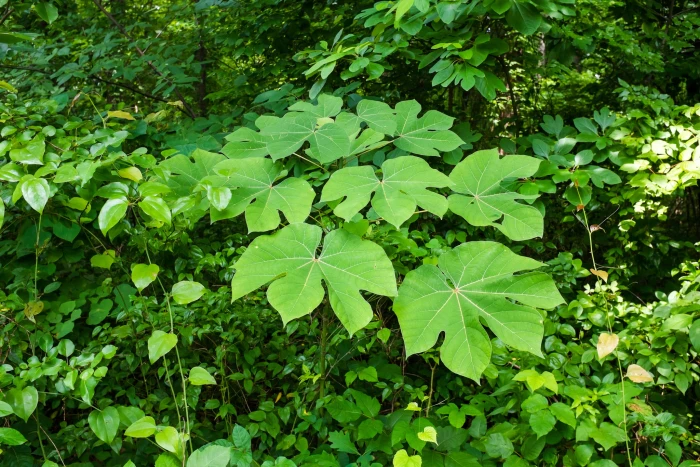
The Chinese Parasoltree is valued for its unique foliage and attractive bark, making it a distinctive choice for urban planting, specimen trees, and large borders. It is adaptable to a range of soil types, preferring full sun to part shade, with slow to medium drainage. While it is not commonly known for any significant disease problems, it can be susceptible to root rot in poorly drained soils. It has been found to become invasive in the southern United States, spreading rapidly along waterways.CC BY-SA 4.0
Plant Description
- Plant Type: Tree
- Height: 30-45 feet
- Width: 20-30 feet
- Growth Rate: Rapid
- Flower Color: Yellow, Green
- Flowering Season: Summer
- Leaf Retention: Deciduous
Growth Requirements
- Sun: Full Sun, Part Shade
- Drainage: Slow, Medium
Common Uses
Edible*Disclaimer: Easyscape's listed plant edibility is for informational use. Always verify the safety and proper identification of any plant before consumption., Fragrant, Low Maintenance
Natural Habitat
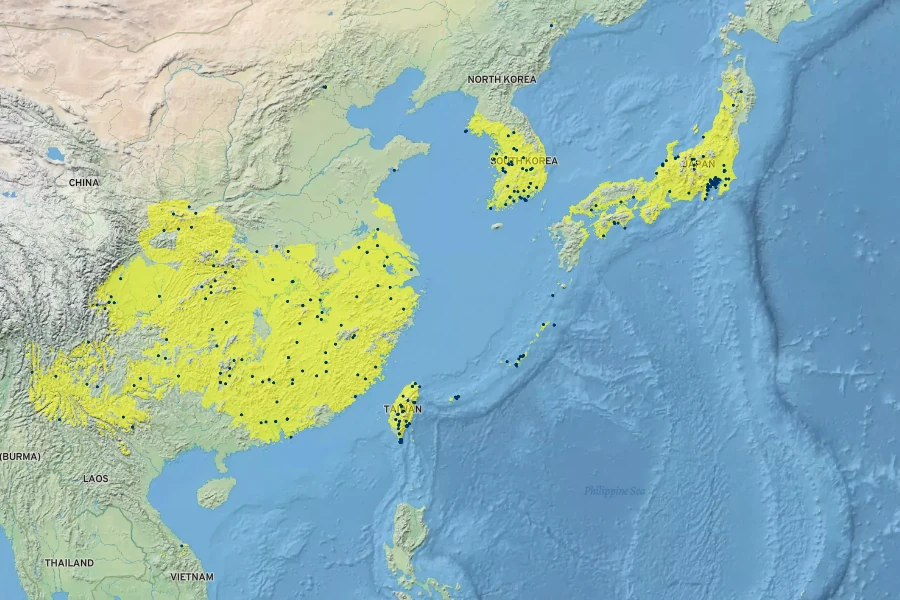
native to open woodlands, forest edges, and limestone hills in China, Korea, Japan, and Taiwan
Other Names
Common Names: Wutong, Chinese-Bottletree, Phoenixtree, Chinese Parasol-Tree, Japanese Varnishtree, Chinesischer Sonnenschirmbaum, 벽오동, Ao-Giri, Byeogodongnamu, Wu Tong
Scientific Names: Firmiana simplex, Sterculia platanifolia, Sterculia tomentosa, Firmiana platanifolia, Firmiana platanifolia f. tomentosa, Hibiscus simplex, Sterculia pyriformis, Sterculia simplex, Caucanthus platanifolia
GBIF Accepted Name: Firmiana simplex (L.) W.Wight