Black-Bindweed
/
(Fallopia convolvulus)
Black-Bindweed (Fallopia convolvulus)
/


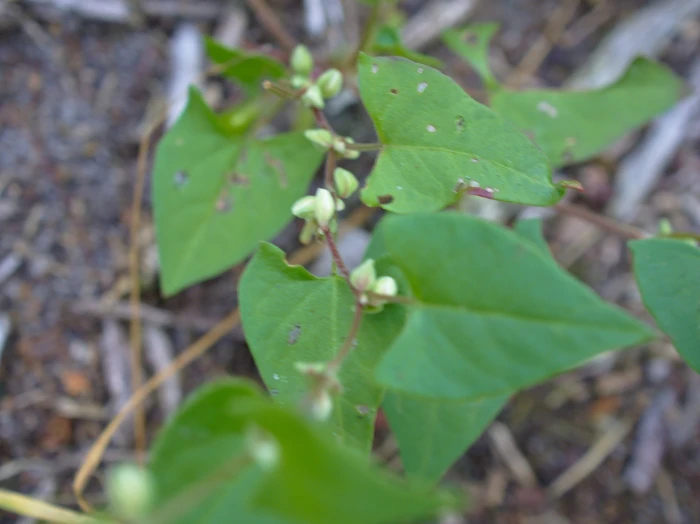

Pierrette Nyssen
CC BY-SA 4.0

Image By:
Pierrette Nyssen
Recorded By:
Copyright:
CC BY-SA 4.0
Copyright Notice:
Photo by: Pierrette Nyssen | License Type: CC BY-SA 4.0 | License URL: http://creativecommons.org/licenses/by-sa/4.0/ | Rights Holder: Pierrette Nyssen | Publisher: iNaturalist | Date Created: 2020-07-29T16:05:54-07:00 |





Summary
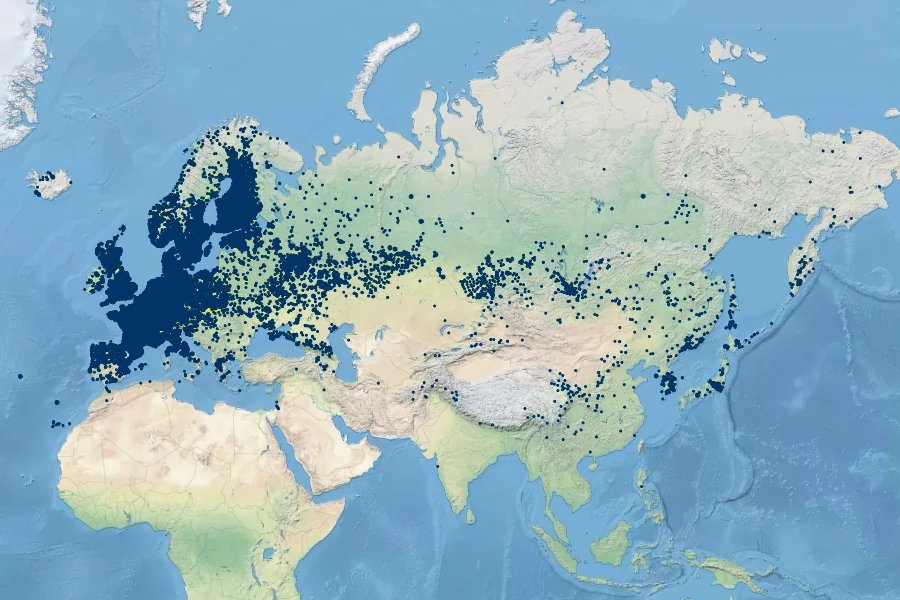
Fallopia convolvulus, commonly known as Black-bindweed or Wild Buckwheat, is a fast-growing annual vine native to a variety of habitats including fields, roadsides, and open woodlands across Europe, Asia, and northern Africa. It can grow up to 59 inches long, with stems that twine clockwise around other plants for support. The leaves are typically triangular to heart-shaped, and the plant produces small, inconspicuous greenish-pink to greenish-white flowers clustered on short racemes during the summer months.
Black-bindweed is not typically cultivated for ornamental purposes due to its invasive nature, but it can be found in wildflower mixes for use in restoration projects or naturalized areas. It thrives in a range of soil types, from clay to sandy loams, and prefers full sun to part shade. While it requires minimal maintenance, it can become problematic if not managed properly, as it competes with crops and other plants for resources. In regions where it is not native, it can be invasive, so it is important to check local regulations before planting. It is invasive in North America, where twining vines foul crops and even clog harvesting machinery.CC BY-SA 4.0
Black-bindweed is not typically cultivated for ornamental purposes due to its invasive nature, but it can be found in wildflower mixes for use in restoration projects or naturalized areas. It thrives in a range of soil types, from clay to sandy loams, and prefers full sun to part shade. While it requires minimal maintenance, it can become problematic if not managed properly, as it competes with crops and other plants for resources. In regions where it is not native, it can be invasive, so it is important to check local regulations before planting. It is invasive in North America, where twining vines foul crops and even clog harvesting machinery.CC BY-SA 4.0
Plant Description
- Plant Type: Herb, Vine
- Height: 1.5-3 feet
- Width: 2-3 feet
- Growth Rate: Moderate, Rapid
- Flower Color: Pink, White
- Flowering Season: Summer, Fall
- Leaf Retention:
Growth Requirements
- Sun: Full Sun
- Drainage: Medium, Fast
Common Uses
Erosion Control, Low Maintenance
Natural Habitat
Native to fields, roadsides, and open woodlands across Europe, Asia, and northern Africa
Other Names
Common Names: Black-bindweed, Climbing Buckwheat, Cornbind, Wild Buckwheat
Scientific Names: Fallopia convolvulus, Bilderdykia convolvulus, Bilderdykia convolvulus var. laevis, Bilderdykia convolvulus var. pumilio, Bilderdykia convolvulus var. scabra, Fagopyrum carinatum, Fagopyrum convolvulus, Fagopyrum convolvulus, Fagopyrum volubile
GBIF Accepted Name: Fallopia convolvulus