Tufted Poppy
/
(Eschscholzia caespitosa)
Tufted Poppy (Eschscholzia caespitosa)
/


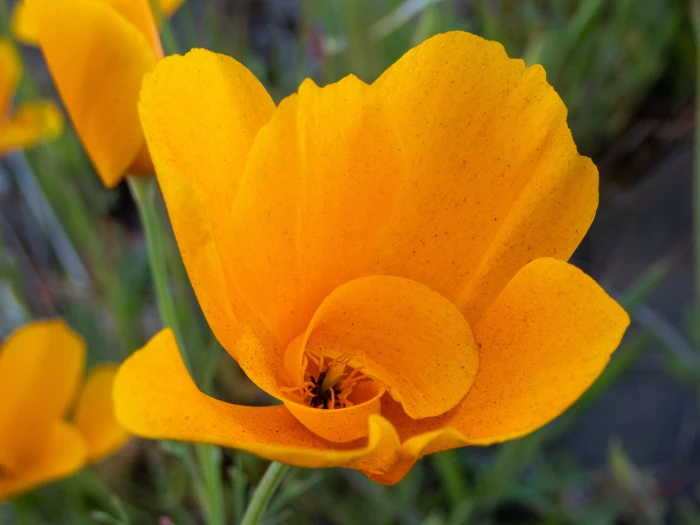

Will Sides
CC BY 4.0

Image By:
Will Sides
Recorded By:
Copyright:
CC BY 4.0
Copyright Notice:
Photo by: Will Sides | License Type: CC BY 4.0 | License URL: http://creativecommons.org/licenses/by/4.0/ | Rights Holder: Will Sides | Publisher: iNaturalist | Date Created: 2021-03-27T16:48:46-07:00 |





Summary
Eschscholzia caespitosa, commonly known as Tufted Poppy, is an annual herb native to open grasslands, rocky slopes, and well-drained soils of chaparral ecosystems in California and Oregon. It bears a resemblance to its relative, the California poppy, and is known for its tufted growth habit. This plant reaches up to 30 centimeters (11+5⁄6 inches) in height and produces a basal rosette of blue-green foliage with several leaflets per leaf. The flowers, borne on thin, erect stems, showcase vibrant orange to yellow petals each 1 to 2+1⁄2 centimeters (1⁄3 to 1 inch) long and bloom from mid-spring to early summer. The fruit is a slender cylindrical capsule 4 to 8 centimeters (1+1⁄2 to 3+1⁄6 inches) long, containing tiny dark netted seeds.
Tufted Poppy is valued for its drought tolerance and ability to self-seed, making it an excellent choice for wildflower meadows, rock gardens, and naturalized areas. It is often used to add splashes of color in xeriscaping and requires minimal maintenance once established. In cultivation, it thrives in full sun and well-drained soils, tolerating low to medium water conditions. While it is not prone to many diseases, overwatering can lead to root rot. It is important to note that Tufted Poppy can spread readily by seed, so gardeners should consider its potential to naturalize in certain areas.CC BY-SA 4.0
Tufted Poppy is valued for its drought tolerance and ability to self-seed, making it an excellent choice for wildflower meadows, rock gardens, and naturalized areas. It is often used to add splashes of color in xeriscaping and requires minimal maintenance once established. In cultivation, it thrives in full sun and well-drained soils, tolerating low to medium water conditions. While it is not prone to many diseases, overwatering can lead to root rot. It is important to note that Tufted Poppy can spread readily by seed, so gardeners should consider its potential to naturalize in certain areas.CC BY-SA 4.0
Plant Description
- Plant Type: Herb
- Height: 1-1.5 feet
- Width: 0.5-0.8 feet
- Growth Rate: Rapid
- Flower Color: Yellow
- Flowering Season: Spring, Summer
- Leaf Retention:
Growth Requirements
- Sun: Full Sun
- Drainage: Fast
Common Uses
Bank Stabilization, Bee Garden, Bird Garden, Border Plant, Butterfly Garden, Deer Resistant, Drought Tolerant, Fragrant, Groundcover, Low Maintenance, Potted Plant, Salt Tolerant, Showy Flowers, Street Planting
Natural Habitat
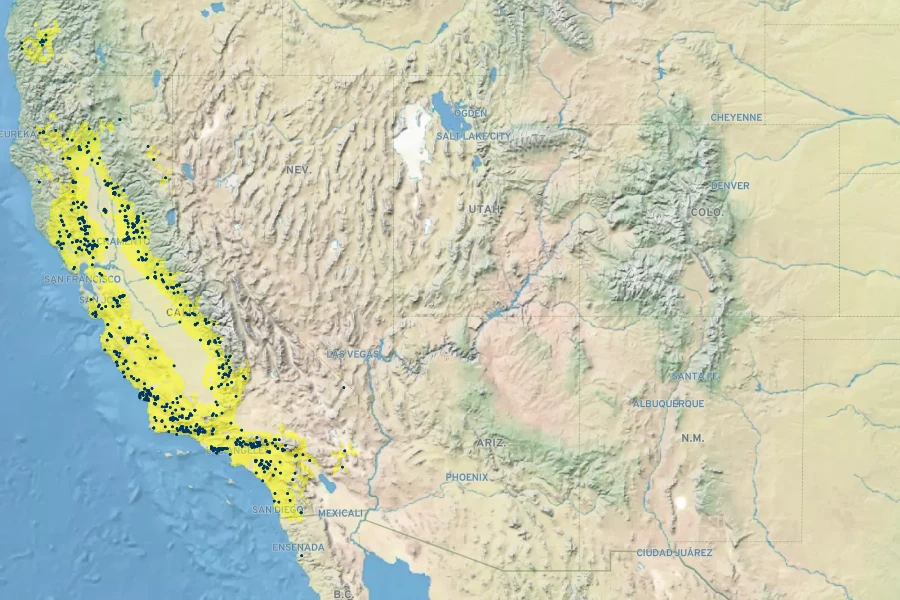
Open grasslands, rocky slopes, and chaparral ecosystems in California and Oregon
Other Names
Common Names: Tufted Poppy, Collarless California Poppy, Tufted California-Poppy, Tuvad Sömntuta, Tufted Eschscholzia
Scientific Names: Eschscholzia caespitosa, Eschscholzia caespitosa subsp. caespitosa, Eschscholzia caruifolia var. cyathifera, Eschscholzia formosa var. urocalyx, Eschscholzia caespitosa var. caespitosa, Chryseis caespitosa
GBIF Accepted Name: Eschscholzia caespitosa Benth.