Canary Wallflower
/
(Erysimum cuspidatum)
Canary Wallflower (Erysimum cuspidatum)
/


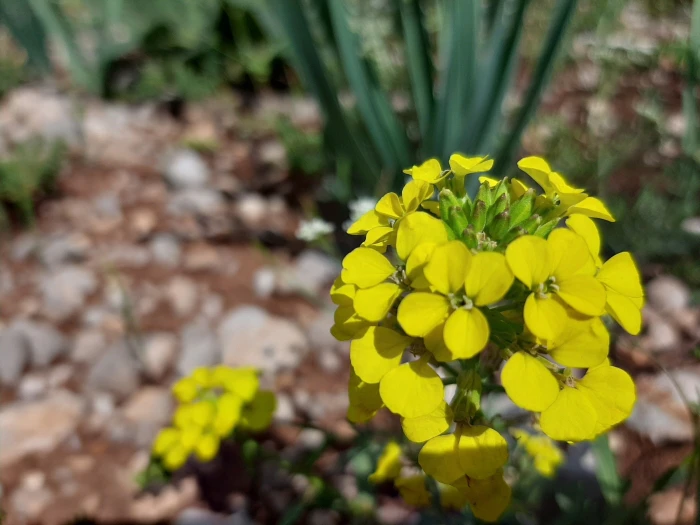

© Serdar Ölez
CC BY-SA 4.0

Image By:
© Serdar Ölez
Recorded By:
Copyright:
CC BY-SA 4.0
Copyright Notice:
Photo by: © Serdar Ölez | License Type: CC BY-SA 4.0 | License URL: http://creativecommons.org/licenses/by-sa/4.0/ | Uploader: gezenadam | Publisher: iNaturalist |





Summary
Erysimum cuspidatum, commonly known as Canary Wallflower or Moroccan Wallflower, is a biennial herb that is native to the Mediterranean. It thrives in a wide range of habitats including rocky slopes, fallow fields, and coastal areas, where it is adapted to the Mediterranean climate. It typically grows to a height and width of 1-2 feet (0.3-0.6 meters). The plant features narrow, lance-shaped leaves and erect stems. Its bright yellow flowers are highly showy and fragrant, blooming profusely from late winter to early summer, adding a splash of color to gardens during these seasons.
The Canary Wallflower is valued for its vibrant flowers and extended blooming period, making it a popular choice for ornamental borders, rock gardens, and as a bedding plant. It is drought-tolerant once established, requiring minimal maintenance, which makes it suitable for xeriscaping. While it prefers full sun, it can tolerate light shade and is adaptable to a variety of well-drained soils, including clay, loam, and sandy types. Regular deadheading can encourage more blooms. It is not commonly afflicted by diseases or pests, but it can suffer from root rot if overwatered or planted in poorly drained soils.CC BY-SA 4.0
The Canary Wallflower is valued for its vibrant flowers and extended blooming period, making it a popular choice for ornamental borders, rock gardens, and as a bedding plant. It is drought-tolerant once established, requiring minimal maintenance, which makes it suitable for xeriscaping. While it prefers full sun, it can tolerate light shade and is adaptable to a variety of well-drained soils, including clay, loam, and sandy types. Regular deadheading can encourage more blooms. It is not commonly afflicted by diseases or pests, but it can suffer from root rot if overwatered or planted in poorly drained soils.CC BY-SA 4.0
Plant Description
- Plant Type: Shrub, Herb, Subshrub
- Height: 1-2 feet
- Width: 1-2 feet
- Growth Rate: Moderate
- Flower Color: Yellow
- Flowering Season: Spring, Summer
- Leaf Retention: Deciduous
Growth Requirements
- Sun: Full Sun
- Drainage: Fast, Medium
Common Uses
Border Plant, Butterfly Garden, Drought Tolerant, Fragrant, Low Maintenance, Rock Garden
Natural Habitat
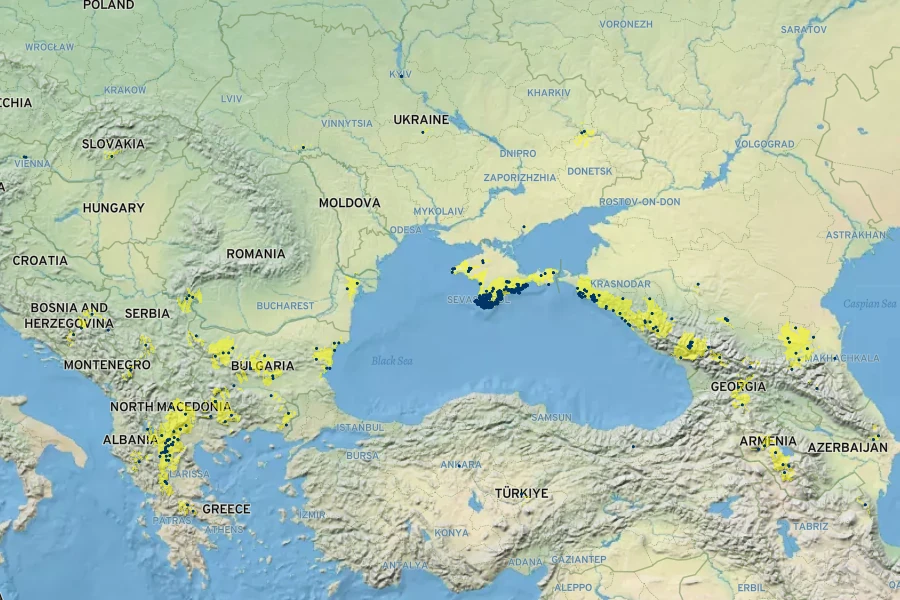
Native to rocky slopes, fallow fields, and coastal areas of the Mediterranean
Other Names
Common Names: Moroccan Wallflower
Scientific Names: Erysimum cuspidatum, Acachmena cuspidata, Cheiranthus bithynicus, Cheiranthus cuspidatus, Cheiranthus planifolius, Cheiranthus planifolius, Cheiranthus taraxacifolius, Cheiranthus taraxacifolius, Cheirinia cuspidata, Crucifera cuspidata
GBIF Accepted Name: Erysimum cuspidatum