Western Needlegrass
/
(Eriocoma occidentalis)
Western Needlegrass (Eriocoma occidentalis)
/


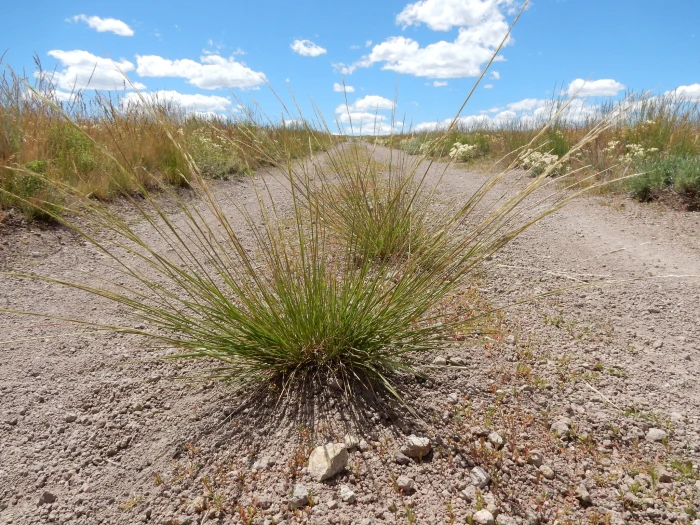

Matt Lavin
CC BY 4.0

Image By:
Matt Lavin
Recorded By:
Copyright:
CC BY 4.0
Copyright Notice:
Photo by: Matt Lavin | License Type: CC BY 4.0 | License URL: http://creativecommons.org/licenses/by/4.0/ | Rights Holder: Matt Lavin | Publisher: iNaturalist | Date Created: 2016-07-12T14:28:26-07:00 |





Summary
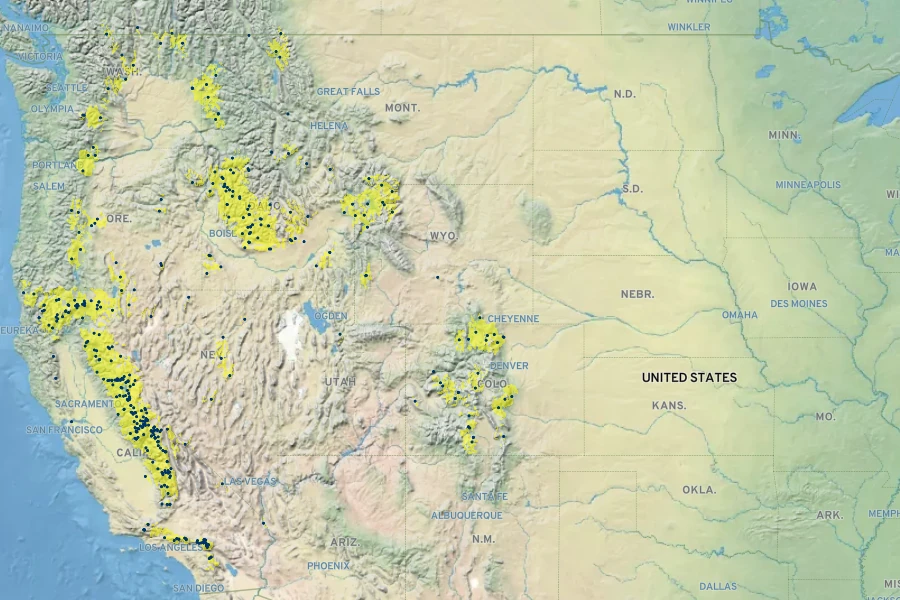
Eriocoma occidentalis, commonly known as Western Needlegrass, is a perennial bunchgrass that is native to a variety of habitats including open woodlands, grasslands, and sagebrush steppe in western North America, from British Columbia to California, and east to Colorado and Arizona, as well as northeastern Mexico. It forms tight clumps of erect stems that can reach up to 47 inches tall, with fine, hairlike leaves and a long, showy inflorescence that blooms from late spring to early summer. The flowers are typically a muted color, blending with the grass’s natural environment, but the feathery awns can catch the light and add a subtle beauty to the landscape.
Western Needlegrass is valued for its drought tolerance and ability to thrive in poor soils, making it an excellent choice for restoration projects and naturalized areas. It is also used for erosion control and as a forage grass for livestock. In cultivation, it requires minimal care, thriving in full sun and well-drained soils. While it is not typically used in ornamental gardening, it can be a useful component in a native plant garden or a xeriscape design. Three subspecies are accepted, each adapted to slightly different environmental conditions. Gardeners should be aware that this grass can self-seed and may spread if conditions are favorable.CC BY-SA 4.0
Western Needlegrass is valued for its drought tolerance and ability to thrive in poor soils, making it an excellent choice for restoration projects and naturalized areas. It is also used for erosion control and as a forage grass for livestock. In cultivation, it requires minimal care, thriving in full sun and well-drained soils. While it is not typically used in ornamental gardening, it can be a useful component in a native plant garden or a xeriscape design. Three subspecies are accepted, each adapted to slightly different environmental conditions. Gardeners should be aware that this grass can self-seed and may spread if conditions are favorable.CC BY-SA 4.0
Plant Description
- Plant Type: Grass
- Height: 2-3 feet
- Width: 1-2 feet
- Growth Rate: Moderate
- Flower Color: N/A
- Flowering Season: Spring
- Leaf Retention: Deciduous
Growth Requirements
- Sun: Full Sun
- Drainage: Medium
Common Uses
Drought Tolerant, Erosion Control, Low Maintenance, Street Planting
Natural Habitat
Open woodlands, grasslands, and sagebrush steppe in western North America
Other Names
Common Names: Stiff Needlegrass
Scientific Names: Eriocoma occidentalis, Achnatherum occidentale, Stipa occidentalis, Stipa occidentalis var. montana, Stipa stricta var. sparsiflora
GBIF Accepted Name: Eriocoma occidentalis