Winter Aconite
/
(Eranthis hyemalis)
Winter Aconite (Eranthis hyemalis)
/


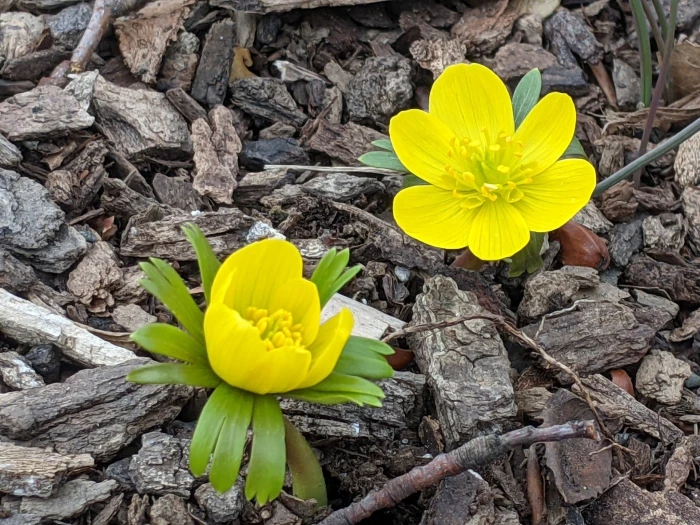

By cgmayers no rights reserved
Public Domain






Summary
Winter Aconite is appreciated for its ease of maintenance and its ability to naturalize, spreading to form a vibrant yellow carpet under trees and shrubs. It is commonly used in rock gardens, woodland gardens, borders, and as a ground cover. It thrives in full sun to part shade and prefers moist, well-drained soils rich in organic matter. It is relatively pest and disease-free but can be susceptible to root rot if grown in poorly drained soils. It can spread readily in favorable conditions and should be monitored in small spaces. CC BY-SA 4.0
Plant Description
- Plant Type: Herb
- Height: 0.3-0.5 feet
- Width: 0.3-0.5 feet
- Growth Rate: Moderate
- Flower Color: Yellow
- Flowering Season: Spring, Winter
- Leaf Retention: Deciduous
Growth Requirements
- Sun: Full Sun, Part Shade
- Drainage: Medium
Common Uses
Bank Stabilization, Bee Garden, Border Plant, Deer Resistant, Drought Tolerant, Groundcover, Low Maintenance, Rabbit Resistant, Rock Garden, Showy Flowers, Street Planting
Natural Habitat
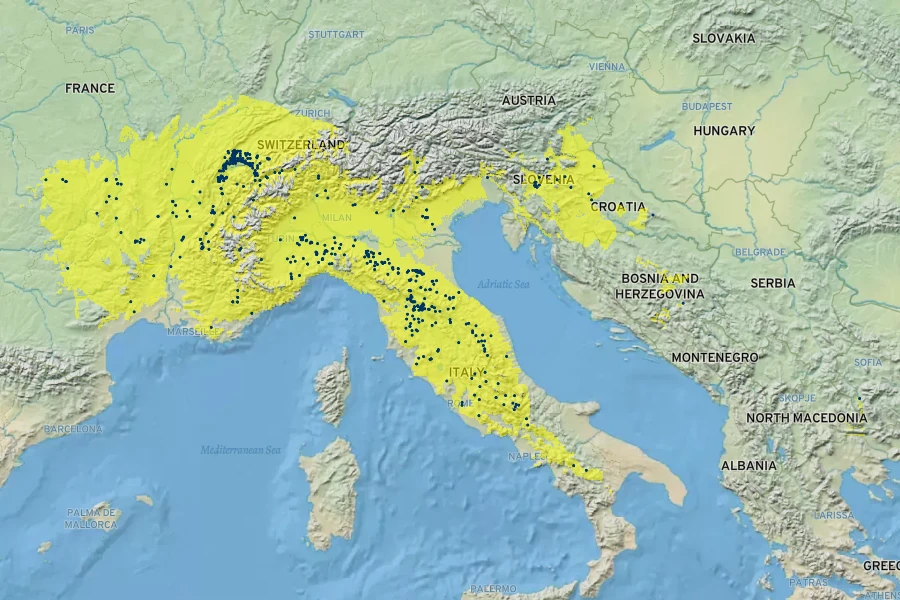
native to woodland margins, open deciduous forests, and shaded riverbanks in Europe
Other Names
Common Names: Winter-Aconite, Winter Hellebore, Almindelig Erantis, Kleiner Winterling, Winterling, Éranthe D’Hiver, Eranthe Dhiver, Winterakoniet, Vintergäck
Scientific Names: Eranthis hyemalis, Eranthis cilicicus, Eranthis tubergenii, Helleborus hyemalis, Eranthis ×tubergenii, Cammarum hyemale, Eranthis bulgarica, Eranthis hyemalis var. bulgarica, Eranthis hyemalis var. cilicica
GBIF Accepted Name: Eranthis hyemalis (L.) Salisb.