Bog Willowherb
/
(Epilobium leptophyllum)
Bog Willowherb (Epilobium leptophyllum)
/


© Derek
CC BY 4.0

Image By:
© Derek
Recorded By:
Copyright:
CC BY 4.0
Copyright Notice:
Photo by: © Derek | License Type: CC BY 4.0 | License URL: http://creativecommons.org/licenses/by/4.0/ | Uploader: calloftheloon | Publisher: iNaturalist |





Summary
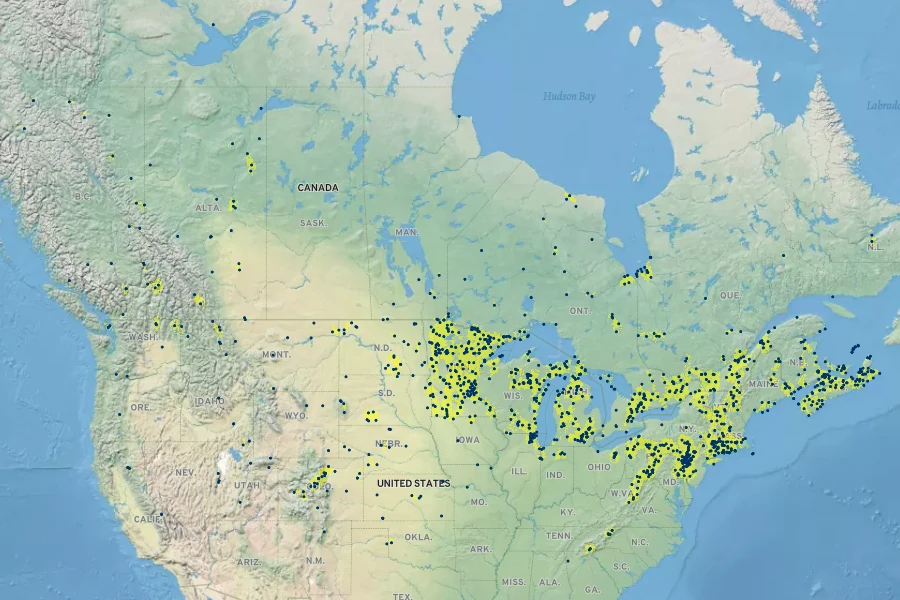
Epilobium leptophyllum, commonly known as bog willowherb or linear-leaved willowherb, is a perennial herb native to wet meadows, marshes, and the edges of ponds and streams in eastern and northern North America. It typically grows up to 1 meter tall and can spread through its tiny stolons, which allow for vegetative propagation. The leaves of bog willowherb are linear, reaching up to 3 inches in length, and the plant produces an inflorescence in the form of a raceme composed of small, delicate flowers with white to pink petals that bloom in the summer months. The fruit is a distinctive hairy, elongated capsule that releases seeds upon maturity.
Bog willowherb is valued for its ability to thrive in wet conditions and is often used in rain gardens or as a part of naturalized wetland plantings. It is also appreciated for its low maintenance requirements and its adaptability to a range of moist soil types. In cultivation, it prefers full sun to part shade and consistently moist to wet soils. While not commonly afflicted by diseases, it can sometimes be susceptible to rust. This plant is not typically associated with aggressive roots, making it a safe choice for gardeners looking to add native wetland species to their landscapes. CC BY-SA 4.0
Bog willowherb is valued for its ability to thrive in wet conditions and is often used in rain gardens or as a part of naturalized wetland plantings. It is also appreciated for its low maintenance requirements and its adaptability to a range of moist soil types. In cultivation, it prefers full sun to part shade and consistently moist to wet soils. While not commonly afflicted by diseases, it can sometimes be susceptible to rust. This plant is not typically associated with aggressive roots, making it a safe choice for gardeners looking to add native wetland species to their landscapes. CC BY-SA 4.0
Plant Description
- Plant Type: Herb
- Height: 1-2.5 feet
- Width: 0.5-1 feet
- Growth Rate: Slow, Moderate
- Flower Color: Pink, Red, White
- Flowering Season: Summer, Fall
- Leaf Retention: Deciduous
Growth Requirements
- Sun: Full Sun, Part Shade
- Drainage: Medium, Slow
Common Uses
Butterfly Garden, Low Maintenance, Water Garden
Natural Habitat
Wet meadows, marshes, and the edges of ponds and streams
Other Names
Common Names: Narrowleaf Willowherb, Linearleaf Willowherb, Linearleaf Willowweed, Narrow-Leaved Willowherb
Scientific Names: Epilobium leptophyllum, Epilobium densum var. nesophilum, Epilobium leptophyllum f. leptophyllum, Epilobium leptophyllum f. umbrosum, Epilobium lineare f. umbrosum, Epilobium nesophilum, Epilobium oliganthum var. gracile, Epilobium palustre var. gracile, Epilobium rosmarinifolium
GBIF Accepted Name: Epilobium leptophyllum