Squirreltail
/
(Elymus elymoides)
Squirreltail (Elymus elymoides)
/


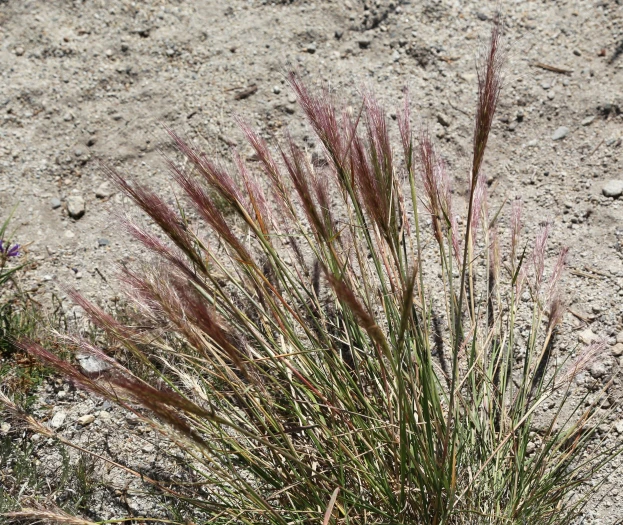

Dcrjsr
CC BY 4.0

Image By:
Dcrjsr
Recorded By:
Copyright:
CC BY 4.0
Copyright Notice:
Photo by: Dcrjsr | License Type: CC BY 4.0 | License URL: https://creativecommons.org/licenses/by/4.0 | Uploader: Dcrjsr | Publisher: Wikimedia Commons | Title: Elymus_elymoides_squirrel-tail_grass_clump_early-red.jpg | Notes: {{Information| |Description=San Gabriel Mts. north of Rancho Cucamonga, CA |Source=Photography by Curtis Clark |Date= |Author=Copyright by Curtis Clark, licensed as noted |Permission={{self|cc-by-sa-2.5}} |other_versions= }} [[Category:Plants of Nor





Summary
Elymus elymoides, commonly known as Squirreltail or Bottlebrush Squirreltail, is a deciduous perennial grass native to a variety of habitats including open woodlands, grasslands, and scrub areas in the Western USA and Canada. It typically grows to around 0.5 meters (20 inches) in height, forming dense tufts. The plant’s erect, solid stems bear flat or rolled leaf blades, contributing to its bunchgrass form. The inflorescence is particularly notable, reaching up to 15 centimeters (5.9 inches) long, stiff and erect, with spikelets one or two centimeters long not counting the awn, which may extend to 9 centimeters and sticks straight out at maturity. This bottlebrush-like appearance not only gives the plant its common name but also aids in wind dispersal of the seeds.
Squirreltail is valued for its drought tolerance and ability to thrive in poor soils, making it an excellent choice for xeriscaping and restoration projects. It is also used to stabilize soils and prevent erosion. In cultivation, it requires full sun, minimal water once established, and well-drained soils.CC BY-SA 4.0
Squirreltail is valued for its drought tolerance and ability to thrive in poor soils, making it an excellent choice for xeriscaping and restoration projects. It is also used to stabilize soils and prevent erosion. In cultivation, it requires full sun, minimal water once established, and well-drained soils.CC BY-SA 4.0
Plant Description
- Plant Type: Grass
- Height: 1-2 feet
- Width: 1-1.5 feet
- Growth Rate: Moderate
- Flower Color: N/A
- Flowering Season: Spring, Summer
- Leaf Retention: Deciduous
Growth Requirements
- Sun: Full Sun
- Drainage: Fast
Common Uses
Bird Garden, Border Plant, Drought Tolerant, Erosion Control, Fire Resistant, Low Maintenance, Potted Plant
Natural Habitat
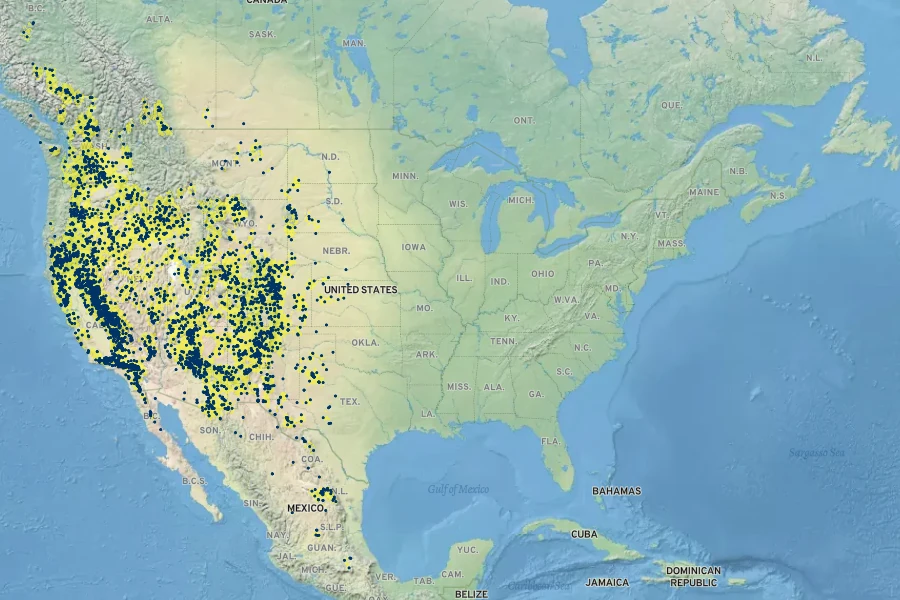
Open woodlands, grasslands, and scrub areas
Other Names
Common Names: Bottlebrush Squirreltail, Common Squirreltail, Long-Bristled Wildrye, Squirreltail Grass, Western Bottlebrush Grass, Élyme Queue-D’Écureuil, Western Bottle-Brush Grass
Scientific Names: Elymus elymoides, Elymus sitanion, Sitanion hystrix var. hystrix, Sitanion elymoides, Hordeum elymoides, Chretomeris trichodes, Chretomeris trichoides, Elymus difformis
GBIF Accepted Name: Elymus elymoides (Raf.) Swezey