Bush’s Purple Coneflower
/
(Echinacea paradoxa)
Bush’s Purple Coneflower (Echinacea paradoxa)
/


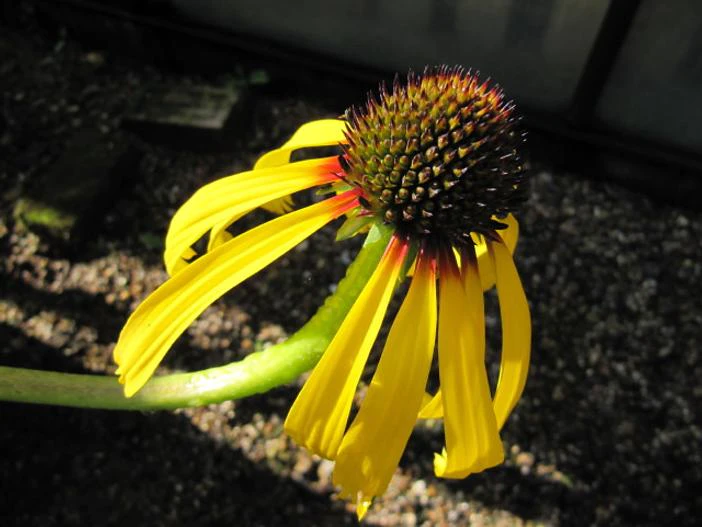

Leonora (Ellie) Enking
CC BY-SA 2.0

Image By:
Leonora (Ellie) Enking
Recorded By:
Copyright:
CC BY-SA 2.0
Copyright Notice:
Photo by: Leonora (Ellie) Enking | License Type: CC BY-SA 2.0 | License URL: https://creativecommons.org/licenses/by-sa/2.0/ | Uploader: wallygrom | Publisher: Flickr



Summary
Echinacea paradoxa, commonly known as Bush’s Purple Coneflower, is a deciduous perennial herb native to the glades and prairies of the Ozark region, specifically in Arkansas, Missouri, and a small part of Oklahoma. It typically grows to a height of 2-3 feet (0.6-0.9 meters) and a width of 1-2 feet (0.3-0.6 meters). This species is unique among coneflowers for its yellow flowers, which bloom in early to mid-summer and are quite showy, attracting pollinators such as bees and butterflies.
Bush’s Purple Coneflower is valued for its striking yellow flowers, which stand out against the more common purple-flowered Echinacea species. It is often used in native plant gardens, perennial borders, and as part of pollinator-friendly landscaping. It thrives in full sun. It prefers well-drained soils and is tolerant of drought, heat, and poor soil conditions. While it is generally low-maintenance, it can be susceptible to aster yellows disease, which causes deformities in the flowers and foliage.CC BY-SA 4.0
Bush’s Purple Coneflower is valued for its striking yellow flowers, which stand out against the more common purple-flowered Echinacea species. It is often used in native plant gardens, perennial borders, and as part of pollinator-friendly landscaping. It thrives in full sun. It prefers well-drained soils and is tolerant of drought, heat, and poor soil conditions. While it is generally low-maintenance, it can be susceptible to aster yellows disease, which causes deformities in the flowers and foliage.CC BY-SA 4.0
Plant Description
- Plant Type: Herb
- Height: 2-3 feet
- Width: 1-1.5 feet
- Growth Rate: Moderate
- Flower Color: Yellow
- Flowering Season: Summer
- Leaf Retention: Deciduous
Growth Requirements
- Sun: Full Sun
- Drainage: Medium
Common Uses
Bee Garden, Bird Garden, Butterfly Garden, Deer Resistant, Drought Tolerant, Fragrant, Hummingbird Garden, Low Maintenance, Rabbit Resistant, Showy Flowers, Street Planting
Natural Habitat
Native to the glades and prairies of the Ozark region
Other Names
Common Names: Yellow Coneflower, Bush’s Purple-Coneflower, Gul Läkerudbeckia
Scientific Names: Echinacea paradoxa, Brauneria paradoxa, Echinacea atrorubens var. paradoxa
GBIF Accepted Name: Echinacea paradoxa (Norton) Britton