Grassland Sundew
/
(Drosera hookeri)
Grassland Sundew (Drosera hookeri)
/


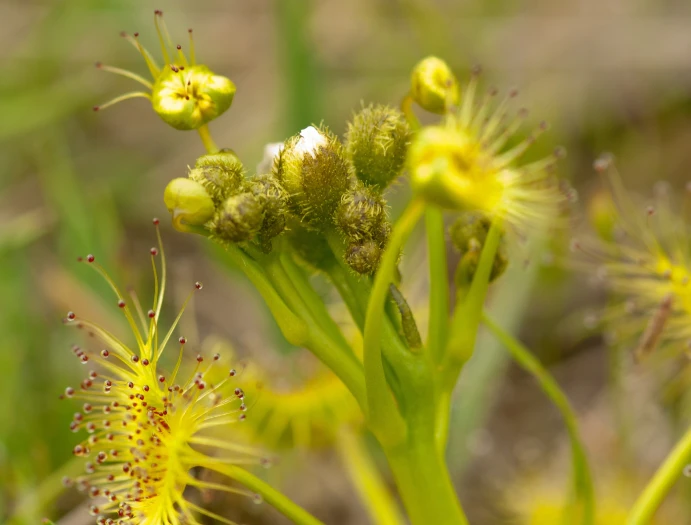

MFdeS
CC BY-SA 3.0

Image By:
MFdeS
Recorded By:
Copyright:
CC BY-SA 3.0
Copyright Notice:
Photo by: MFdeS | License Type: CC BY-SA 3.0 | License URL: https://creativecommons.org/licenses/by-sa/3.0 | Uploader: MFdeS | Publisher: Wikimedia Commons | Title: Drosera_hookeri_flower_bud_detail.jpg | Notes: {{Information |Description = Kamm-Wurmfarn (''[[Dryopteris cristata]]'') |Source = photographed by Kristian Peters |Date = created 10.06.2007, Floristentreffen MV 2007 |Author = Kristian Peters -- ~~~~ |Permission = {{GFDL-self}} |other_versions = }} |





Summary
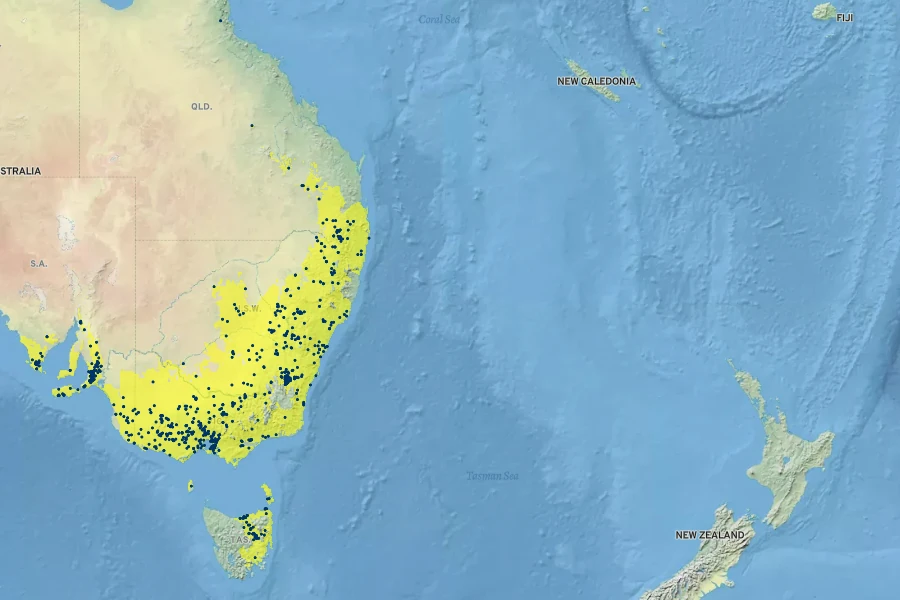
Drosera hookeri, commonly known as Grassland Sundew, is an evergreen perennial herb with tuberous roots, native to the open grasslands and heathlands of Southeastern Australia. It typically forms a rosette of sticky, glandular leaves that are adapted to catch and digest insects, which supplements its nutrient intake in the typically nutrient-poor soils it inhabits. Drosera hookeri reaches a modest size, with leaves spreading out to about 4 inches (10 cm) in diameter. It produces small, striking white and pink flowers that bloom in the spring and are quite showy given the plant’s overall size.
The Grassland Sundew is valued for its unique insectivorous habit and the delicate beauty of its carnivorous leaves, which are covered in red glandular tentacles that glisten in the sunlight. It is often used in cultivation for bog gardens, terrariums, or as a curiosity in plant collections. It prefers acidic, sandy, or peaty soils that are low in nutrients. While it can tolerate full sun, it also grows well in part shade. There are no popular garden cultivars, but the species itself is a conversation starter due to its carnivorous nature. Potential problems include root rot if overwatered or if the soil is not well-draining enough.CC BY-SA 4.0
The Grassland Sundew is valued for its unique insectivorous habit and the delicate beauty of its carnivorous leaves, which are covered in red glandular tentacles that glisten in the sunlight. It is often used in cultivation for bog gardens, terrariums, or as a curiosity in plant collections. It prefers acidic, sandy, or peaty soils that are low in nutrients. While it can tolerate full sun, it also grows well in part shade. There are no popular garden cultivars, but the species itself is a conversation starter due to its carnivorous nature. Potential problems include root rot if overwatered or if the soil is not well-draining enough.CC BY-SA 4.0
Plant Description
- Plant Type: Herb
- Height: 0.2-0.5 feet
- Width: 0.1-0.4 feet
- Growth Rate: Slow
- Flower Color: White, Pink
- Flowering Season: Spring
- Leaf Retention: Evergreen
Growth Requirements
- Sun: Full Sun, Part Shade
- Drainage: Medium
Common Uses
Low Maintenance, Potted Plant
Natural Habitat
native to the open grasslands and heathlands of Southeastern Australia
Other Names
Common Names: Sundews
Scientific Names: Drosera hookeri, Drosera peltata var. foliosa
GBIF Accepted Name: Drosera hookeri R.P.Gibson, B.J.Conn & Conran