Western Arctic Shootingstar
/
(Dodecatheon frigidum)
Western Arctic Shootingstar (Dodecatheon frigidum)
/



Jason Grant
CC BY 4.0

Image By:
Jason Grant
Recorded By:
Copyright:
CC BY 4.0
Copyright Notice:
Photo by: Jason Grant | License Type: CC BY 4.0 | License URL: http://creativecommons.org/licenses/by/4.0/ | Rights Holder: Jason Grant | Publisher: iNaturalist | Date Created: 2016-07-06T15:14:31-07:00 |





Summary
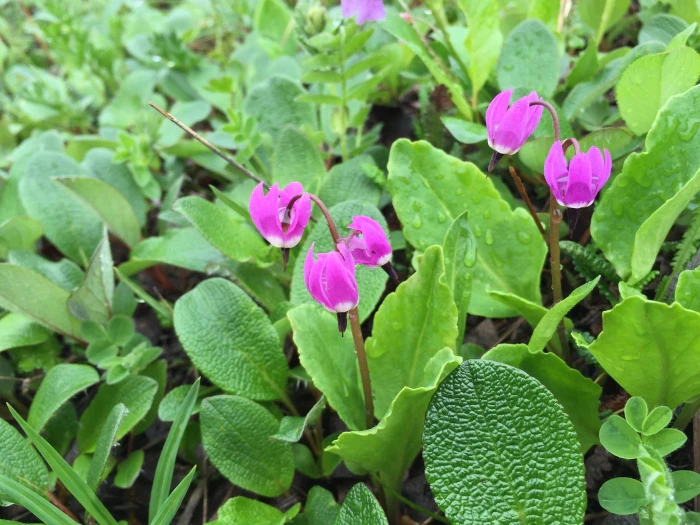
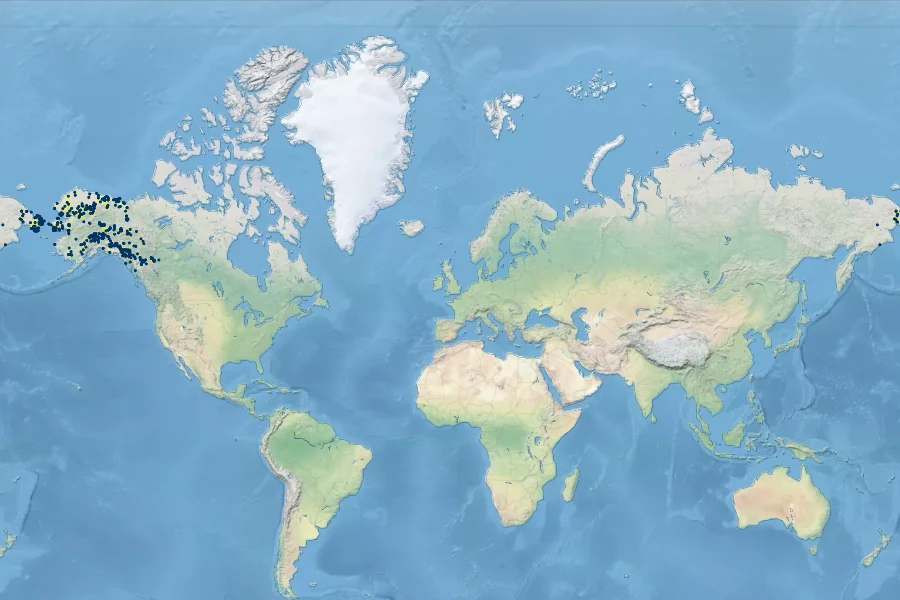
Dodecatheon frigidum, commonly known as the western arctic shootingstar, is an herbaceous perennial that is native to the tundra and subalpine meadows of northwestern North America and Asiatic Russia. It is a charming plant that grows up to 16 inches tall and spreads via underground rhizomes. Each shoot can produce 2-7 striking pink to magenta flowers with a white center, which bloom from late spring to early summer. The flowers are pendulous, with reflexed petals, giving them a distinctive shooting star appearance. The western arctic shootingstar is commonly found across much of Alaska, as well as in Yukon, Northwest Territories, British Columbia, northern Saskatchewan, and the Russian Far East, where it thrives in moist, cool environments.
In cultivation, Dodecatheon frigidum is valued for its unique floral display and is often used in rock gardens, woodland gardens, and borders. It prefers consistently moist soils and can tolerate wet conditions, making it suitable for planting near water features or in bog gardens. It requires part shade to full shade and benefits from the protection of taller plants or a northern exposure. While it is not a high-maintenance plant, it does require adequate moisture and should not be allowed to dry out. There are no major disease issues, but slugs can sometimes be a problem. This plant is generally well-behaved in the garden setting.CC BY-SA 4.0
In cultivation, Dodecatheon frigidum is valued for its unique floral display and is often used in rock gardens, woodland gardens, and borders. It prefers consistently moist soils and can tolerate wet conditions, making it suitable for planting near water features or in bog gardens. It requires part shade to full shade and benefits from the protection of taller plants or a northern exposure. While it is not a high-maintenance plant, it does require adequate moisture and should not be allowed to dry out. There are no major disease issues, but slugs can sometimes be a problem. This plant is generally well-behaved in the garden setting.CC BY-SA 4.0
Plant Description
- Plant Type: Herb
- Height: 0.5-1 feet
- Width: 0.5-1 feet
- Growth Rate: Moderate
- Flower Color: Pink, Purple, White
- Flowering Season: Spring, Summer
- Leaf Retention: Semi-deciduous
Growth Requirements
- Sun: Full Sun
- Drainage: Medium
Common Uses
Border Plant, Butterfly Garden, Low Maintenance, Water Garden
Natural Habitat
Native to tundra and subalpine meadows in northwestern North America and Asiatic Russia
Other Names
Common Names: Northern Shooting Star, Frigid Shooting Star
Scientific Names: Dodecatheon frigidum, Dodecatheon meadia var. frigidum, Primula frigida
GBIF Accepted Name: Dodecatheon frigidum