Fuller’s Teasel
/
(Dipsacus sativus)
Fuller’s Teasel (Dipsacus sativus)
/



lazarus
CC BY 4.0

Image By:
lazarus
Recorded By:
Copyright:
CC BY 4.0
Copyright Notice:
Photo by: lazarus | License Type: CC BY 4.0 | License URL: http://creativecommons.org/licenses/by/4.0/ | Rights Holder: lazarus | Publisher: iNaturalist | Date Created: 2015-10-18T12:30:23-07:00 |



Summary
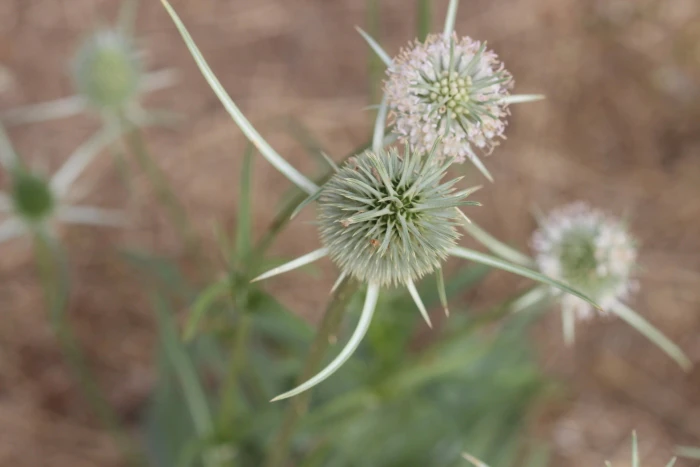
Dipsacus sativus, commonly known as Fuller’s Teasel, Indian Teasel, or Wild Teasel, is a deciduous biennial herb. It is native to grasslands, woodlands, and riparian zones in Europe and Asia. The plant typically grows at a moderate rate to a height of 4.25-6 feet (1.3-1.8 meters) and a width of 1.75-3.25 feet (0.5-1 meter). Fuller’s Teasel has a distinctive appearance with prickly stems and leaves, and it produces tall flower heads with spiny bracts and purple flowers that are quite showy when they bloom in the summer. The flower heads are often dried and used in floral arrangements.
Fuller’s Teasel is valued for its unique flower heads, which can add architectural interest to gardens. It is also historically significant for its use in the textile industry, where the dried heads were used to raise the nap on fabrics. In cultivation, it requires full sun, and it can grow in a variety of soil types, including clay, loam, or sandy soils with medium drainage. While it can be a striking addition to wildflower gardens and naturalized areas, it is important to be aware of its invasive potential. In some regions, it has escaped cultivation and can outcompete native plants.CC BY-SA 4.0
Fuller’s Teasel is valued for its unique flower heads, which can add architectural interest to gardens. It is also historically significant for its use in the textile industry, where the dried heads were used to raise the nap on fabrics. In cultivation, it requires full sun, and it can grow in a variety of soil types, including clay, loam, or sandy soils with medium drainage. While it can be a striking addition to wildflower gardens and naturalized areas, it is important to be aware of its invasive potential. In some regions, it has escaped cultivation and can outcompete native plants.CC BY-SA 4.0
Plant Description
- Plant Type: Herb
- Height: 4.25-6 feet
- Width: 1.75-3.25 feet
- Growth Rate: Moderate
- Flower Color: Purple, White
- Flowering Season: Summer, Fall
- Leaf Retention: Deciduous
Growth Requirements
- Sun: Full Sun
- Drainage: Medium
Common Uses
Border Plant
Natural Habitat
Grasslands, woodlands, and riparian zones in Europe and Asia
Other Names
Common Names: Indian Teasel, Wild Teasel, Card’s Thistle
Scientific Names: Dipsacus sativus, Dipsacus fullonum, Dipsacus fullonum, Dipsacus fullonum subsp. fullonum, Dipsacus fullonum subsp. sativus, Dipsacus fullonum subsp. sativus, Dipsacus fullonum var. sativus, Dipsacus fullonum var. sativus, Dipsacus fullonum var. sativus
GBIF Accepted Name: Dipsacus sativus