Cleveland’s Bush Monkeyflower
/
(Diplacus clevelandii)
Cleveland’s Bush Monkeyflower (Diplacus clevelandii)
/


Eric Alan Isaacson
CC BY 4.0

Image By:
Eric Alan Isaacson
Recorded By:
Copyright:
CC BY 4.0
Copyright Notice:
Photo by: Eric Alan Isaacson | License Type: CC BY 4.0 | License URL: http://creativecommons.org/licenses/by/4.0/ | Rights Holder: Eric Alan Isaacson | Publisher: iNaturalist | Date Created: 2023-06-11T18:46:22Z |





Summary
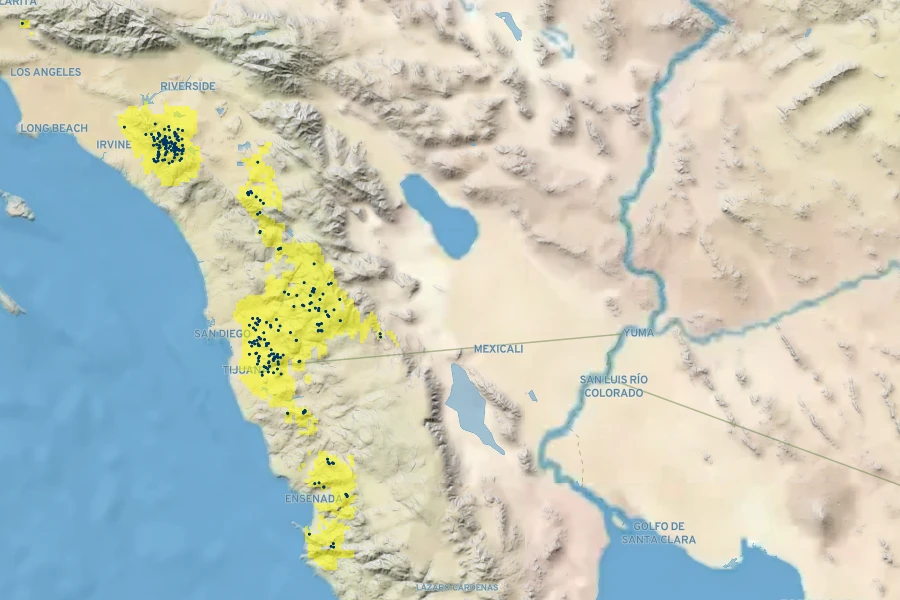
Diplacus clevelandii, commonly known as Cleveland’s bush monkeyflower, is a perennial shrub native to the coastal sage scrub and chaparral of southern California and northern Baja California, often found in the Peninsular Ranges. It is a member of the Phrymaceae family and thrives in well-drained soils within its native range. Cleveland’s bush monkeyflower typically grows up to 3 feet tall with hairy, erect stems. The lance-shaped leaves can reach up to 4 inches in length. From April to June, it produces showy, tubular bright yellow flowers that attract pollinators such as hummingbirds and bees.
In cultivation, Cleveland’s bush monkeyflower is valued for its drought tolerance and vibrant flowers, making it a suitable choice for xeriscaping, native plant gardens, and wildlife habitats. It prefers full sun to partial shade and requires little water once established, reflecting its adaptation to the dry Mediterranean climate of its native habitat. While it is generally low-maintenance, it can be susceptible to fungal diseases if conditions are too moist. Gardeners should ensure good air circulation and avoid overhead watering to prevent issues.CC BY-SA 4.0
In cultivation, Cleveland’s bush monkeyflower is valued for its drought tolerance and vibrant flowers, making it a suitable choice for xeriscaping, native plant gardens, and wildlife habitats. It prefers full sun to partial shade and requires little water once established, reflecting its adaptation to the dry Mediterranean climate of its native habitat. While it is generally low-maintenance, it can be susceptible to fungal diseases if conditions are too moist. Gardeners should ensure good air circulation and avoid overhead watering to prevent issues.CC BY-SA 4.0
Plant Description
- Plant Type: Shrub, Herb
- Height: 1-3 feet
- Width: 1-3 feet
- Growth Rate: Moderate
- Flower Color: Yellow
- Flowering Season: Spring, Summer
- Leaf Retention: Evergreen
Growth Requirements
- Sun: Full Sun, Part Shade
- Drainage: Medium, Fast
Common Uses
Bee Garden, Bird Garden, Butterfly Garden, Drought Tolerant, Low Maintenance
Natural Habitat
Coastal sage scrub and chaparral of southern California and northern Baja California
Other Names
Common Names: Cleveland’s Monkeyflower, San Diego Bush Monkeyflower, San Diego Monkeyflower
Scientific Names: Diplacus clevelandii, Mimulus cleavelandii, Mimulus clevelandii
GBIF Accepted Name: Diplacus clevelandii