Sheathed Cholla
/
(Cylindropuntia tunicata)
Sheathed Cholla (Cylindropuntia tunicata)
/


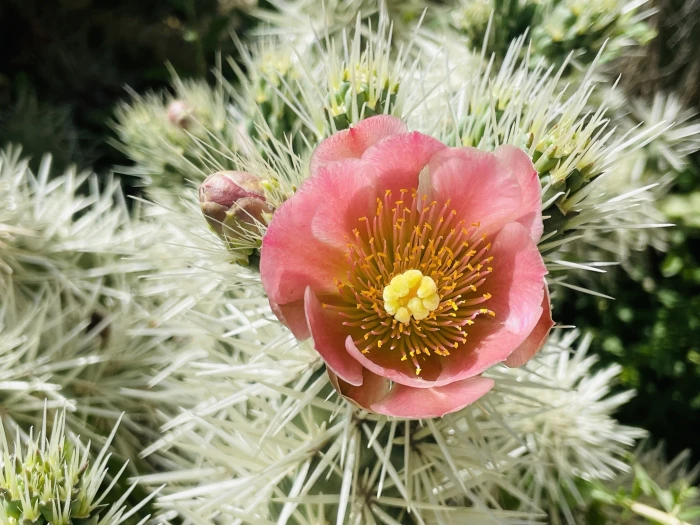

© Francisco E. Fonturbel
CC BY 4.0

Image By:
© Francisco E. Fonturbel
Recorded By:
Copyright:
CC BY 4.0
Copyright Notice:
Photo by: © Francisco E. Fonturbel | License Type: CC BY 4.0 | License URL: http://creativecommons.org/licenses/by/4.0/ | Uploader: fonturbel | Publisher: iNaturalist |





Summary
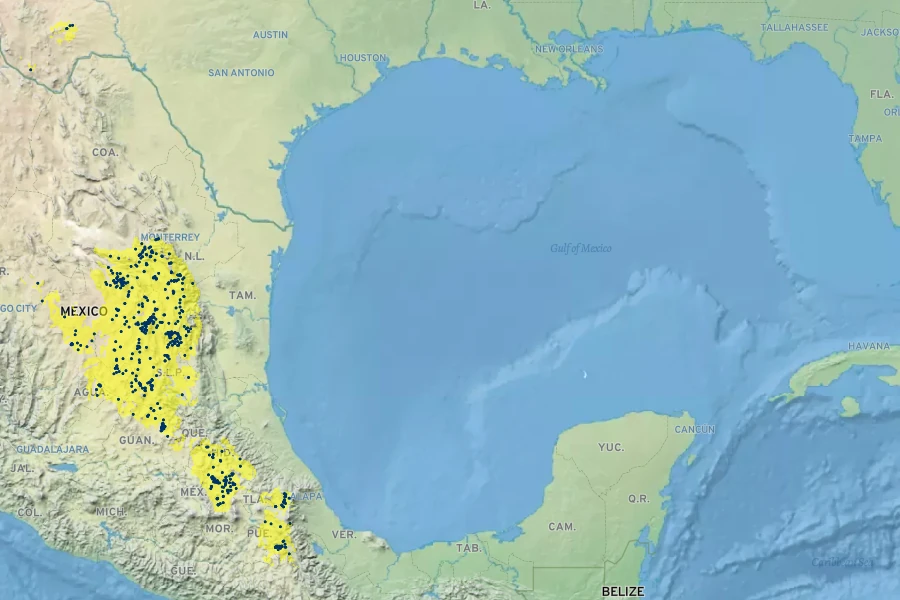
Cylindropuntia tunicata, commonly known as sheathed cholla and also referred to as Brown-spined Hudson pear, is a perennial shrub that is part of the cactus family. It is native to arid and semi-arid regions, specifically the Chihuahuan Desert of North America. This cactus typically grows in open areas, desert grasslands, and rocky slopes. It can reach heights of 3 to 5 feet (0.9 to 1.5 meters) and has a distinctive appearance with segmented branches covered in a sheath of tan to brown spines that can be up to 3 inches long.
Sheathed cholla is known for its resilience in harsh desert conditions, requiring minimal water and thriving in well-drained sandy or gravelly soils. It prefers full sun exposure. The plant produces greenish-yellow flowers that bloom in late spring to early summer, adding a splash of color to the landscape. However, its spines are a significant concern as they can cause injury to humans and animals and damage equipment. In cultivation, it is used primarily in xeriscaping and as a barrier plant due to its spiny nature. Gardeners should handle it with care and plant it away from high-traffic areas. It is considered an invasive species in Queensland, Australia, where it affects agriculture by invading pastures and natural areas. It has been found to become invasive in Queensland, Australia, harming livestock and damaging tires.CC BY-SA 4.0
Sheathed cholla is known for its resilience in harsh desert conditions, requiring minimal water and thriving in well-drained sandy or gravelly soils. It prefers full sun exposure. The plant produces greenish-yellow flowers that bloom in late spring to early summer, adding a splash of color to the landscape. However, its spines are a significant concern as they can cause injury to humans and animals and damage equipment. In cultivation, it is used primarily in xeriscaping and as a barrier plant due to its spiny nature. Gardeners should handle it with care and plant it away from high-traffic areas. It is considered an invasive species in Queensland, Australia, where it affects agriculture by invading pastures and natural areas. It has been found to become invasive in Queensland, Australia, harming livestock and damaging tires.CC BY-SA 4.0
Plant Description
- Plant Type: Succulent
- Height: 4-6 feet
- Width: 3-5 feet
- Growth Rate: Slow
- Flower Color: Green, Yellow
- Flowering Season: Spring, Summer
- Leaf Retention: Evergreen
Growth Requirements
- Sun: Full Sun
- Drainage: Fast
Common Uses
Drought Tolerant, Fire Resistant, Low Maintenance, Rock Garden
Natural Habitat
Native to arid and semi-arid regions of the Chihuahuan Desert in North America
Other Names
Common Names: Sheathed Cholla, Clavellina, Coyonoxtle, Tencholote, True Cholla
Scientific Names: Cylindropuntia tunicata, Cactus tunicatus, Cereus tunicatus, Cylindropuntia tunicata var. aricensis, Cylindropuntia tunicata var. chilensis, Grusonia tunicata, Opuntia exuviata, Opuntia exuviata var. angustior, Opuntia exuviata var. spinosior
GBIF Accepted Name: Cylindropuntia tunicata