Golden Eye-Grass
/
(Curculigo orchioides)
Golden Eye-Grass (Curculigo orchioides)
/


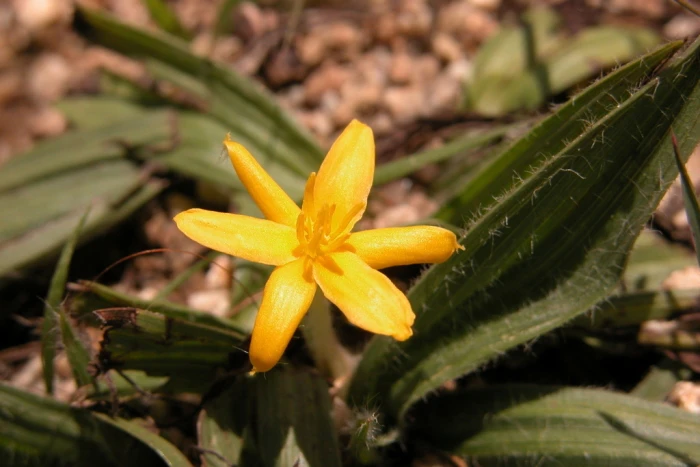

Vijay Barve
CC BY 4.0

Image By:
Vijay Barve
Recorded By:
Copyright:
CC BY 4.0
Copyright Notice:
Photo by: Vijay Barve | License Type: CC BY 4.0 | License URL: http://creativecommons.org/licenses/by/4.0/ | Rights Holder: Vijay Barve | Publisher: iNaturalist | Date Created: 39333 |





Summary
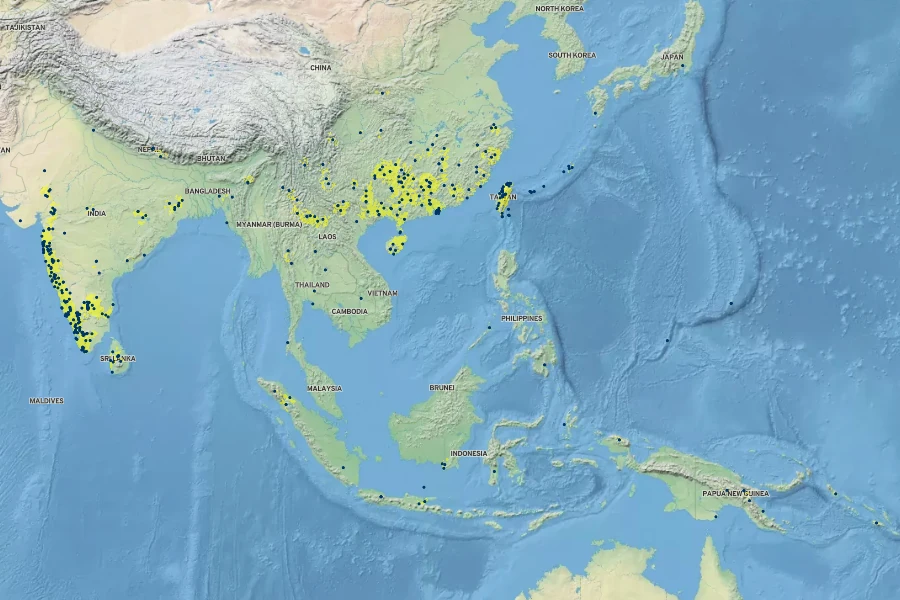
Curculigo orchioides, commonly known as golden eye-grass or black musli, is a perennial herb that is considered endangered in its native range, which includes Nepal, China, Japan, the Indian subcontinent, Papuasia, and Micronesia. It is traditionally found in a range of habitats such as monsoon forests, grasslands, and the understory of open woodlands, where it thrives in moist, well-drained soils. The plant typically grows to a height of 10-35 cm and features lance-shaped leaves with a glossy texture. Golden eye-grass blooms with small, yellow flowers that are not particularly showy, but it is primarily valued for its tuberous roots.
Golden eye-grass is notable for its medicinal properties, as it produces chemical compounds like curculigosides and curculigines, which have been studied for their potential health benefits. In cultivation, it is used for its therapeutic value and sometimes grown in herbal gardens. It requires partial shade to full sun and rich, loamy soil to thrive. While it is not commonly used in ornamental horticulture, its conservation is critical due to its endangered status and its importance in traditional medicine, especially in India where it is used to treat a variety of ailments. Care should be taken to source plants ethically to avoid contributing to its decline in the wild.CC BY-SA 4.0
Golden eye-grass is notable for its medicinal properties, as it produces chemical compounds like curculigosides and curculigines, which have been studied for their potential health benefits. In cultivation, it is used for its therapeutic value and sometimes grown in herbal gardens. It requires partial shade to full sun and rich, loamy soil to thrive. While it is not commonly used in ornamental horticulture, its conservation is critical due to its endangered status and its importance in traditional medicine, especially in India where it is used to treat a variety of ailments. Care should be taken to source plants ethically to avoid contributing to its decline in the wild.CC BY-SA 4.0
Plant Description
- Plant Type: Herb
- Height: 1-1.5 feet
- Width: 1-2 feet
- Growth Rate: Slow
- Flower Color: Yellow
- Flowering Season: Summer
- Leaf Retention: Evergreen
Growth Requirements
- Sun: Full Sun, Part Shade
- Drainage: Medium
Common Uses
Border Plant, Low Maintenance, Potted Plant
Natural Habitat
Monsoon forests, grasslands, and the understory of open woodlands
Other Names
Common Names: Kali Musli, Xian Mao, Tali Grass
Scientific Names: Curculigo orchioides, Curculigo brevifolia, Curculigo brevifolia, Curculigo densa, Curculigo firma, Curculigo malabarica, Curculigo orchioides subsp. minor, Curculigo orchioides var. minor, Curculigo pauciflora
GBIF Accepted Name: Curculigo orchioides