Common Cotoneaster
/
(Cotoneaster integerrimus)
Common Cotoneaster (Cotoneaster integerrimus)
/


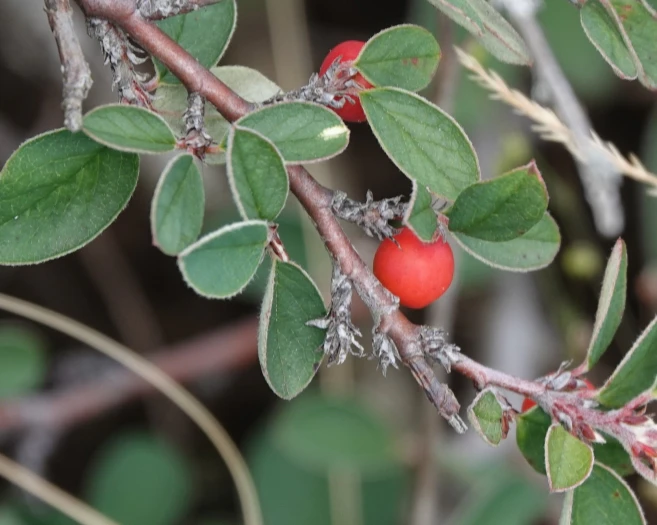

© Jais Knudsen
CC BY 4.0

Image By:
© Jais Knudsen
Recorded By:
Copyright:
CC BY 4.0
Copyright Notice:
Photo by: © Jais Knudsen | License Type: CC BY 4.0 | License URL: http://creativecommons.org/licenses/by/4.0/ | Uploader: jais_knudsen | Publisher: iNaturalist |





Summary
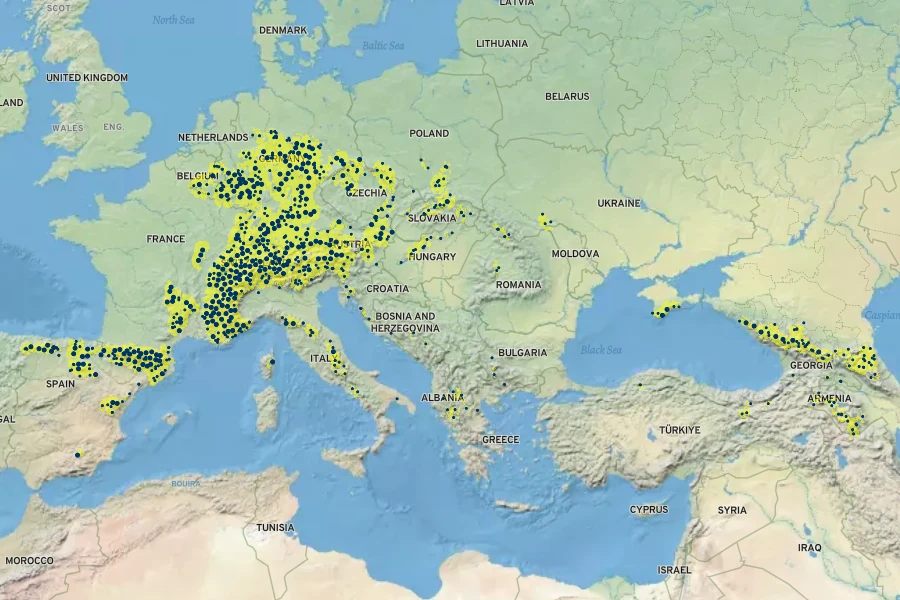
Cotoneaster integerrimus, commonly known as Common Cotoneaster, is a deciduous shrub native to a variety of habitats including rocky hillsides, forest margins, and scrub areas in central and eastern Europe and southwest Asia, extending from southern Belgium and eastern France to northern Turkey, the Caucasus, and northern Iran. It typically grows up to 7 feet tall and wide, with a dense, rounded form. The leaves are oval to oval-acute, green and thinly pubescent above, densely pubescent below, turning to shades of yellow and red in the fall. In late spring to early summer, it produces corymbs of 3-8 small, white to pale pink flowers, followed by showy dark red pomes (berry-like fruits) that persist into winter, providing visual interest and food for birds.
Common Cotoneaster is valued for its adaptability to various soil types, including chalky and limestone soils, and its ability to grow at altitudes up to 9186 feet. It is often used in cultivation for hedging, as a ground cover, or in wildlife gardens for its attractive flowers and fruits. This shrub prefers full sun to part shade and requires well-drained soil. It is drought-tolerant once established and has low maintenance requirements. However, it can be susceptible to fire blight and may spread aggressively in some areas, so gardeners should manage its spread where necessary.CC BY-SA 4.0
Common Cotoneaster is valued for its adaptability to various soil types, including chalky and limestone soils, and its ability to grow at altitudes up to 9186 feet. It is often used in cultivation for hedging, as a ground cover, or in wildlife gardens for its attractive flowers and fruits. This shrub prefers full sun to part shade and requires well-drained soil. It is drought-tolerant once established and has low maintenance requirements. However, it can be susceptible to fire blight and may spread aggressively in some areas, so gardeners should manage its spread where necessary.CC BY-SA 4.0
Plant Description
- Plant Type: Shrub
- Height: 4.25-6.5 feet
- Width: 4-8.25 feet
- Growth Rate: Moderate
- Flower Color: Pink, White
- Flowering Season: Spring, Summer
- Leaf Retention: Deciduous
Growth Requirements
- Sun: Full Sun, Part Shade
- Drainage: Medium
Common Uses
Bird Garden, Border Plant, Butterfly Garden, Hedges, Low Maintenance
Natural Habitat
Native to rocky hillsides, forest margins, and scrub areas
Other Names
Common Names: European cotoneaster, Benved, Dvergmispel, Entire-leaved Cotoneaster
Scientific Names: Cotoneaster integerrimus, Cotoneaster canescens, Cotoneaster canescens, Cotoneaster cinnabarinus, Cotoneaster cotoneaster, Cotoneaster estiensis, Cotoneaster integerrimus f. fructo-nigro, Cotoneaster integerrimus f. fructo-rubro, Cotoneaster integerrimus subsp. masclansii
GBIF Accepted Name: Cotoneaster integerrimus