Forest Bushwillow
/
(Combretum kraussii)
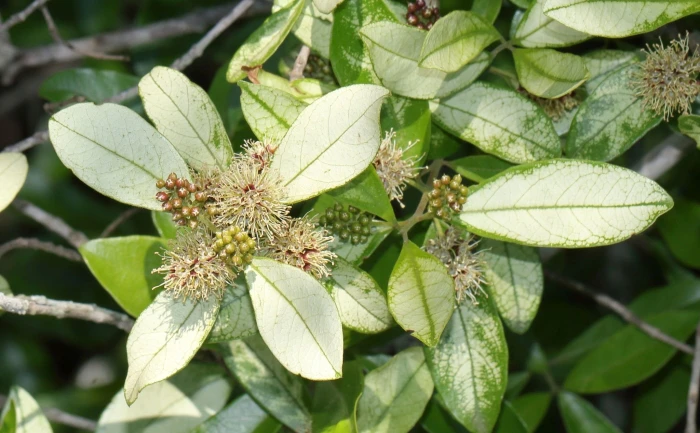
Forest Bushwillow (Combretum kraussii)
/



Alan Manson
CC BY 4.0

Image By:
Alan Manson
Recorded By:
Copyright:
CC BY 4.0
Copyright Notice:
Photo by: Alan Manson | License Type: CC BY 4.0 | License URL: http://creativecommons.org/licenses/by/4.0/ | Rights Holder: Alan Manson | Publisher: iNaturalist | Date Created: 2019-12-14T11:54:36-08:00 |





Summary
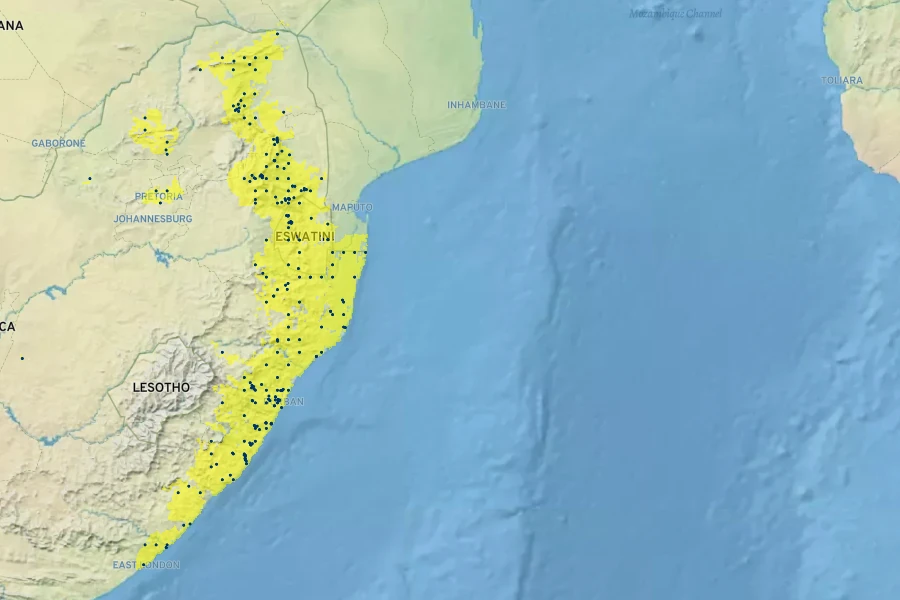
Combretum kraussii, commonly known as Forest Bushwillow, is a semi-deciduous tree native to the coastal and inland forests, as well as forest margins and riverine woodlands of eastern South Africa, Eswatini, and southern Mozambique. It typically grows to a height of 15-20 feet (4.5-6 meters) with a similar spread and is characterized by a rounded crown. The leaves are initially pale when they emerge in late spring, maturing to a glossy green by mid-summer. The Forest Bushwillow is particularly noted for its striking winged fruit that appear in colorful clusters, ranging from red to pink, which persist into the winter months and add ornamental value. The presence of the stilbenoid Combretastatin B-1 in the plant has been researched for potential medicinal uses.
In cultivation, Forest Bushwillow is valued for its adaptability to different soil types, though it prefers well-drained loamy soils. It is drought-tolerant once established and can thrive in full sun to partial shade. This species is often used in gardens for its attractive foliage and fruit, as well as for creating natural hedges and screens. It is also planted for its ecological benefits, such as providing food for birds. Gardeners should be aware that it may require pruning to maintain a desirable shape and to remove any dead or damaged wood. While not commonly reported to have serious disease or pest issues, occasional leaf spot or rust may occur.CC BY-SA 4.0
In cultivation, Forest Bushwillow is valued for its adaptability to different soil types, though it prefers well-drained loamy soils. It is drought-tolerant once established and can thrive in full sun to partial shade. This species is often used in gardens for its attractive foliage and fruit, as well as for creating natural hedges and screens. It is also planted for its ecological benefits, such as providing food for birds. Gardeners should be aware that it may require pruning to maintain a desirable shape and to remove any dead or damaged wood. While not commonly reported to have serious disease or pest issues, occasional leaf spot or rust may occur.CC BY-SA 4.0
Plant Description
- Plant Type: Tree, Shrub
- Height: 6-10 feet
- Width: 6-10 feet
- Growth Rate: Moderate
- Flower Color: White
- Flowering Season: Spring, Summer
- Leaf Retention: Semi-deciduous
Growth Requirements
- Sun: Full Sun, Part Shade
- Drainage: Medium, Slow
Common Uses
Bird Garden, Butterfly Garden, Low Maintenance, Potted Plant, Showy Flowers
Natural Habitat
Coastal and inland forests, forest margins, and riverine woodlands
Other Names
Common Names: Krauss’s Combretum
Scientific Names: Combretum kraussii, Combretum lucidum, Combretum lucidum
GBIF Accepted Name: Combretum kraussii