Bride’s Bonnet
/
(Clintonia uniflora)
Bride’s Bonnet (Clintonia uniflora)
/


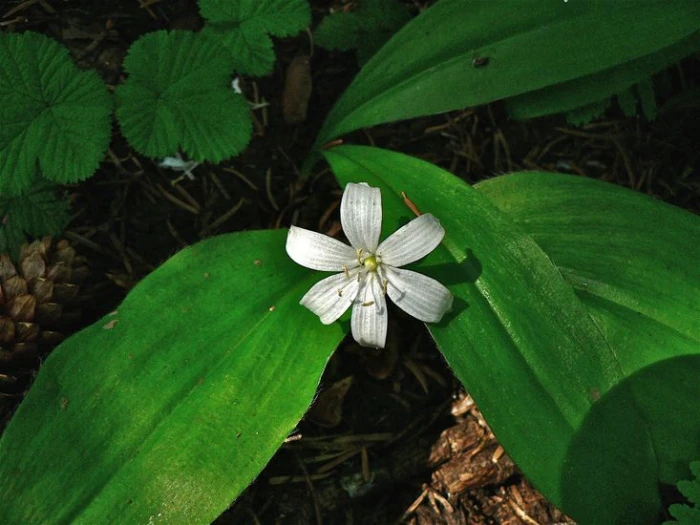

Jean Pawek
CC BY 3.0

Image By:
Jean Pawek
Recorded By:
Copyright:
CC BY 3.0
Copyright Notice:
Photo by: Jean Pawek | License Type: CC BY 3.0 | License URL: http://creativecommons.org/licenses/by/3.0/ | Attribution: 2014 Jean Pawek | Publisher: Calphotos |





Summary
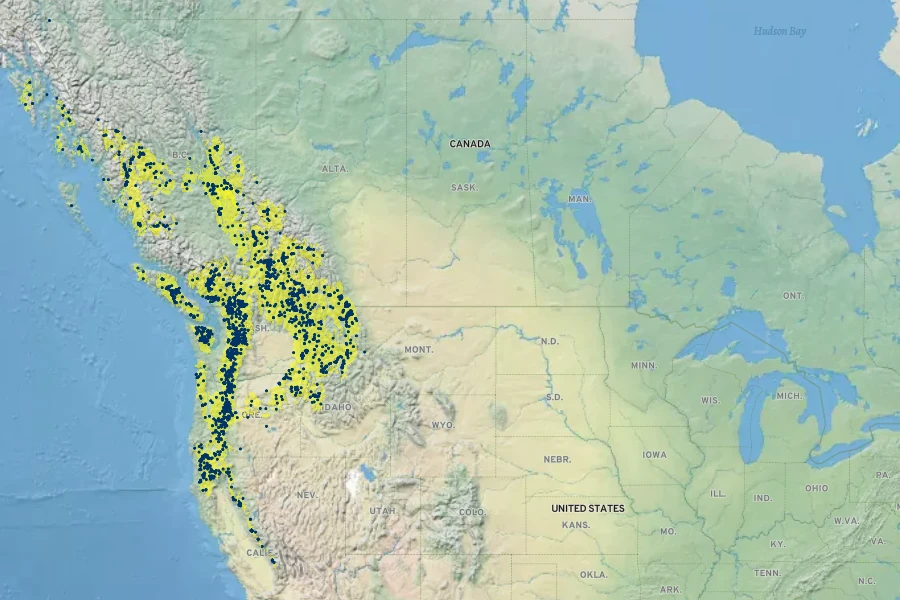
Clintonia uniflora, commonly known as Bride’s Bonnet, is a perennial herb native to the moist coniferous and mixed forests of the Pacific Northwest, including regions from Northern California to British Columbia. It is the smallest species in the genus, reaching only 15 to 25 cm (6 to 10 inches) in height. Bride’s Bonnet forms basal rosettes and spreads slowly by underground rhizomes. Each plant typically bears a single, nodding flower, though occasionally an inflorescence of two flowers may occur. The flower features six white tepals, each about 2 cm (0.8 inches) long, and six protruding stamens with yellow, pollen-dusted anthers. After pollination, the flower gives way to a round, blue berry approximately 1 cm (0.4 inches) in diameter, which is attractive to birds and small mammals.
This plant is valued for its delicate appearance and is often used in woodland gardens, shade gardens, and naturalized areas. It requires minimal maintenance once established and is appreciated for its early spring flowers and summer berries. Bride’s Bonnet thrives in part shade to full shade and prefers humus-rich, well-drained soils. It is not drought-tolerant and should be kept moist, especially during the growing season. While generally free from serious pests and diseases, it can suffer from root rot if the soil is too wet. Gardeners should be aware that this plant does not transplant well due to its delicate root system.CC BY-SA 4.0
This plant is valued for its delicate appearance and is often used in woodland gardens, shade gardens, and naturalized areas. It requires minimal maintenance once established and is appreciated for its early spring flowers and summer berries. Bride’s Bonnet thrives in part shade to full shade and prefers humus-rich, well-drained soils. It is not drought-tolerant and should be kept moist, especially during the growing season. While generally free from serious pests and diseases, it can suffer from root rot if the soil is too wet. Gardeners should be aware that this plant does not transplant well due to its delicate root system.CC BY-SA 4.0
Plant Description
- Plant Type: Herb
- Height: 0.5-0.8 feet
- Width: 0.2-0.5 feet
- Growth Rate: Slow
- Flower Color: White
- Flowering Season: Summer
- Leaf Retention: Deciduous
Growth Requirements
- Sun: Part Shade, Full Shade
- Drainage: Medium, Fast
Common Uses
Bird Garden, Butterfly Garden, Deer Resistant, Low Maintenance, Showy Flowers
Natural Habitat
Moist coniferous and mixed forests of the Pacific Northwest
Other Names
Common Names: Queen’s Cup, Bead Lily, Single-Flowered Clintonia, Clintonie Uniflore
Scientific Names: Clintonia uniflora, Smilacina borealis var. uniflora, Smilacina uniflora
GBIF Accepted Name: Clintonia uniflora (Menzies ex Schult. & Schult.f.) Kunth