Western Water Hemlock
/
(Cicuta douglasii)
Western Water Hemlock (Cicuta douglasii)
/


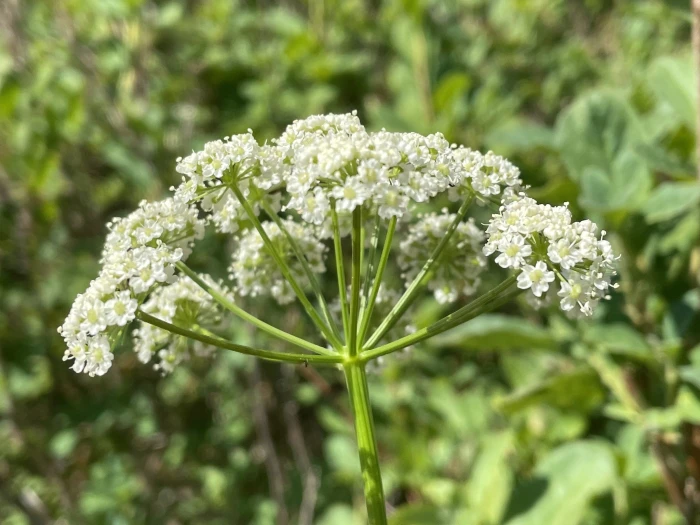

© Henrik Kibak
CC BY 4.0

Image By:
© Henrik Kibak
Recorded By:
Copyright:
CC BY 4.0
Copyright Notice:
Photo by: © Henrik Kibak | License Type: CC BY 4.0 | License URL: http://creativecommons.org/licenses/by/4.0/ | Uploader: hkibak | Publisher: iNaturalist |






Summary
Cicuta douglasii, commonly known as Western Water Hemlock, is a highly toxic perennial herb that is native to riparian zones, wet meadows, and marshy areas of North America, particularly in the western regions. It can reach up to 7 feet in height and thrives in wet environments such as stream banks, marshes, and wet pastures. The plant is characterized by its thick, tuberous roots and hollow, purplish-spotted stems. From June to August, it produces compound umbels of small, showy white flowers that attract various insects.
Western Water Hemlock is known for its extreme toxicity due to the presence of cicutoxin, a compound that severely affects the central nervous system. It is considered the most poisonous plant in North America, posing serious risks to humans, livestock, and wildlife, with symptoms of poisoning including excessive salivation, tremors, and respiratory failure. Despite its danger, the plant plays a role in its native ecosystem by stabilizing soil in wet areas and providing habitat for insects. In cultivation, it is generally avoided due to its poisonous nature, but it may be studied in botanical gardens for educational purposes. When handling or working near this plant, extreme caution is advised to prevent accidental poisoning. It requires consistently moist or wet soil conditions and can tolerate partial shade to full sun exposure. There are no popular garden cultivars due to its toxicity, and it is not recommended for any form of landscape use.CC BY-SA 4.0
Western Water Hemlock is known for its extreme toxicity due to the presence of cicutoxin, a compound that severely affects the central nervous system. It is considered the most poisonous plant in North America, posing serious risks to humans, livestock, and wildlife, with symptoms of poisoning including excessive salivation, tremors, and respiratory failure. Despite its danger, the plant plays a role in its native ecosystem by stabilizing soil in wet areas and providing habitat for insects. In cultivation, it is generally avoided due to its poisonous nature, but it may be studied in botanical gardens for educational purposes. When handling or working near this plant, extreme caution is advised to prevent accidental poisoning. It requires consistently moist or wet soil conditions and can tolerate partial shade to full sun exposure. There are no popular garden cultivars due to its toxicity, and it is not recommended for any form of landscape use.CC BY-SA 4.0
Plant Description
- Plant Type: Herb
- Height: 4-6 feet
- Width: 2-3 feet
- Growth Rate: Rapid
- Flower Color: White
- Flowering Season: Spring, Summer, Fall
- Leaf Retention: Deciduous
Growth Requirements
- Sun: Full Sun, Part Shade
- Drainage: Medium, Slow
Common Uses
Water Garden
Natural Habitat
Native to riparian zones, wet meadows, and marshy areas of North America
Other Names
Common Names: Western Water Hemlock, Water Hemlock
Scientific Names: Cicuta douglasii, Cicuta californica, Cicuta fimbriata, Cicuta frondosa, Cicuta maculata, Cicuta maculata var. californica, Cicuta mexicana, Cicuta occidentalis f. frondosa, Cicuta purpurata
GBIF Accepted Name: Cicuta douglasii