Vetivergrass
/
(Chrysopogon zizanioides)
Vetivergrass (Chrysopogon zizanioides)
/


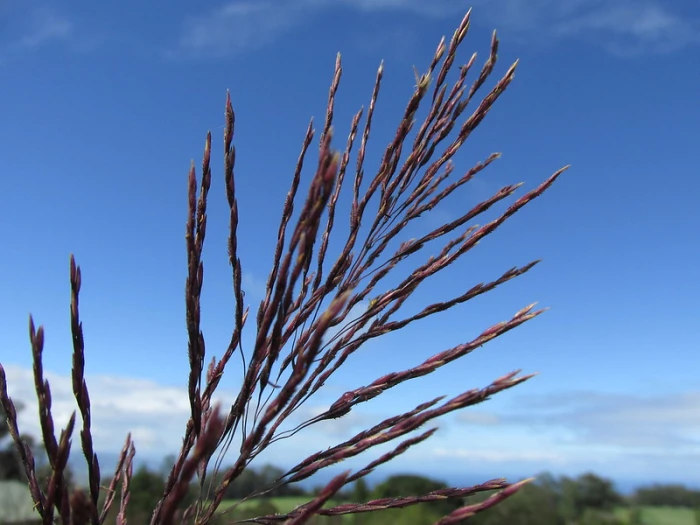

Forest and Kim Starr
CC BY 3.0 us






Summary
Vetivergrass is valued for its soil erosion control properties, particularly in tropical and subtropical regions. It is used for land rehabilitation and embankment stabilization. The plant’s roots contain an essential oil that is used in perfumery and traditional medicine. In cultivation, Vetivergrass prefers full sun but can tolerate a range of water conditions, from low to high, and is adaptable to various soil types with slow to fast drainage. It is not typically grown for ornamental purposes but rather for its practical applications in soil conservation and its aromatic roots. While noninvasive genotypes are safe for cultivation, fertile genotypes have become invasive in some regions, though common sterile commercial lines are noninvasive.CC BY-SA 4.0
Plant Description
- Plant Type: Grass
- Height: 4-5 feet
- Width: 3-4 feet
- Growth Rate: Rapid
- Flower Color: N/A
- Flowering Season: Summer
- Leaf Retention: Evergreen
Growth Requirements
- Sun: Full Sun
- Drainage: Slow, Medium, Fast
Common Uses
Bank Stabilization, Deer Resistant, Drought Tolerant, Edible*Disclaimer: Easyscape's listed plant edibility is for informational use. Always verify the safety and proper identification of any plant before consumption., Erosion Control, Fire Resistant, Potted Plant, Salt Tolerant, Street Planting, Water Garden
Natural Habitat
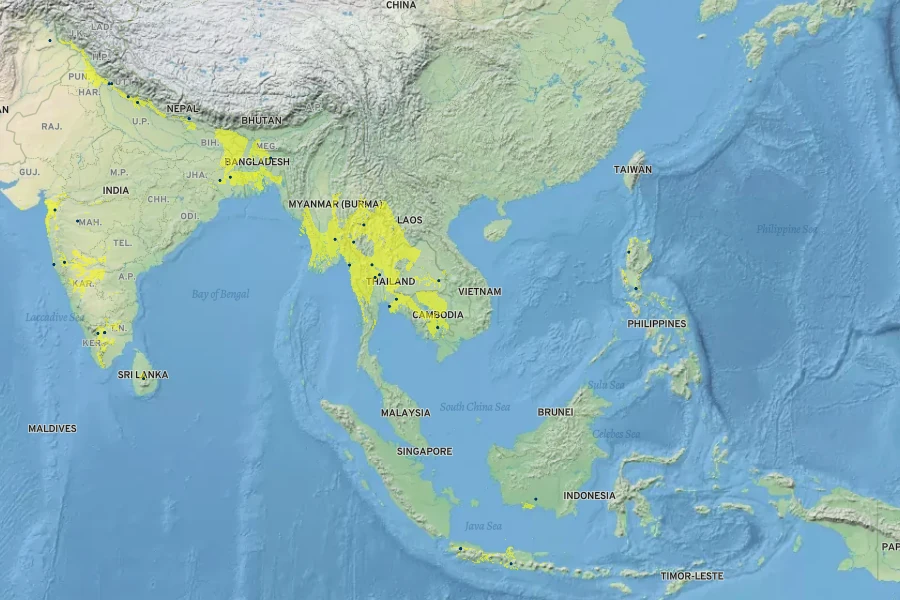
native to India and Indo-China, often found in open areas, wetlands, and along riverbanks
Other Names
Common Names: Cuscus Grass, Vetiver, Vetiver Grass, Khus-Khus, Khus-Khus Grass, Khus, Vetivergras, Zacate Violeta, Chiendent Odorant, Vétiver
Scientific Names: Vetiveria zizanioides, Chrysopogon zizanioides, Andropogon muricatus, Andropogon zizanioides, Anatherum muricatum, Anatherum zizanioides, Agrostis verticillata, Phalaris zizanioides, Andropogon aromaticus
GBIF Accepted Name: Chrysopogon zizanioides (L.) Roberty