Esteve’s Pincushion
/
(Chaenactis stevioides)
Esteve’s Pincushion (Chaenactis stevioides)
/


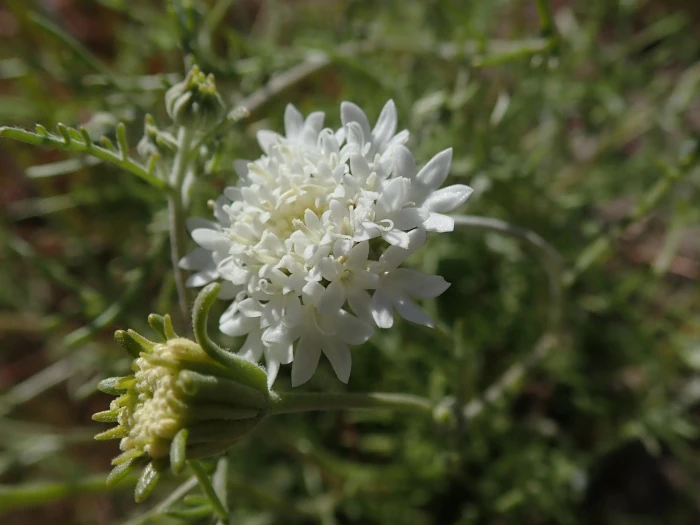

© joergmlpts
CC BY 4.0

Image By:
© joergmlpts
Recorded By:
Copyright:
CC BY 4.0
Copyright Notice:
Photo by: © joergmlpts | License Type: CC BY 4.0 | License URL: http://creativecommons.org/licenses/by/4.0/ | Uploader: joergmlpts | Publisher: iNaturalist |





Summary
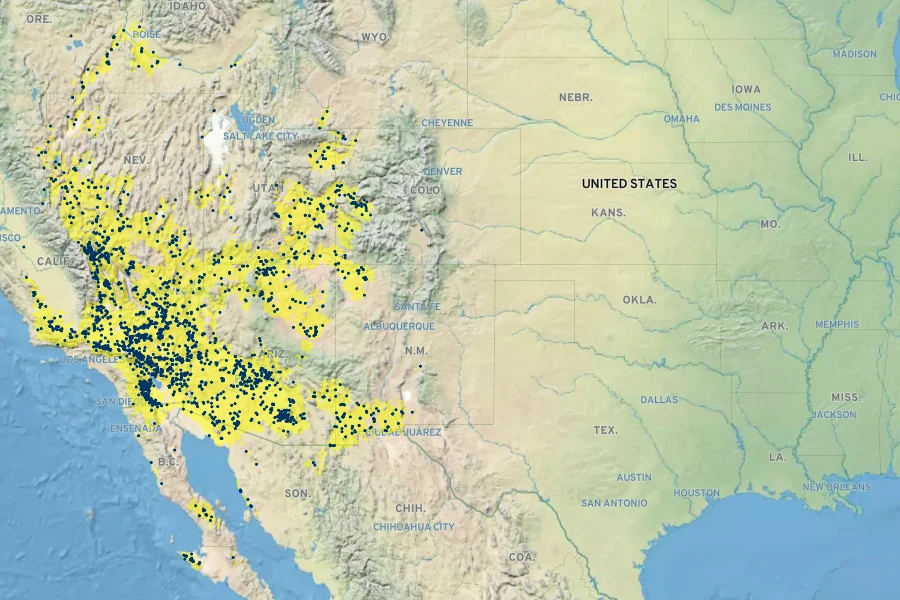
Chaenactis stevioides, commonly known as Esteve’s pincushion or desert pincushion, is an annual herb native to arid and semi-arid habitats such as the Mojave Desert, southern Great Basin, and parts of California, extending into northern Mexico. It is particularly abundant in desert washes, creosote bush communities, and Joshua tree woodlands. This plant typically grows erect stems up to 18 inches tall and features hairy, cobwebby stems that become less dense as the plant matures. The leaves are pinnately divided, adding a fine-textured element to the foliage. Esteve’s pincushion blooms profusely from March to June, displaying flower heads with white, pink, or pale yellow disk flowers that are moderately showy and attract pollinators.
Esteve’s pincushion is valued for its drought tolerance and ability to thrive in poor, well-drained soils, making it an excellent choice for xeriscaping and naturalistic desert gardens. It requires minimal maintenance once established and can reseed itself in suitable conditions. In cultivation, it prefers full sun exposure and is often used in rock gardens, wildflower meadows, and as a filler in borders due to its airy appearance. While generally free from serious pests and diseases, overwatering or poor drainage can lead to root rot.CC BY-SA 4.0
Esteve’s pincushion is valued for its drought tolerance and ability to thrive in poor, well-drained soils, making it an excellent choice for xeriscaping and naturalistic desert gardens. It requires minimal maintenance once established and can reseed itself in suitable conditions. In cultivation, it prefers full sun exposure and is often used in rock gardens, wildflower meadows, and as a filler in borders due to its airy appearance. While generally free from serious pests and diseases, overwatering or poor drainage can lead to root rot.CC BY-SA 4.0
Plant Description
- Plant Type: Herb
- Height: 0.5-1.5 feet
- Width: 0.5-1.5 feet
- Growth Rate: Moderate
- Flower Color: White, Pink, Yellow
- Flowering Season: Spring, Summer
- Leaf Retention:
Growth Requirements
- Sun: Full Sun
- Drainage: Fast
Common Uses
Drought Tolerant, Low Maintenance, Rock Garden
Natural Habitat
Native to desert washes, creosote bush communities, and Joshua tree woodlands within the Mojave Desert, southern Great Basin, and parts of California, extending into northern Mexico
Other Names
Common Names: Esteve’s Pincushion, Desert Pincushion, Steve’s Dusty Maiden, Steve’s Pincushion, Broad-Flower Pincushion, Esteve Pincushion
Scientific Names: Chaenactis stevioides, Chaenactis brachypappa, Chaenactis furcata, Chaenactis gillespiei, Chaenactis latifolia, Chaenactis stevioides var. brachypappa, Chaenactis stevioides var. stevioides, Chaenactis stevioides var. thornberi, Chaenactis ×mexicana
GBIF Accepted Name: Chaenactis stevioides