Douglas’ Dustymaiden
/
(Chaenactis douglasii)
Douglas’ Dustymaiden (Chaenactis douglasii)
/


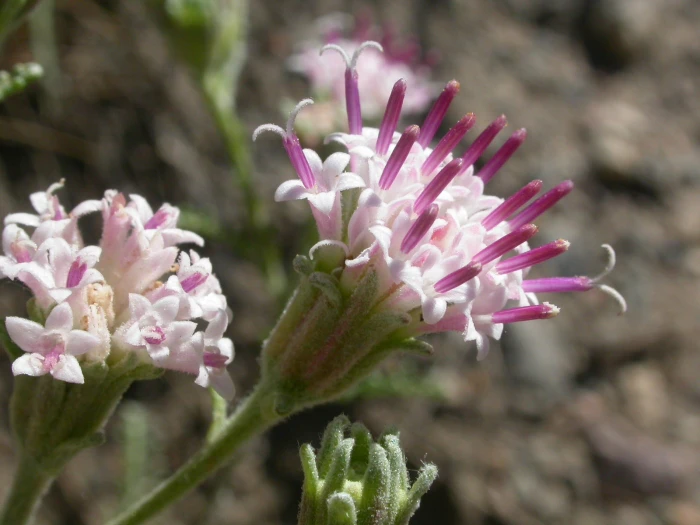

Matt Lavin
CC BY 4.0

Image By:
Matt Lavin
Recorded By:
Copyright:
CC BY 4.0
Copyright Notice:
Photo by: Matt Lavin | License Type: CC BY 4.0 | License URL: http://creativecommons.org/licenses/by/4.0/ | Rights Holder: Matt Lavin | Publisher: iNaturalist | Date Created: 2003-07-02T10:37:28-07:00 |





Summary
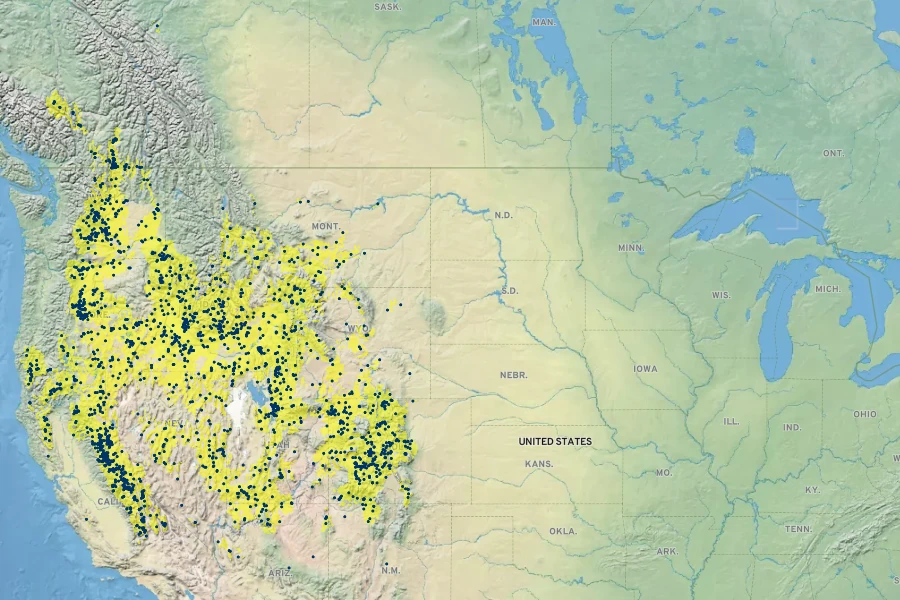
Chaenactis douglasii, commonly known as Douglas’ dustymaiden, is a perennial herb that thrives in a variety of habitats such as dry meadows, open woodlands, and rocky slopes in western North America, from British Columbia to New Mexico, and east to Nebraska and the Dakotas. It is particularly adapted to high elevation environments, often found from sea level to 13,123 feet. This plant typically grows erect to a height of 4-24 inches tall, with cobwebby stems and woolly or hairy basal leaves that form a low rosette. The inflorescence is a cluster of white or pinkish tubular disc flowers that bloom from late spring to early fall, attracting pollinators such as bees and butterflies.
Douglas’ dustymaiden is valued for its drought tolerance and ability to thrive in poor, well-drained soils, making it a suitable choice for rock gardens, xeriscaping, and restoration projects. It requires minimal maintenance once established and can be used to add texture and interest to native plant gardens. While it is not commonly used in traditional horticulture, some Plateau Indian tribes historically used the plant medicinally as a dressing for burns, wounds, and sores. Douglas’ dustymaiden prefers full sun to light shade and is relatively free of serious pests and diseases, although it can be susceptible to root rot if overwatered.CC BY-SA 4.0
Douglas’ dustymaiden is valued for its drought tolerance and ability to thrive in poor, well-drained soils, making it a suitable choice for rock gardens, xeriscaping, and restoration projects. It requires minimal maintenance once established and can be used to add texture and interest to native plant gardens. While it is not commonly used in traditional horticulture, some Plateau Indian tribes historically used the plant medicinally as a dressing for burns, wounds, and sores. Douglas’ dustymaiden prefers full sun to light shade and is relatively free of serious pests and diseases, although it can be susceptible to root rot if overwatered.CC BY-SA 4.0
Plant Description
- Plant Type: Herb
- Height: 0.5-1.6 feet
- Width: 0.75-1 feet
- Growth Rate: Moderate
- Flower Color: White
- Flowering Season: Summer
- Leaf Retention: Deciduous
Growth Requirements
- Sun: Full Sun, Part Shade
- Drainage: Fast, Medium
Common Uses
Drought Tolerant, Erosion Control, Low Maintenance
Natural Habitat
Dry meadows, open woodlands, and rocky slopes
Other Names
Common Names: Dusty Maiden, Hoary Chaenactis, Douglas’ Pincushion, Douglas’s Dusty-Maiden, Hoary Pincushion, Hoary False Yarrow
Scientific Names: Chaenactis douglasii, Chaenactis achilleifolia, Chaenactis achilleifolia var. achilleifolia, Chaenactis achilleifolia var. douglasii, Chaenactis angustifolia, Chaenactis brachiata, Chaenactis brachiata var. brachiata, Chaenactis brachiata var. stansburyana, Chaenactis cheilanthoides
GBIF Accepted Name: Chaenactis douglasii