Mouse-Ear Chickweed
/
(Cerastium diffusum)
Mouse-Ear Chickweed (Cerastium diffusum)
/



© Donald Davesne
CC BY 4.0

Image By:
© Donald Davesne
Recorded By:
Copyright:
CC BY 4.0
Copyright Notice:
Photo by: © Donald Davesne | License Type: CC BY 4.0 | License URL: http://creativecommons.org/licenses/by/4.0/ | Uploader: donalddavesne | Publisher: iNaturalist |






Summary
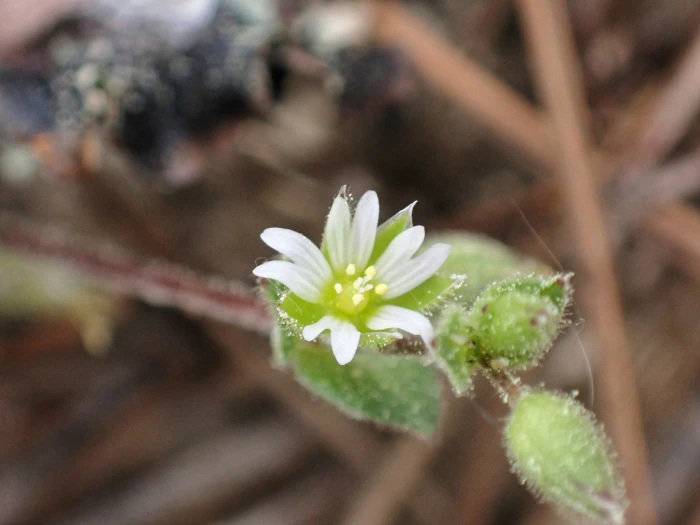
Cerastium diffusum, commonly known as Sea Mouse-Ear, is a perennial herb native to a variety of habitats including grasslands, coastal areas, and open woodlands across Europe and Asia. It typically grows at a moderate rate to a height of 0.2-0.5 feet (0.06-0.2 meters) and a width of 0.3-1 feet (0.1-0.3 meters). This plant forms a low, spreading mat with small, oval to lance-shaped leaves. The white flowers, which bloom in the spring and summer, are small but numerous, each with five deeply notched petals that give the appearance of ten. The blooms are modest in size but can be quite dense and attractive when the plant is in full flower.
Sea Mouse-Ear is valued for its ground-covering ability, particularly in rock gardens, borders, and as a filler between stepping stones where its tolerance for occasional foot traffic is beneficial. It is also used for its ornamental foliage and flowers in cottage gardens. This plant is relatively low-maintenance and thrives in full sun to part shade. It adapts well to a range of soil types, including clay, loam, and sandy soils, provided they have medium to fast drainage. While generally disease-free, it can sometimes suffer from rust or leaf spot. It is also important to note that Cerastium diffusum can become invasive in some areas, spreading vigorously and potentially outcompeting native species. Gardeners should monitor its growth and manage its spread to prevent unwanted naturalization.CC BY-SA 4.0
Sea Mouse-Ear is valued for its ground-covering ability, particularly in rock gardens, borders, and as a filler between stepping stones where its tolerance for occasional foot traffic is beneficial. It is also used for its ornamental foliage and flowers in cottage gardens. This plant is relatively low-maintenance and thrives in full sun to part shade. It adapts well to a range of soil types, including clay, loam, and sandy soils, provided they have medium to fast drainage. While generally disease-free, it can sometimes suffer from rust or leaf spot. It is also important to note that Cerastium diffusum can become invasive in some areas, spreading vigorously and potentially outcompeting native species. Gardeners should monitor its growth and manage its spread to prevent unwanted naturalization.CC BY-SA 4.0
Plant Description
- Plant Type: Herb
- Height: 0.2-0.5 feet
- Width: 0.3-1 feet
- Growth Rate: Moderate
- Flower Color: White
- Flowering Season: Spring, Summer
- Leaf Retention: Deciduous
Growth Requirements
- Sun: Full Sun, Part Shade
- Drainage: Fast, Medium
Common Uses
Drought Tolerant, Low Maintenance
Natural Habitat
Grasslands, coastal areas, and open woodlands across Europe and Asia
Other Names
Common Names: Sea Mouse-Ear, Mouse-Ear Chickweed, Dark-Green Mouse-Ear, Seaside Chickweed
Scientific Names: Fourstamen Chickweed
GBIF Accepted Name: Cerastium diffusum