Gray Chickweed
/
(Cerastium brachypetalum)
Gray Chickweed (Cerastium brachypetalum)
/


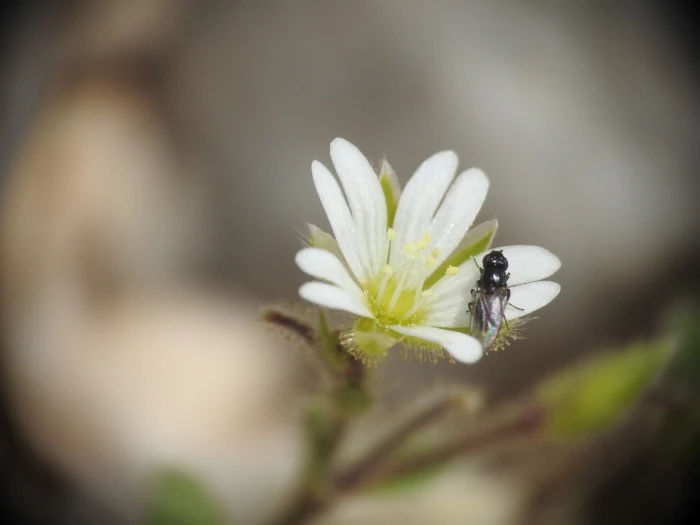

© Yves Bas
CC BY 4.0

Image By:
© Yves Bas
Recorded By:
Copyright:
CC BY 4.0
Copyright Notice:
Photo by: © Yves Bas | License Type: CC BY 4.0 | License URL: http://creativecommons.org/licenses/by/4.0/ | Uploader: yvesbas | Publisher: iNaturalist |





Summary
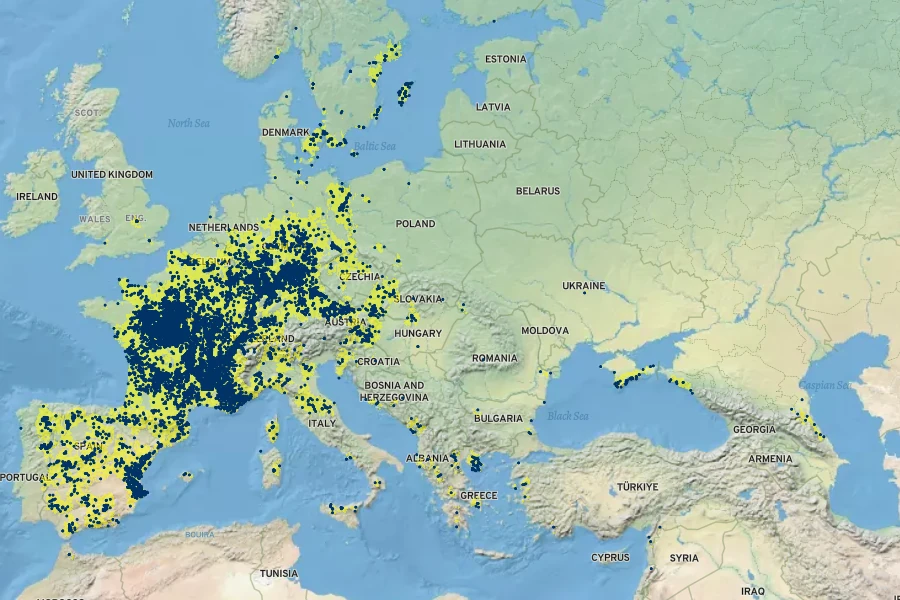
Cerastium brachypetalum, commonly known as gray chickweed or gray mouse-ear, is an annual herb that is native to temperate regions of Eurasia and has been introduced to North America. It is a low-growing plant, typically reaching 5-15 cm in height, and is often found in open grasslands, meadows, and disturbed sites. In its native habitat, it thrives in a variety of soil types but prefers well-drained conditions. The plant blooms in the spring, producing small, white flowers with notched petals that are mildly showy. The foliage is covered with fine, grayish hairs, giving it a distinctive appearance.
Gray chickweed is valued for its ability to fill in bare spots in gardens and its resilience in a range of soil conditions. It is often used in wildflower meadows and as a ground cover in informal garden settings. It requires minimal maintenance once established and can tolerate both full sun and partial shade. While it is not a common garden plant, it can be of interest to those looking to support local biodiversity, as it is a food source for various insects. However, it can become weedy if not managed properly and may require control measures to prevent unwanted spread.CC BY-SA 4.0
Gray chickweed is valued for its ability to fill in bare spots in gardens and its resilience in a range of soil conditions. It is often used in wildflower meadows and as a ground cover in informal garden settings. It requires minimal maintenance once established and can tolerate both full sun and partial shade. While it is not a common garden plant, it can be of interest to those looking to support local biodiversity, as it is a food source for various insects. However, it can become weedy if not managed properly and may require control measures to prevent unwanted spread.CC BY-SA 4.0
Plant Description
- Plant Type: Herb
- Height: 0.5-1 feet
- Width: 0.5-1 feet
- Growth Rate: Moderate
- Flower Color: White
- Flowering Season: Spring, Summer
- Leaf Retention:
Growth Requirements
- Sun: Full Sun, Part Shade
- Drainage: Medium, Fast
Common Uses
Border Plant, Low Maintenance, Rock Garden
Natural Habitat
Native to temperate regions of Eurasia, found in open grasslands and meadows
Other Names
Common Names: Gray Mouse-ear, Grey Mouse-Ear, Short-petal Chickweed
Scientific Names: Cerastium brachypetalum, Cerastium brachypetalum, Cerastium semidecandrum, Cerastium viscosum
GBIF Accepted Name: Cerastium brachypetalum