Devil’s Tresses
/
(Cassytha ciliolata)
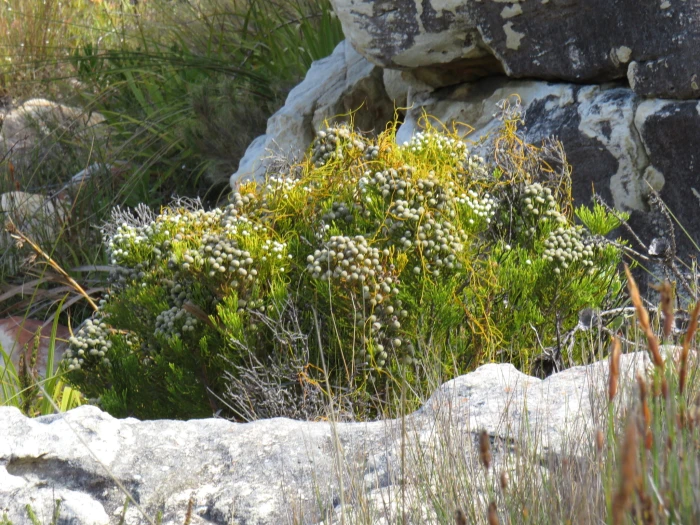
Devil’s Tresses (Cassytha ciliolata)
/



Jeremy Gilmore
CC BY 4.0

Image By:
Jeremy Gilmore
Recorded By:
Copyright:
CC BY 4.0
Copyright Notice:
Photo by: Jeremy Gilmore | License Type: CC BY 4.0 | License URL: http://creativecommons.org/licenses/by/4.0/ | Rights Holder: Jeremy Gilmore | Publisher: iNaturalist | Date Created: 2020-03-19T15:18:29-07:00 |





Summary
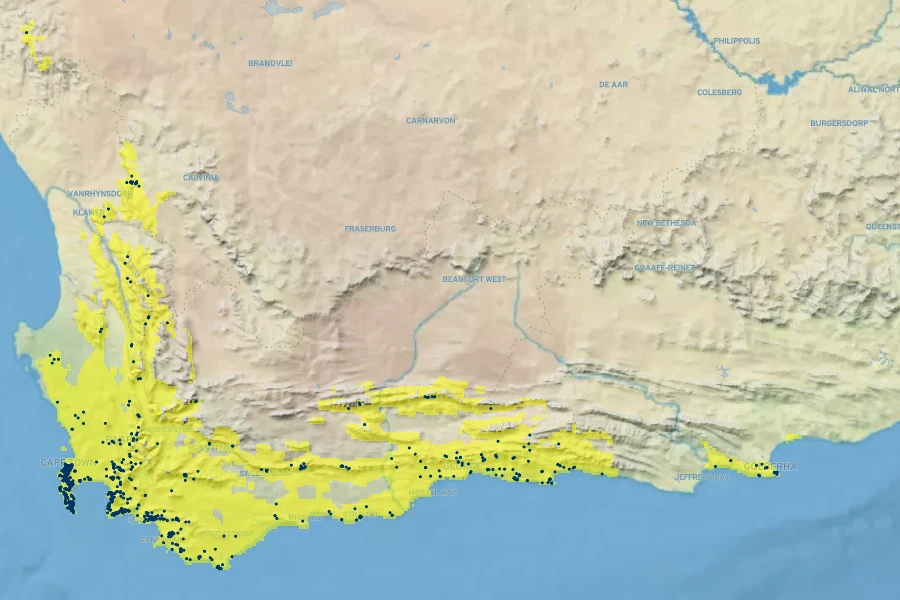
Cassytha ciliolata, commonly known as Devil’s Tresses, is a parasitic vine native to open woodlands, coastal dunes, and heathlands in the Cape Provinces (Eastern and Western Cape provinces) of South Africa. It exhibits rapid growth and can quickly envelop host plants with its slender, twining stems. Cassytha ciliolata produces small, greenish-yellow, inconspicuous flowers during the summer months. The flowers are generally not considered showy, but they are interesting from a botanical perspective due to their parasitic nature.
Devil’s Twine is not commonly cultivated due to its parasitic lifestyle, which can be detrimental to other plants. However, it may be studied for its unique ecological interactions and sometimes used in educational settings. In its native habitat, it plays a role in the ecosystem by transferring nutrients between plants and providing habitat for certain insects. When grown, it requires a host plant, as it is unable to photosynthesize sufficiently on its own. It prefers full sun to part shade and can adapt to a range of soil types, including clay, loam, and sandy soils, provided they have medium to fast drainage.CC BY-SA 4.0
Devil’s Twine is not commonly cultivated due to its parasitic lifestyle, which can be detrimental to other plants. However, it may be studied for its unique ecological interactions and sometimes used in educational settings. In its native habitat, it plays a role in the ecosystem by transferring nutrients between plants and providing habitat for certain insects. When grown, it requires a host plant, as it is unable to photosynthesize sufficiently on its own. It prefers full sun to part shade and can adapt to a range of soil types, including clay, loam, and sandy soils, provided they have medium to fast drainage.CC BY-SA 4.0
Plant Description
- Plant Type: Vine
- Height: 1-2 feet
- Width: 1-2 feet
- Growth Rate: Rapid
- Flower Color: Green
- Flowering Season: Summer
- Leaf Retention: Evergreen
Growth Requirements
- Sun: Full Sun, Part Shade
- Drainage: Fast, Medium
Common Uses
Erosion Control, Low Maintenance
Natural Habitat
Open woodlands, coastal dunes, and heathlands
Other Names
Common Names:
Scientific Names: Cassytha ciliolata, Cassytha capensis, Cassytha triflora, Ozarthris capense
GBIF Accepted Name: Cassytha ciliolata