Raynolds’ Sedge
/
(Carex raynoldsii)
Raynolds’ Sedge (Carex raynoldsii)
/


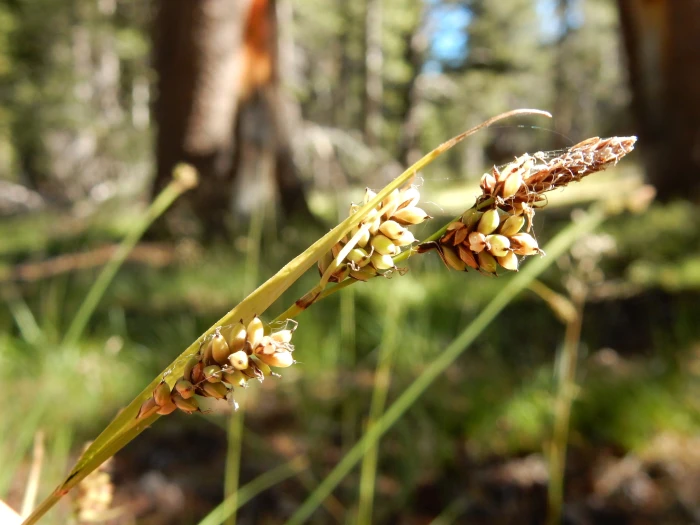

Matt Lavin
CC BY 4.0

Image By:
Matt Lavin
Recorded By:
Copyright:
CC BY 4.0
Copyright Notice:
Photo by: Matt Lavin | License Type: CC BY 4.0 | License URL: http://creativecommons.org/licenses/by/4.0/ | Rights Holder: Matt Lavin | Publisher: iNaturalist | Date Created: 2018-08-05T10:39:34-07:00 |





Summary
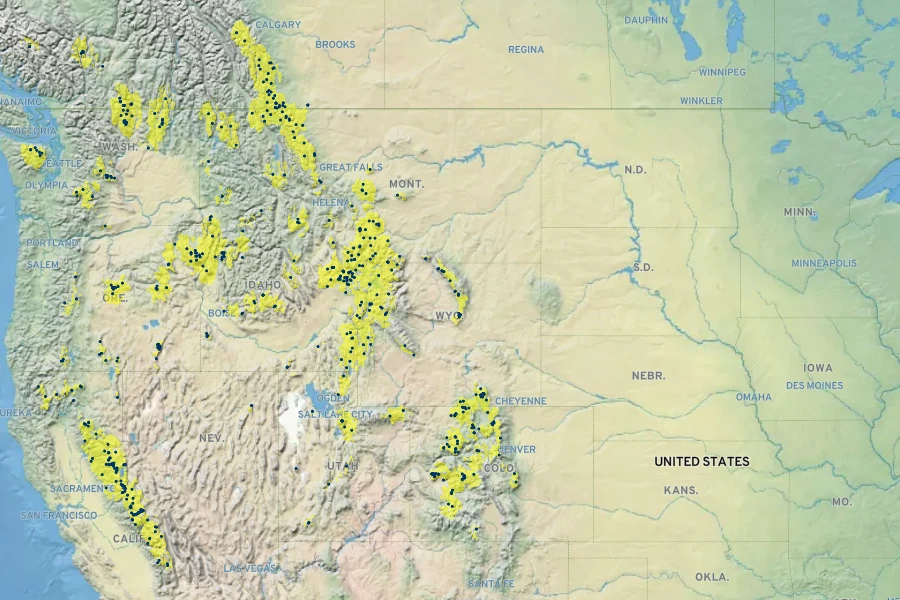
Carex raynoldsii, commonly known as Raynolds’ sedge, is a perennial herbaceous plant native to moist meadows, streambanks, and wetlands in the montane to alpine zones of western North America, ranging from California to Colorado and extending to the Yukon Territory. It typically forms dense clumps reaching up to 30 inches in height, with smooth, grass-like stems emerging from rhizomes. The inflorescence is characterized by rounded or oval flower spikes, each suspended on a peduncle, and the fruits are enveloped by protective scales. The greenish-brown flowers bloom from late spring to early summer and are not particularly showy, but they contribute to the plant’s overall texture in the landscape.
Raynolds’ sedge is valued for its ability to thrive in wet conditions and is often used in restoration projects, especially in riparian zones. It is also suitable for water gardens and naturalized areas. This sedge prefers consistently moist soils and can tolerate a range of light conditions, from full sun in cooler climates to partial shade. While it is not commonly found in traditional garden settings, its utility in ecological plantings and its ease of maintenance make it a practical choice for specific landscaping needs. Carex raynoldsii is generally free from serious pests and diseases, but it can spread vigorously in ideal conditions, potentially becoming aggressive in small garden spaces.CC BY-SA 4.0
Raynolds’ sedge is valued for its ability to thrive in wet conditions and is often used in restoration projects, especially in riparian zones. It is also suitable for water gardens and naturalized areas. This sedge prefers consistently moist soils and can tolerate a range of light conditions, from full sun in cooler climates to partial shade. While it is not commonly found in traditional garden settings, its utility in ecological plantings and its ease of maintenance make it a practical choice for specific landscaping needs. Carex raynoldsii is generally free from serious pests and diseases, but it can spread vigorously in ideal conditions, potentially becoming aggressive in small garden spaces.CC BY-SA 4.0
Plant Description
- Plant Type: Grass
- Height: 1-1.5 feet
- Width: 1-1.5 feet
- Growth Rate: Moderate
- Flower Color: N/A
- Flowering Season: Spring, Summer
- Leaf Retention: Evergreen
Growth Requirements
- Sun: Part Shade, Full Shade
- Drainage: Fast, Medium, Slow
Common Uses
Erosion Control, Low Maintenance, Water Garden
Natural Habitat
Moist meadows, streambanks, and wetlands in montane to alpine zones
Other Names
Common Names: Matted Sedge
Scientific Names: Carex raynoldsii, Carex lyallii
GBIF Accepted Name: Carex raynoldsii