Lentoid Sedge
/
(Carex phacota)
Lentoid Sedge (Carex phacota)
/


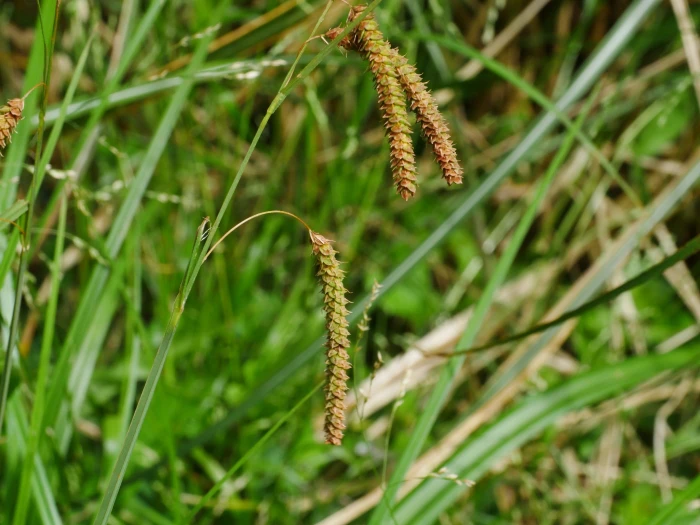

Jacy Chen
CC BY 4.0

Image By:
Jacy Chen
Recorded By:
Copyright:
CC BY 4.0
Copyright Notice:
Photo by: Jacy Chen | License Type: CC BY 4.0 | License URL: http://creativecommons.org/licenses/by/4.0/ | Rights Holder: Jacy Chen | Publisher: iNaturalist | Date Created: 2021-04-20T14:41:56-07:00 |





Summary
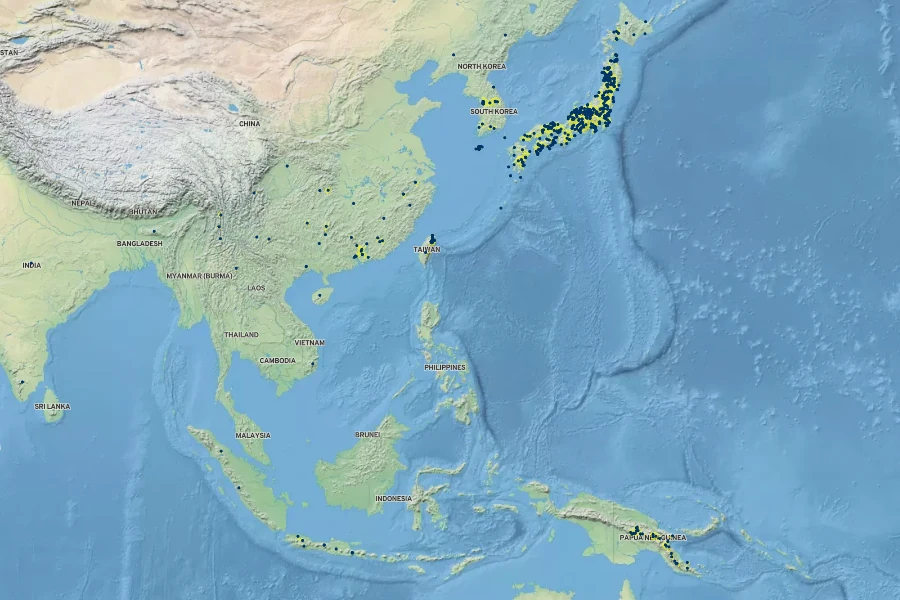
Carex phacota, commonly known as lentoid sedge, is a perennial herbaceous plant that belongs to the sedge family. It is native to a wide range of habitats including wet grasslands, ditches, stream banks, and roadsides across the Indian Subcontinent, Southeast Asia, most of Malesia, New Guinea, central and southern China, Hainan, Taiwan, Korea, the Ryukyus, and Japan. Lentoid sedge often colonizes areas after disturbances such as fire and landslides, indicating its pioneer species status. It typically grows in clumps and can reach heights of up to 60 centimeters. The plant features narrow, grass-like leaves and produces small, inconspicuous brownish-green flowers that are wind-pollinated. Flowering usually occurs in the late spring and early summer.
Lentoid sedge is valued for its ability to stabilize soil and prevent erosion, particularly in wetland restoration projects and riparian buffer zones. It is relatively low-maintenance, requiring moist to wet soil conditions and can tolerate a range of light conditions from full sun to partial shade. While not commonly used for ornamental purposes, it serves an important ecological function and can be utilized in naturalistic plantings. Carex phacota is not known for significant pest or disease problems, but it should be planted carefully outside its native range to prevent unwanted spread. CC BY-SA 4.0
Lentoid sedge is valued for its ability to stabilize soil and prevent erosion, particularly in wetland restoration projects and riparian buffer zones. It is relatively low-maintenance, requiring moist to wet soil conditions and can tolerate a range of light conditions from full sun to partial shade. While not commonly used for ornamental purposes, it serves an important ecological function and can be utilized in naturalistic plantings. Carex phacota is not known for significant pest or disease problems, but it should be planted carefully outside its native range to prevent unwanted spread. CC BY-SA 4.0
Plant Description
- Plant Type: Grass
- Height: 1-3 feet
- Width: 1-2 feet
- Growth Rate: Moderate
- Flower Color: N/A
- Flowering Season: Spring
- Leaf Retention: Evergreen
Growth Requirements
- Sun: Part Shade, Full Shade
- Drainage: Medium, Slow
Common Uses
Erosion Control, Low Maintenance, Water Garden
Natural Habitat
Wet grasslands, ditches, stream banks, and roadsides, often colonizing after disturbances
Other Names
Common Names: Phacota sedge, Pacific sedge
Scientific Names: Carex phacota, Carex biconvexis, Carex cincta, Carex cincta subsp. subphacota, Carex cincta var. subphacota, Carex fauriae, Carex fauriei, Carex gracilipes, Carex lenticularis
GBIF Accepted Name: Carex phacota