Twotipped Sedge
/
(Carex lachenalii)
Twotipped Sedge (Carex lachenalii)
/


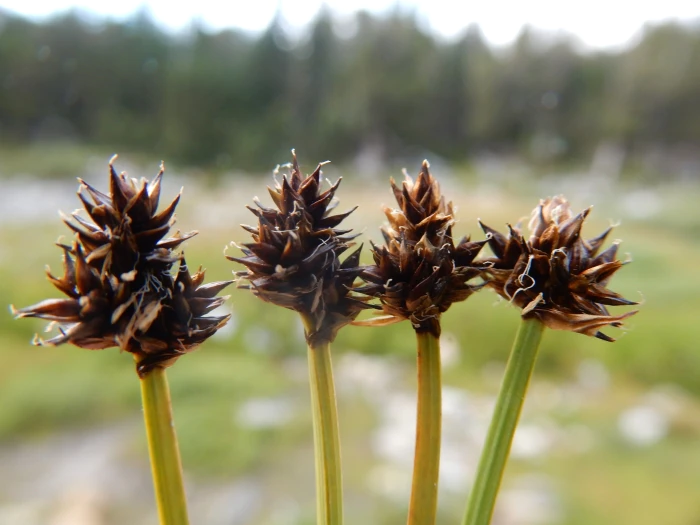

© Matt Lavin
CC BY 4.0

Image By:
© Matt Lavin
Recorded By:
Copyright:
CC BY 4.0
Copyright Notice:
Photo by: © Matt Lavin | License Type: CC BY 4.0 | License URL: http://creativecommons.org/licenses/by/4.0/ | Uploader: mattlavin | Publisher: iNaturalist |






Summary
Carex lachenalii, commonly known as Twotipped Sedge or Hare’s Foot Sedge, is a perennial herbaceous plant native to a wide range of habitats including moist tundra, wet meadows, marshes, and along streams in temperate to subarctic regions. Its distribution spans North America, Greenland, Iceland, Europe, Asia, and New Zealand’s South Island. The plant typically forms dense tussocks or clumps reaching up to 24 inches in height, with narrow, grass-like leaves. The inflorescences consist of dense clusters of small, brownish flowers that appear in late spring to early summer, though they are not particularly showy. The foliage remains attractive throughout the growing season.
Twotipped Sedge is valued for its ability to adapt to various wetland conditions and is often used in restoration projects for wetland habitats. It can also be used in rain gardens or as a ground cover in moist, shaded garden areas. Carex lachenalii prefers consistently moist soils and can tolerate a range of light conditions from full sun to partial shade. While it is generally low-maintenance, it can spread in ideal conditions and may require management to keep it in check. Subspecies include Carex lachenalii subsp. lachenalii and Carex lachenalii subsp. macroura, which differ slightly in their ecological preferences and morphology.CC BY-SA 4.0
Twotipped Sedge is valued for its ability to adapt to various wetland conditions and is often used in restoration projects for wetland habitats. It can also be used in rain gardens or as a ground cover in moist, shaded garden areas. Carex lachenalii prefers consistently moist soils and can tolerate a range of light conditions from full sun to partial shade. While it is generally low-maintenance, it can spread in ideal conditions and may require management to keep it in check. Subspecies include Carex lachenalii subsp. lachenalii and Carex lachenalii subsp. macroura, which differ slightly in their ecological preferences and morphology.CC BY-SA 4.0
Plant Description
- Plant Type: Grass
- Height: 0.2-0.7 feet
- Width: 0.2-0.4 feet
- Growth Rate: Moderate
- Flower Color: N/A
- Flowering Season: Summer
- Leaf Retention: Evergreen
Growth Requirements
- Sun: Full Sun, Part Shade
- Drainage: Medium, Fast
Common Uses
Deer Resistant, Erosion Control, Low Maintenance, Rabbit Resistant, Water Garden
Natural Habitat
Moist tundra, wet meadows, marshes, and along streams in temperate to subarctic regions
Other Names
Common Names: Lachenal’s Sedge, Schnee-Segge, Hare’s-Foot Sedge, Sedge
Scientific Names: Carex lachenalii, Carex approximata, Carex approximata, Carex heleonastes var. lachenalii, Vignea lachenalii
GBIF Accepted Name: Carex lachenalii