Hood’s Sedge
/
(Carex hoodii)
Hood’s Sedge (Carex hoodii)
/


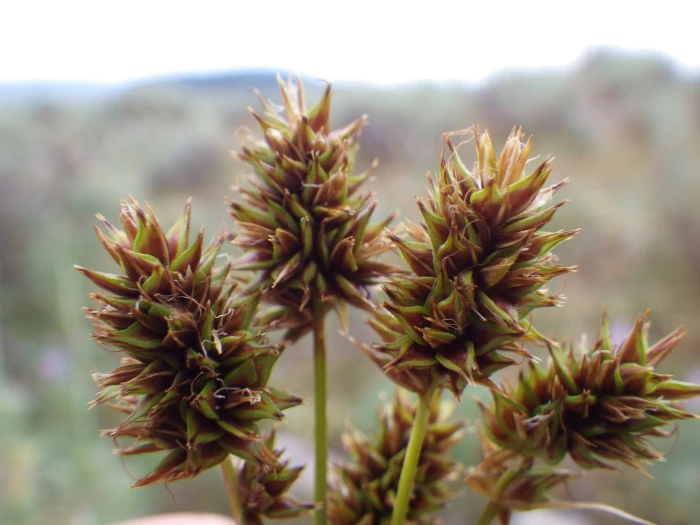

Matt Lavin
CC BY 4.0

Image By:
Matt Lavin
Recorded By:
Copyright:
CC BY 4.0
Copyright Notice:
Photo by: Matt Lavin | License Type: CC BY 4.0 | License URL: http://creativecommons.org/licenses/by/4.0/ | Rights Holder: Matt Lavin | Publisher: iNaturalist | Date Created: 2013-07-13T14:23:58-07:00 |






Summary
Carex hoodii, commonly known as Hood’s sedge, is a perennial herbaceous plant native to a variety of habitats in western North America, including open coniferous forests, forest clearings, subalpine meadows, and mountain slopes from Alaska to California and east to South Dakota. It typically forms dense clumps of thin, wiry stems that can reach up to 32 inches in height, with narrow, grass-like leaves. The plant produces dense clusters of reddish-brown flowers in late spring to early summer, which are not particularly showy but add a subtle texture to the landscape.
Hood’s sedge is valued for its adaptability, making it a versatile choice for gardeners. It can be used for naturalistic plantings, as a ground cover in shaded areas, or for erosion control on slopes. It prefers partial shade to full sun and requires well-drained soil, although it can tolerate a range of soil types. This sedge is relatively low-maintenance, but it may benefit from occasional watering during prolonged dry periods. It is not known for serious disease or pest issues, but may spread under favorable conditions and should be monitored to prevent unwanted expansion.CC BY-SA 4.0
Hood’s sedge is valued for its adaptability, making it a versatile choice for gardeners. It can be used for naturalistic plantings, as a ground cover in shaded areas, or for erosion control on slopes. It prefers partial shade to full sun and requires well-drained soil, although it can tolerate a range of soil types. This sedge is relatively low-maintenance, but it may benefit from occasional watering during prolonged dry periods. It is not known for serious disease or pest issues, but may spread under favorable conditions and should be monitored to prevent unwanted expansion.CC BY-SA 4.0
Plant Description
- Plant Type: Grass
- Height: 0.5-1 feet
- Width: 0.5-1 feet
- Growth Rate: Moderate
- Flower Color: N/A
- Flowering Season: Spring, Summer
- Leaf Retention: Evergreen
Growth Requirements
- Sun: Full Sun, Part Shade
- Drainage: Medium, Fast
Common Uses
Erosion Control, Low Maintenance, Rock Garden
Natural Habitat
Native to open coniferous forests, forest clearings, subalpine meadows, and mountain slopes in western North America
Other Names
Common Names: Hood Sedge, Dwarf Sedge
Scientific Names: Carex hoodii, Carex congesta, Carex congesta, Carex hoodii subsp. neurocarpa, Carex hoodii var. nervosa, Carex hoodii var. neurocarpa, Carex muricata var. confixa
GBIF Accepted Name: Carex hoodii