Western Inflated Sedge
/
(Carex exsiccata)
Western Inflated Sedge (Carex exsiccata)
/


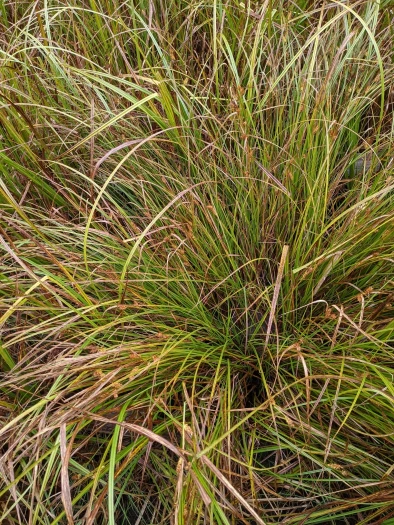

Chloe and Trevor Van Loon
CC BY 4.0

Image By:
Chloe and Trevor Van Loon
Recorded By:
Copyright:
CC BY 4.0
Copyright Notice:
Photo by: Chloe and Trevor Van Loon | License Type: CC BY 4.0 | License URL: http://creativecommons.org/licenses/by/4.0/ | Rights Holder: Chloe and Trevor Van Loon | Publisher: iNaturalist | Date Created: 2021-09-18T11:28:04-07:00 |





Summary
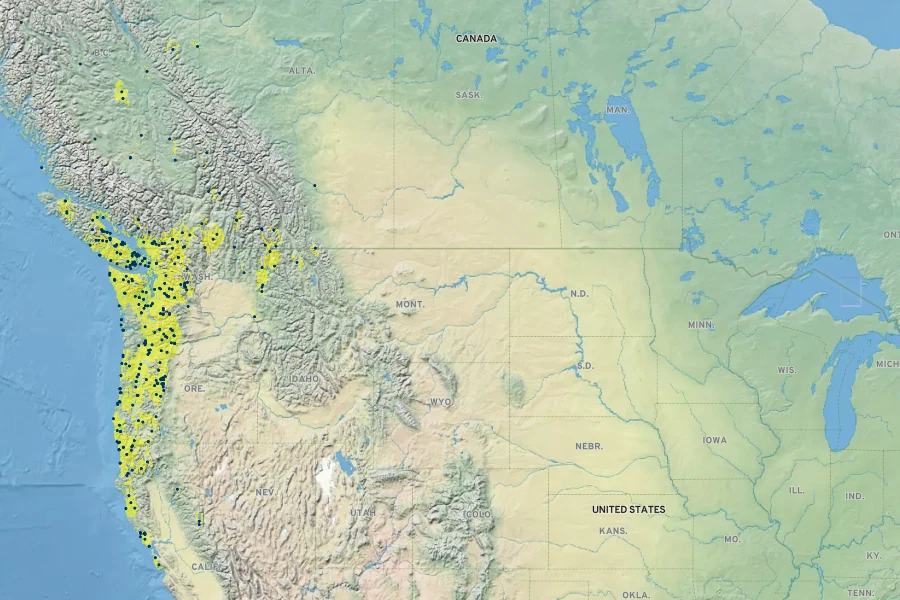
Carex exsiccata, commonly known as western inflated sedge or beaked sedge, is a perennial herb native to North America, specifically found in wet meadows, marshes, and along the edges of ponds and streams in British Columbia, Washington, Oregon, Idaho, Montana, Colorado, and California. It typically forms dense clumps and can reach heights of 10-60 cm. The plant features narrow, grass-like leaves and brown, inflated, beak-shaped seed capsules that appear in late spring to summer. The flowers are not particularly showy, but the unique seed heads add textural interest to the landscape.
Western inflated sedge is valued for its ability to thrive in wet conditions and is often used in rain gardens, wetland restoration projects, and as a ground cover in moist garden areas. It is relatively low maintenance, requiring consistently moist to wet soil and full sun to part shade conditions. While it is not commonly used in traditional ornamental gardens, it serves an important ecological role in its native habitat by providing cover and food for wildlife. Carex exsiccata is also historically significant, as indigenous peoples have utilized it to create a black dye.CC BY-SA 4.0
Western inflated sedge is valued for its ability to thrive in wet conditions and is often used in rain gardens, wetland restoration projects, and as a ground cover in moist garden areas. It is relatively low maintenance, requiring consistently moist to wet soil and full sun to part shade conditions. While it is not commonly used in traditional ornamental gardens, it serves an important ecological role in its native habitat by providing cover and food for wildlife. Carex exsiccata is also historically significant, as indigenous peoples have utilized it to create a black dye.CC BY-SA 4.0
Plant Description
- Plant Type: Grass
- Height: 1-2 feet
- Width: 1-2 feet
- Growth Rate: Moderate
- Flower Color: N/A
- Flowering Season: Summer, Fall
- Leaf Retention: Evergreen
Growth Requirements
- Sun: Full Sun, Part Shade
- Drainage: Medium, Fast
Common Uses
Drought Tolerant, Low Maintenance, Rabbit Resistant
Natural Habitat
Wet meadows, marshes, and along the edges of ponds and streams
Other Names
Common Names: Brown Sedge, Western Inflated Sedge, Big Inflated Sedge, Inflated Sedge, Oxbow Sedge
Scientific Names: Carex exsiccata, Carex vesicaria var. major
GBIF Accepted Name: Carex exsiccata