Italian Thistle
/
(Carduus pycnocephalus)
Italian Thistle (Carduus pycnocephalus)
/


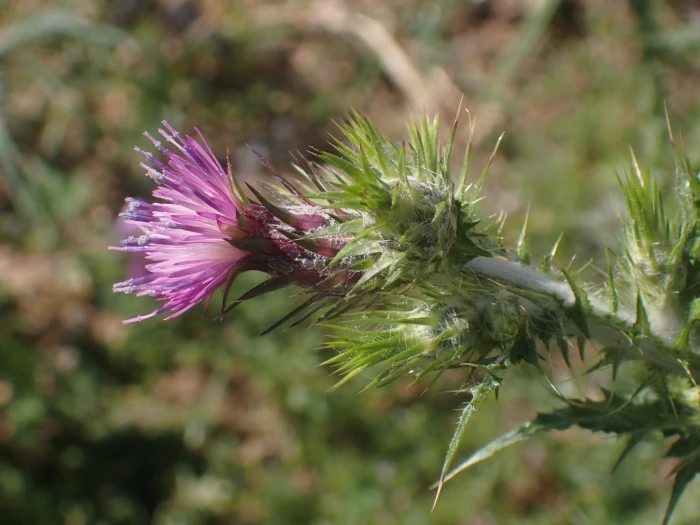

© Fabien Piednoir
CC BY-SA 4.0

Image By:
© Fabien Piednoir
Recorded By:
Copyright:
CC BY-SA 4.0
Copyright Notice:
Photo by: © Fabien Piednoir | License Type: CC BY-SA 4.0 | License URL: http://creativecommons.org/licenses/by-sa/4.0/ | Uploader: fabienpiednoir | Publisher: iNaturalist |





Summary
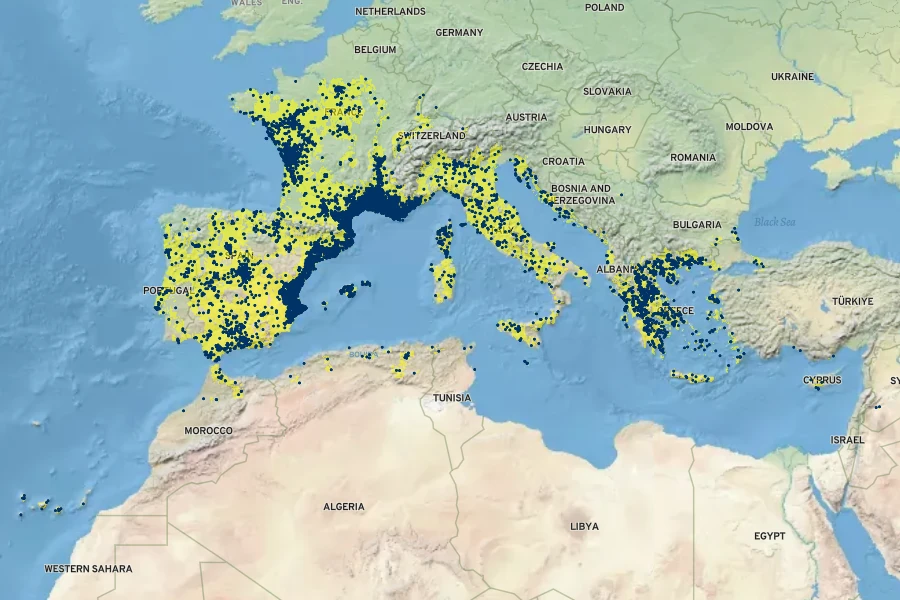
Carduus pycnocephalus, commonly known as Italian thistle, is a winter annual herb native to the Mediterranean region, including Southern Europe and Northern Africa. It thrives in open areas such as grasslands, roadsides, and disturbed sites. Typically, this thistle can grow up to 7 feet tall, featuring spiny stems and foliage. The flowers are pink to purple and bloom from late spring to early summer, attracting pollinators but also spreading rapidly. Italian thistle is characterized by its ability to colonize a wide range of habitats and outcompete native vegetation.
In cultivation, Italian thistle is not typically grown due to its invasive nature and potential to become a noxious weed. However, its ability to adapt to poor soil conditions and its drought tolerance can be noted as horticultural attributes in its native range. Gardeners should be cautious and avoid planting it in areas where it can become invasive. It requires full sun to part shade and can tolerate a variety of soil types, but prefers well-drained soils. Italian thistle is invasive in California, Australia, and South America, forming dense thistle populations in grasslands.CC BY-SA 4.0
In cultivation, Italian thistle is not typically grown due to its invasive nature and potential to become a noxious weed. However, its ability to adapt to poor soil conditions and its drought tolerance can be noted as horticultural attributes in its native range. Gardeners should be cautious and avoid planting it in areas where it can become invasive. It requires full sun to part shade and can tolerate a variety of soil types, but prefers well-drained soils. Italian thistle is invasive in California, Australia, and South America, forming dense thistle populations in grasslands.CC BY-SA 4.0
Plant Description
- Plant Type: Herb
- Height: 0.75-2.25 feet
- Width: 0.75-1.25 feet
- Growth Rate: Rapid
- Flower Color: Purple
- Flowering Season: Spring, Summer
- Leaf Retention: Semi-deciduous
Growth Requirements
- Sun: Full Sun
- Drainage: Fast, Medium
Common Uses
Bird Garden, Erosion Control
Natural Habitat
Native to the Mediterranean region, thriving in open areas such as grasslands, roadsides, and disturbed sites
Other Names
Common Names: Italian Thistle, Compact-headed Thistle, Plymouth Thistle
Scientific Names: Carduus pycnocephalus, Carduus arabicus subsp. carduus, Carduus pycnocephalus var. pycnocephalus
GBIF Accepted Name: Carduus pycnocephalus