Pompom Weed
/
(Campuloclinium macrocephalum)
Pompom Weed (Campuloclinium macrocephalum)
/



Nicola van Berkel
CC BY-SA 4.0

Image By:
Nicola van Berkel
Recorded By:
Copyright:
CC BY-SA 4.0
Copyright Notice:
Photo by: Nicola van Berkel | License Type: CC BY-SA 4.0 | License URL: http://creativecommons.org/licenses/by-sa/4.0/ | Rights Holder: Nicola van Berkel | Publisher: iNaturalist | Date Created: 41995 |





Summary
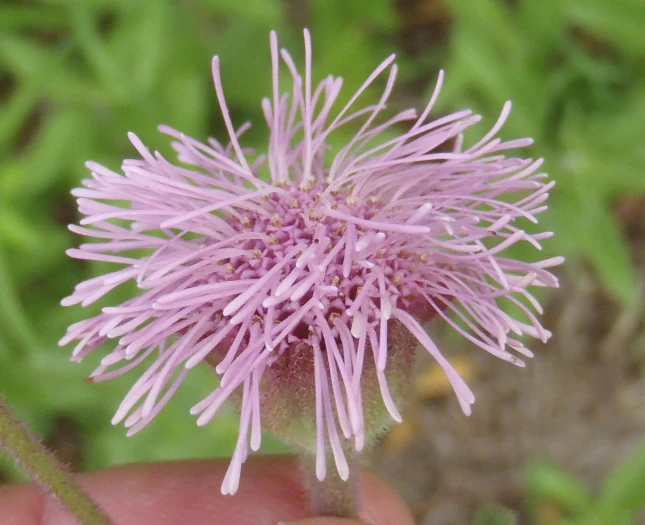
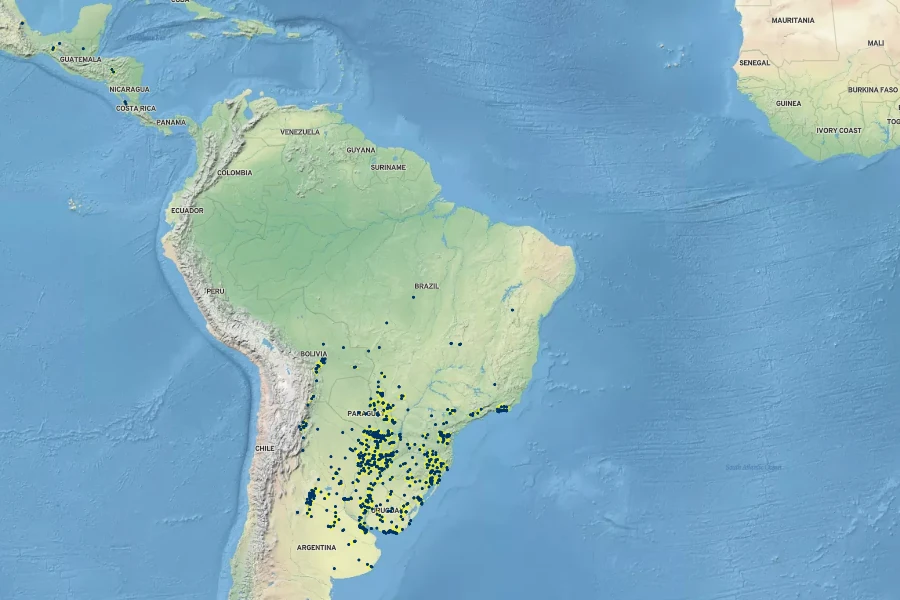
Campuloclinium macrocephalum, commonly known as pompom weed, is a perennial herb native to open woodlands and grasslands in Central America and South America. It has been introduced to South Africa where it is considered invasive. This species typically grows up to 4 feet tall and is characterized by its bristly hairs on the stems and leaves. It produces dense leaf rosettes at the base, which can suppress the growth of surrounding vegetation. The plant is known for its fluffy, spherical flower heads that are white to pale pink in color, blooming from late summer to fall and attracting a variety of pollinators.
Pompom weed is not commonly cultivated due to its invasive nature, but where it is grown, it is often used for its ornamental fluffy flower heads. It requires full sun to part shade and well-drained soils. It is not typically recommended for garden use due to its aggressive growth and potential to outcompete native plants. Gardeners should be cautious and check local regulations before planting, as it can spread rapidly and become a problem outside its native range. It is invasive in South Africa and Brazil, invading grasslands and wetlands.CC BY-SA 4.0
Pompom weed is not commonly cultivated due to its invasive nature, but where it is grown, it is often used for its ornamental fluffy flower heads. It requires full sun to part shade and well-drained soils. It is not typically recommended for garden use due to its aggressive growth and potential to outcompete native plants. Gardeners should be cautious and check local regulations before planting, as it can spread rapidly and become a problem outside its native range. It is invasive in South Africa and Brazil, invading grasslands and wetlands.CC BY-SA 4.0
Plant Description
- Plant Type: Herb
- Height: 2-3 feet
- Width: 1-2 feet
- Growth Rate: Moderate
- Flower Color: White
- Flowering Season: Summer
- Leaf Retention: Deciduous
Growth Requirements
- Sun: Full Sun, Part Shade
- Drainage: Fast, Medium
Common Uses
Border Plant, Butterfly Garden, Low Maintenance, Potted Plant
Natural Habitat
Native to open woodlands and grasslands
Other Names
Common Names: Paraguay Daisy, Brazilian Button Flower
Scientific Names: Campuloclinium macrocephalum, Campuloclinium macrocephalum var. macrocephalum, Campuloclinium macrocephalum var. strigosum, Campuloclinium pohlianum, Campuloclinium pohlianum, Campuloclinium strigosum, Campuloclinium strigosum, Chromolaena pratensis, Conoclinium macrocephalum, Conoclinium macrocephalum
GBIF Accepted Name: Campuloclinium macrocephalum