Creeping Bellflower
/
(Campanula rapunculoides)
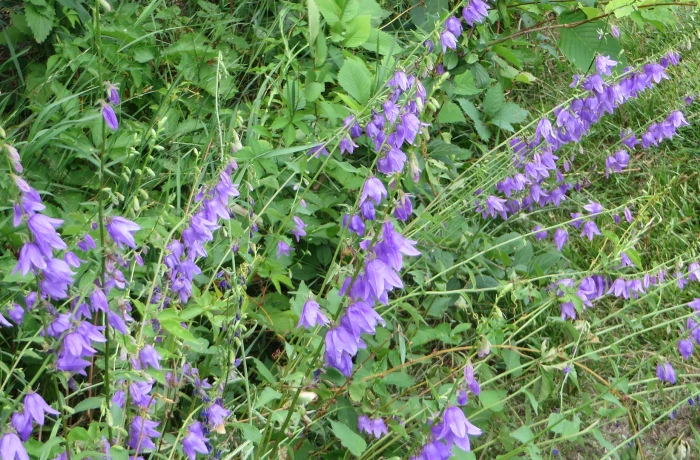
Creeping Bellflower (Campanula rapunculoides)
/



© Gordon Johnston
CC BY-SA 4.0

Image By:
© Gordon Johnston
Recorded By:
Copyright:
CC BY-SA 4.0
Copyright Notice:
Photo by: © Gordon Johnston | License Type: CC BY-SA 4.0 | License URL: http://creativecommons.org/licenses/by-sa/4.0/ | Uploader: gordon_johnston | Publisher: iNaturalist |






Summary
Campanula rapunculoides, commonly known as creeping bellflower, is a perennial herb that is native to open woodlands and grassy areas in Europe and west Asia. It can grow up to 47 inches tall and features upright stems with lance-shaped leaves. From mid to late summer, it produces racemes of nodding, bell-shaped flowers that are bright blue-violet in color, adding a splash of color to the garden landscape. The plant is known for its vigorous growth and ability to spread rapidly by underground rhizomes, which can make it difficult to control.
Creeping bellflower is valued for its attractive flowers and can be used in border plantings, cottage gardens, and as a ground cover. It thrives in a range of soil types, provided they are well-drained, and it prefers full sun to partial shade. While it is drought-tolerant once established, it benefits from regular watering during prolonged dry periods. Gardeners should be cautious, as it is highly invasive in North America, spreading aggressively by roots and seeds and choking out native plants.CC BY-SA 4.0
Creeping bellflower is valued for its attractive flowers and can be used in border plantings, cottage gardens, and as a ground cover. It thrives in a range of soil types, provided they are well-drained, and it prefers full sun to partial shade. While it is drought-tolerant once established, it benefits from regular watering during prolonged dry periods. Gardeners should be cautious, as it is highly invasive in North America, spreading aggressively by roots and seeds and choking out native plants.CC BY-SA 4.0
Plant Description
- Plant Type: Herb
- Height: 1-3 feet
- Width: 1-2 feet
- Growth Rate: Rapid
- Flower Color: Blue, Purple
- Flowering Season: Spring, Summer
- Leaf Retention: Deciduous
Growth Requirements
- Sun: Full Sun, Part Shade
- Drainage: Medium
Common Uses
Border Plant, Butterfly Garden, Rabbit Resistant
Natural Habitat
Native to open woodlands and grassy areas in Europe and west Asia
Other Names
Common Names: Creeping Bellflower, Rover Bellflower, European Bellflower, Rampion Bellflower
Scientific Names: Campanula rapunculoides, Campanula contracta, Campanula lunariaefolia, Campanula lunariaefolia, Campanula lunariifolia, Campanula morifolia, Campanula racemosa var. laxiflora, Campanula rapunculiformis, Campanula rapunculoides var. parviflora
GBIF Accepted Name: Campanula rapunculoides