Dagame
/
(Calycophyllum candidissimum)
Dagame (Calycophyllum candidissimum)
/


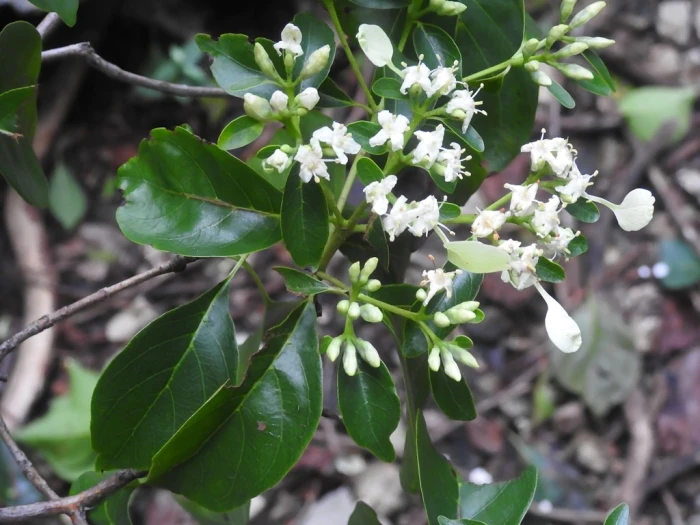

Neptalí Ramírez Marcial
CC BY 4.0

Image By:
Neptalí Ramírez Marcial
Recorded By:
Copyright:
CC BY 4.0
Copyright Notice:
Photo by: Neptalí Ramírez Marcial | License Type: CC BY 4.0 | License URL: http://creativecommons.org/licenses/by/4.0/ | Rights Holder: Neptalí Ramírez Marcial | Publisher: iNaturalist | Date Created: 2017-10-14T09:21:42-07:00 |






Summary
Calycophyllum candidissimum, commonly known as Dagame or Lemonwood, is a deciduous tree native to the seasonally dry forests of southern Mexico, Central America, Colombia, and Venezuela, and is recognized as the national tree of Nicaragua. It thrives in lowland areas and can reach heights of up to 100 feet (30 meters), with a trunk diameter of 3 feet (1 meter). The tree’s form is typically straight and cylindrical, with a dense, rounded crown. It produces small, fragrant white flowers that are not particularly showy, followed by non-edible fruit. The bark is smooth and light gray, providing an attractive contrast to the dark green foliage.
Dagame is valued for its hard, durable, and beautifully grained wood, which is used in fine cabinetry, construction, and crafts. It is also planted for reforestation projects and as a shade tree in coffee plantations. In cultivation, it requires full sun and well-drained soils, tolerating a range of soil types from sandy to loamy. While it is drought-tolerant once established, young trees benefit from regular watering. Lemonwood is relatively free of serious pests and diseases, but it can be susceptible to root rot in poorly drained soils. It is not typically grown in small gardens due to its large size, but it can be an excellent choice for parks and large landscapes where space permits.CC BY-SA 4.0
Dagame is valued for its hard, durable, and beautifully grained wood, which is used in fine cabinetry, construction, and crafts. It is also planted for reforestation projects and as a shade tree in coffee plantations. In cultivation, it requires full sun and well-drained soils, tolerating a range of soil types from sandy to loamy. While it is drought-tolerant once established, young trees benefit from regular watering. Lemonwood is relatively free of serious pests and diseases, but it can be susceptible to root rot in poorly drained soils. It is not typically grown in small gardens due to its large size, but it can be an excellent choice for parks and large landscapes where space permits.CC BY-SA 4.0
Plant Description
- Plant Type: Tree
- Height: 20-30 feet
- Width: 15-20 feet
- Growth Rate: Moderate
- Flower Color: White
- Flowering Season: Spring, Summer
- Leaf Retention: Evergreen
Growth Requirements
- Sun: Full Sun, Part Shade
- Drainage: Medium
Common Uses
Bee Garden, Bird Garden, Low Maintenance, Potted Plant
Natural Habitat
Seasonally dry forests in lowland areas
Other Names
Common Names: Lemonwood, Satinwood, Degame, White-wood
Scientific Names: Calycophyllum candidissimum, Macrocnemum candidissimum, Mussaenda candida, Mussaenda candidissima
GBIF Accepted Name: Calycophyllum candidissimum