Mouse Ears
/
(Calothamnus rupestris)
Mouse Ears (Calothamnus rupestris)
/


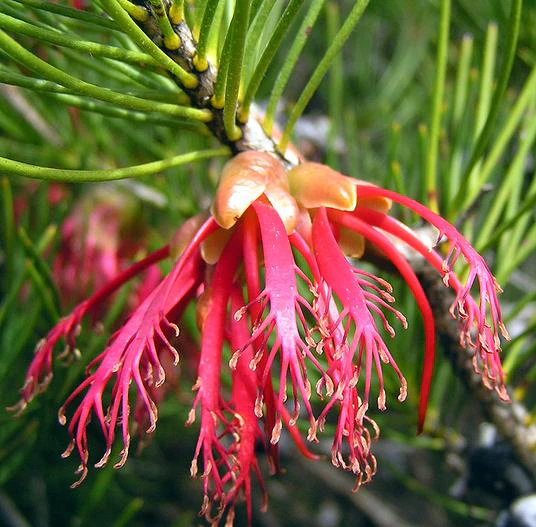

jmcgross
CC BY 2.0

Image By:
jmcgross
Recorded By:
Copyright:
CC BY 2.0
Copyright Notice:
Photo by: jmcgross | License Type: CC BY 2.0 | License URL: https://creativecommons.org/licenses/by/2.0 | Uploader: Berichard | Publisher: Wikipedia Commons





Summary
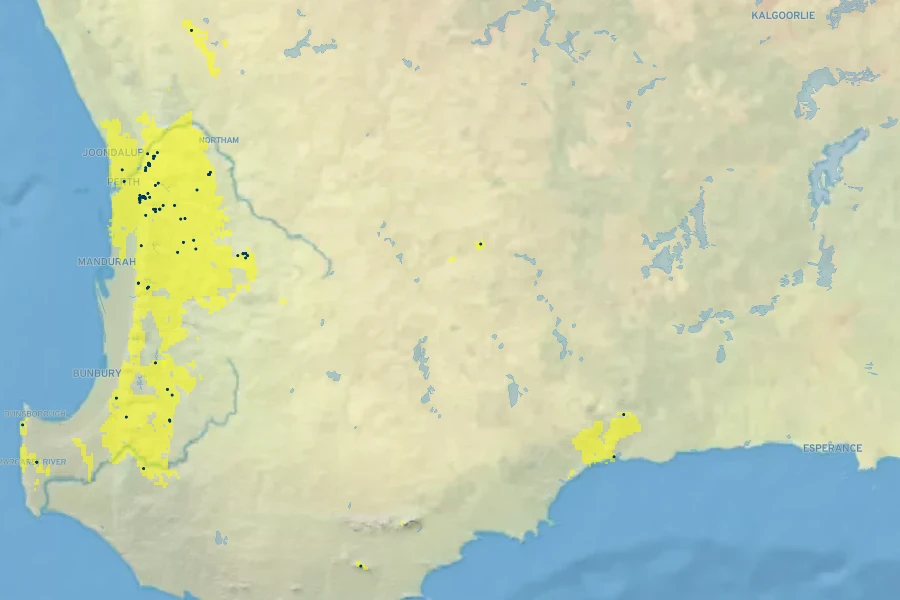
Calothamnus rupestris, commonly known as Mouse Ears or Granite Net-bush, is a shrub or small tree in the myrtle family, native to the granite outcrops and rocky slopes of southwestern Australia. It is an erect, often compact, sometimes spreading shrub or small tree growing to 0.9–4 meters (3–10 ft) in height with a similar spread. The plant is characterized by its short, stiff, prickly leaves and its distinctive flowers, which are a shade of pink to red and appear in spring. The flowers are showy and not immersed in thick, corky bark, which is a feature that distinguishes it from some other species in the genus. The plant’s natural habitat includes areas with well-drained, sandy or gravelly soils, often associated with granite outcrops.
In cultivation, Mouse Ears is valued for its unique appearance and vibrant flowers, which attract nectar-feeding birds and insects. It is suitable for use in rockeries, native plant gardens, and as a feature plant in water-wise landscapes. It prefers well-drained soils and can adapt to a range of soil types, provided they are not waterlogged. While generally low-maintenance, it may be susceptible to root rot if overwatered or planted in poorly draining soils.CC BY-SA 4.0
In cultivation, Mouse Ears is valued for its unique appearance and vibrant flowers, which attract nectar-feeding birds and insects. It is suitable for use in rockeries, native plant gardens, and as a feature plant in water-wise landscapes. It prefers well-drained soils and can adapt to a range of soil types, provided they are not waterlogged. While generally low-maintenance, it may be susceptible to root rot if overwatered or planted in poorly draining soils.CC BY-SA 4.0
Plant Description
- Plant Type: Shrub
- Height: 3-4 feet
- Width: 3-4 feet
- Growth Rate: Moderate
- Flower Color: Pink
- Flowering Season: Spring, Summer
- Leaf Retention: Evergreen
Growth Requirements
- Sun: Full Sun
- Drainage: Medium
Common Uses
Bee Garden, Bird Garden, Butterfly Garden, Hummingbird Garden, Low Maintenance, Street Planting
Natural Habitat
Granite outcrops and rocky slopes of southwestern Australia
Other Names
Common Names: Granite Net Bush, Cliff Net Bush
Scientific Names: Calothamnus rupestris, Melaleuca rupestris
GBIF Accepted Name: Melaleuca rupestris (Schauer) Craven & R.D.Edwards