Brazilian Beauty Leaf
/
(Calophyllum brasiliense)
Brazilian Beauty Leaf (Calophyllum brasiliense)
/


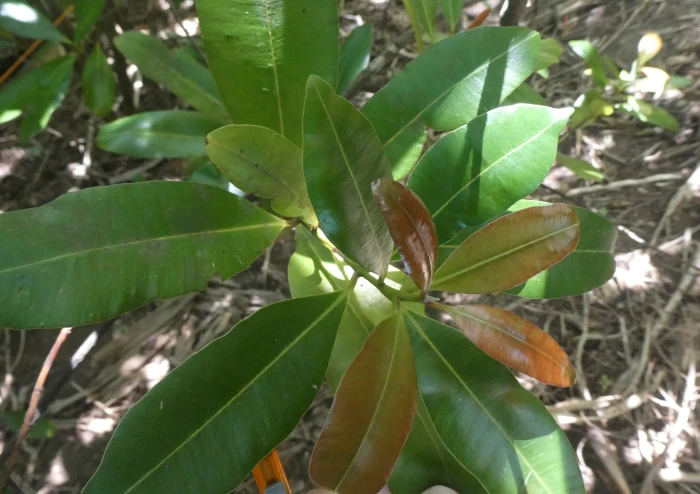

Alison Copeland
CC BY 4.0






Summary
Guanandi is valued for its durable, reddish-brown timber, which is used in construction and fine woodworking. It is also recognized for its medicinal properties, with the oil extracted from its seeds being used in traditional medicine. In cultivation, guanandi is important for forest conservation and reforestation projects due to its fast growth and adaptability to different soil types. It prefers full sun to partial shade and requires regular watering, especially in dry periods. While it is not commonly seen in urban landscapes, it can be used in large gardens and parks for its shade and ornamental value. Potential problems include susceptibility to root rot in poorly drained soils.CC BY-SA 4.0
Plant Description
- Plant Type: Tree
- Height: 30-60 feet
- Width: 20-40 feet
- Growth Rate: Moderate
- Flower Color: White
- Flowering Season: Spring, Summer
- Leaf Retention: Evergreen
Growth Requirements
- Sun: Full Sun, Part Shade
- Drainage: Medium, Slow
Common Uses
Bird Garden, Showy Flowers, Water Garden
Natural Habitat
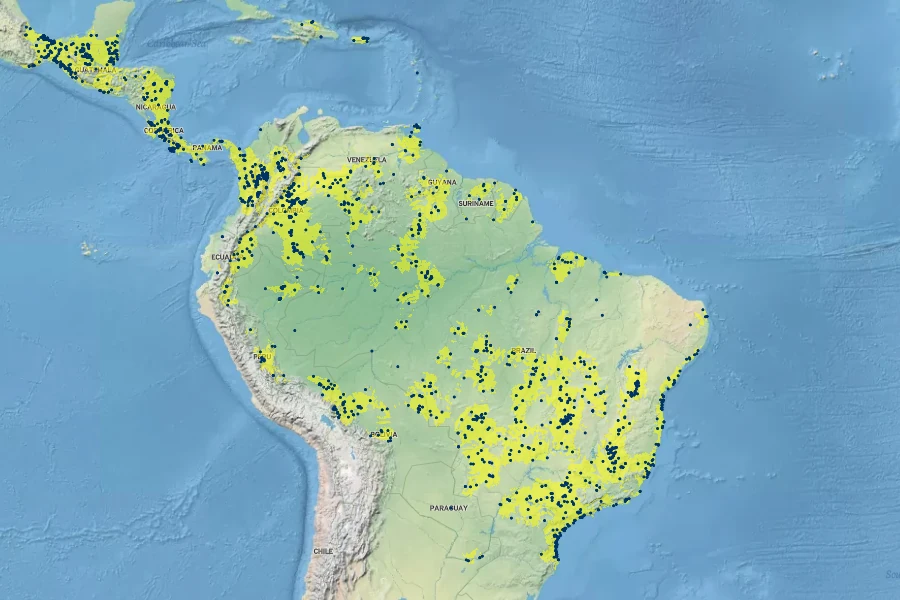
Rainforests and gallery forests, with intermittent flowering peaking in summer
Other Names
Common Names: Guanandi, Aceite De Maria, Santa Maria tree, Palo De Maria, Santa Maria, Bella María, Cedro-Do-Pântano, Balsam fig
Scientific Names: Calophyllum brasiliense, Calophyllum brasiliense subsp. mariae, Calophyllum brasiliense subsp. verum, Calophyllum brasiliense subsp. wrightii, Calophyllum brasiliense var. burchellii, Calophyllum brasiliense var. elongatum, Calophyllum brasiliense var. elongatum, Calophyllum brasiliense var. gardneri, Calophyllum brasiliense var. rekoi, Calophyllum brasiliense var. spruceana
GBIF Accepted Name: Calophyllum brasiliense