Barren Brome
/
(Bromus sterilis)
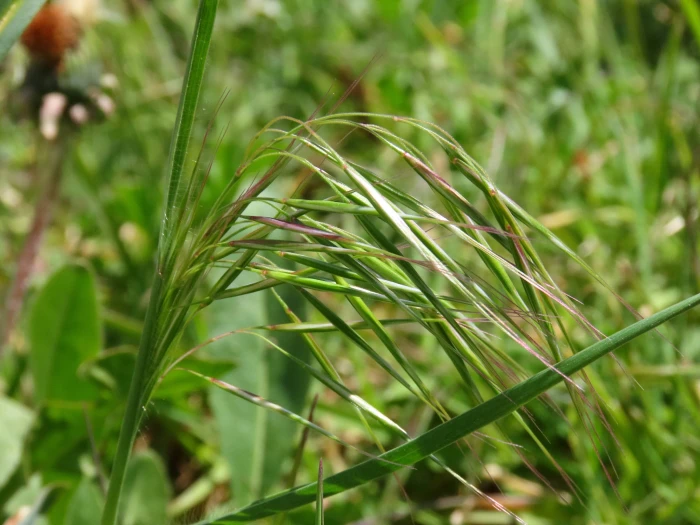
Barren Brome (Bromus sterilis)
/



Emanuele Santarelli
CC BY-SA 4.0

Image By:
Emanuele Santarelli
Recorded By:
Copyright:
CC BY-SA 4.0
Copyright Notice:
Photo by: Emanuele Santarelli | License Type: CC BY-SA 4.0 | License URL: http://creativecommons.org/licenses/by-sa/4.0/ | Rights Holder: Emanuele Santarelli | Publisher: iNaturalist | Date Created: 2020-04-10T13:12:33-07:00 |





Summary
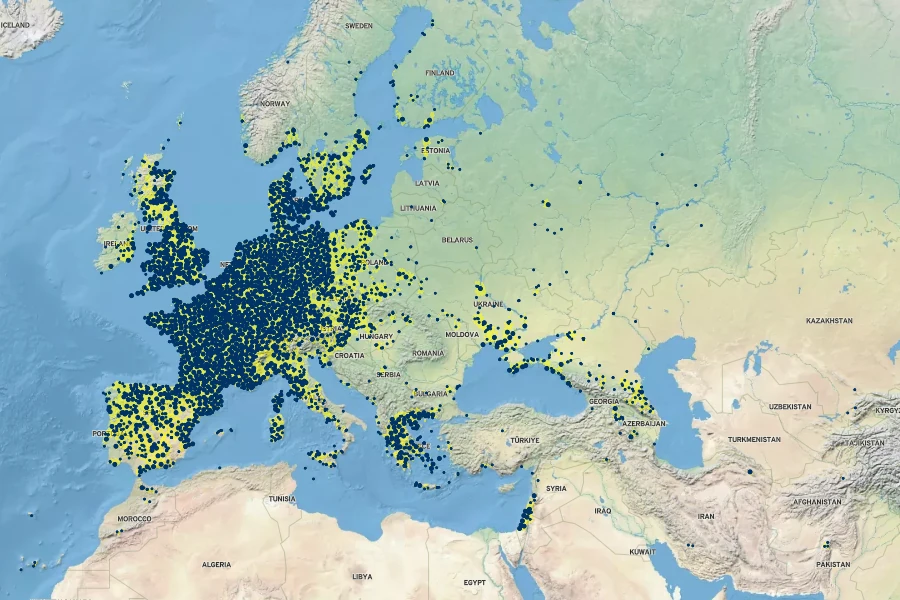
Bromus sterilis, commonly known as barren brome or sterile brome, is an annual or biennial grass native to a variety of habitats including open woodlands, grasslands, and disturbed sites across Europe, Africa, and temperate Asia. It typically grows to a height of 8-35 inches (20-90 cm) and features rough, hairy leaves. The plant forms loose, nodding panicles with spikelets that are up to 2 inches long, each containing 4-10 flowers that may appear from late spring to early summer. The flowers are not particularly showy, but the grass can add a delicate texture to the landscape.
Barren brome is often found in cultivation as part of wildflower meadows or naturalistic plantings where its ability to self-seed can be beneficial for maintaining a dynamic planting design. It is also used for erosion control due to its fibrous root system. This grass prefers full sun to part shade and can tolerate a range of soil types, from well-drained to moderately fertile. It is a low-maintenance option for gardeners. However, it can become weedy and potentially invasive outside its native range, so caution is advised when planting in areas where it is not native. It has been found to become invasive in California and is a noxious weed on both U.S. coasts.CC BY-SA 4.0
Barren brome is often found in cultivation as part of wildflower meadows or naturalistic plantings where its ability to self-seed can be beneficial for maintaining a dynamic planting design. It is also used for erosion control due to its fibrous root system. This grass prefers full sun to part shade and can tolerate a range of soil types, from well-drained to moderately fertile. It is a low-maintenance option for gardeners. However, it can become weedy and potentially invasive outside its native range, so caution is advised when planting in areas where it is not native. It has been found to become invasive in California and is a noxious weed on both U.S. coasts.CC BY-SA 4.0
Plant Description
- Plant Type: Grass
- Height: 1-2 feet
- Width: 1-2 feet
- Growth Rate: Moderate
- Flower Color: N/A
- Flowering Season: Spring
- Leaf Retention: Semi-deciduous
Growth Requirements
- Sun: Full Sun, Part Shade
- Drainage: Medium, Fast
Common Uses
Erosion Control, Low Maintenance
Natural Habitat
Open woodlands, grasslands, and disturbed sites across Europe, Africa, and temperate Asia
Other Names
Common Names: Poverty Brome, Sterile Brome, Arechi-No-Cha-Hiki, Barren Bromegrass, Bromo-Estéril, Capim-Cevadinha
Scientific Names: Bromus sterilis, Anisantha sterilis, Anisantha sterilis var. sicula, Anisantha sterilis var. stenantha, Anisantha sterilis var. velutina, Avena sterilis, Bromus amplus, Bromus delicatulus, Bromus distichus
GBIF Accepted Name: Bromus sterilis